
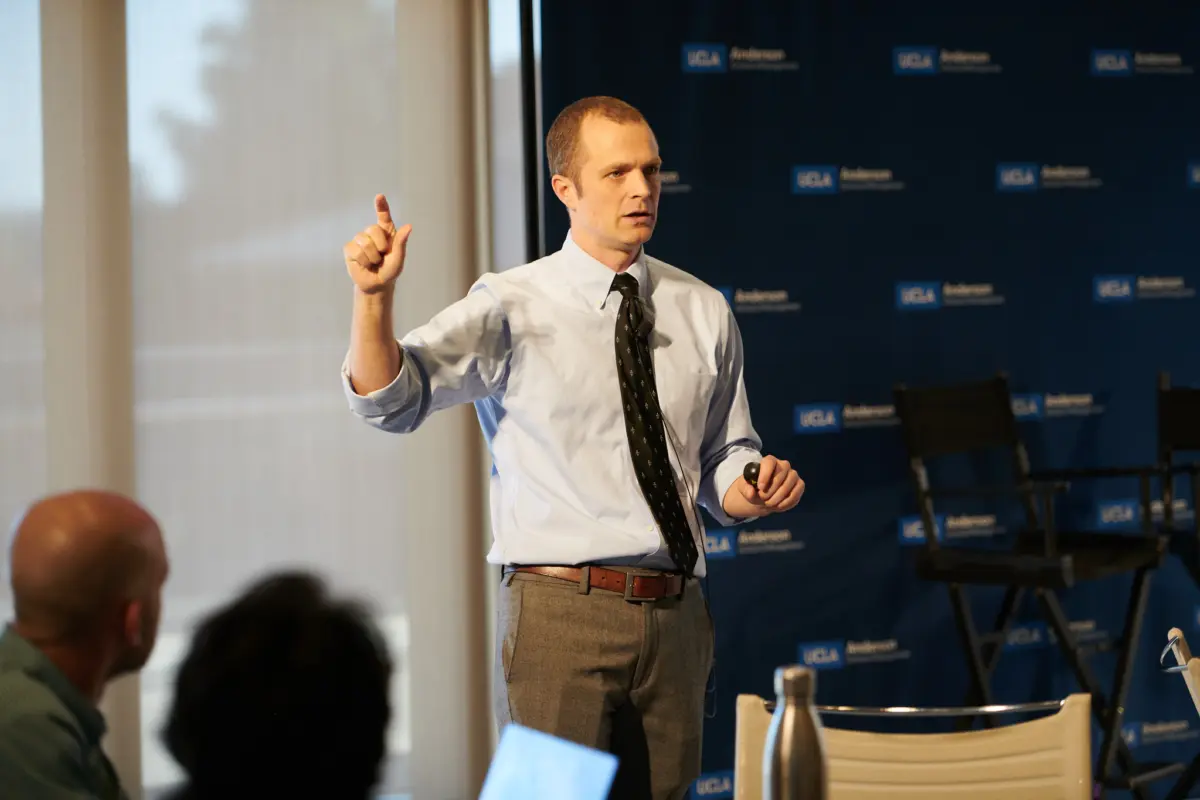
PhD Candidate Highlight: Tyson Timmer examines how sustainability shapes corporate behavior
PhD candidate Tyson Timmer examines how corporate sustainability reporting influences investors, employees and job applicants. His research explores whether greater transparency actually changes decisions and what drives people’s responses to corporate sustainability efforts.
When companies publish sustainability reports—public reports that detail their environmental impacts and risks—the assumption is that greater transparency leads to better environmental decision-making.
But does that assumption hold up to scrutiny?
Tyson Timmer, who will finish his PhD at the UCLA Institute of the Environment and Sustainability (IoES) this August, wanted to find out. His work explores the real impact that sustainability disclosures have on the decisions made by key corporate stakeholders.
“What my research has been focusing on for my dissertation is: what do different groups of people do with this information now?” he said. Essentially, who is using it, and does it change what they do?
Timmer hopes his research will fill a gap in existing studies, which typically focus on what companies should disclose rather than on the impact of such disclosures on corporate behavior. filling a gap in existing studies that typically focus only on what companies should disclose.
Timmer’s Path to Sustainability Research
Timmer earned a bachelor’s degree in manufacturing engineering with a focus in hybrid vehicle design. Straight out of undergrad, Timmer began working in aerospace engineering, but he remained interested in understanding the environmental impacts of production rather than individual products. That’s why he decided to pursue a master’s in industrial ecology.
After receiving his master’s degree, Timmer spent six years working in corporate finance, an experience that informed his understanding of companies’ roles within larger economic systems.
“The thing that’s really nice about having experience in finance is that it’s truly thinking about companies as a whole, what they do both in their industry silo as well as how they’re integrated into the national and global economy,” he said.
This broader perspective ultimately led Timmer to consider how sustainability fits into corporations’ decision-making process. His growing interest in understanding how corporations make sustainability decisions led him to the IoES, which offered an interdisciplinary approach that was a natural fit.
Timmer was advised by Professor Maggie Delmas (UCLA Anderson School of Management and IoES), whose research focuses on corporate sustainability and on incentivizing businesses to adopt more sustainable practices, and by Professor Charles Corbett (UCLA Anderson School of Management), whose work focuses on operations management and sustainability.
Interpreting Sustainability Reporting
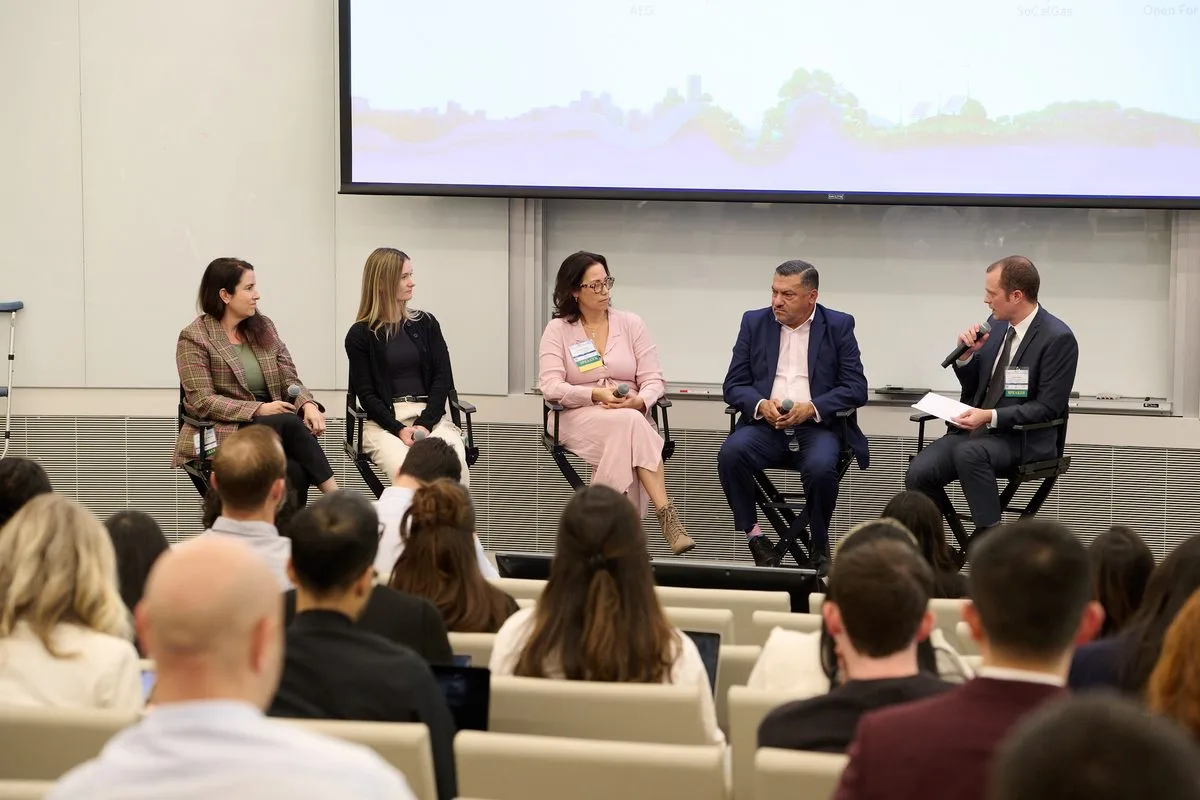
Throughout his time at IoES, Timmer contributed to several major research initiatives aimed at better understanding and organizing corporate sustainability information, including the State of Corporate Sustainability Disclosure and the Corporate Sustainability Transparency Index, which are collaborations between Anderson and IoES for the Open For Good Project.
Together, these projects developed new ways to compare sustainability reporting across companies and made it easier for researchers to analyze information that was often inconsistent in both structure and language.
“A lot of this information was out there,” Timmer said, “but company A was talking about it differently than company B.” According to Timmer, understanding what companies leave out can sometimes reveal just as much as what they choose to disclose.
“How they’re talking about what they’re not talking about almost tells you more,” he said.
For his dissertation, his work has focused less on studying the reports themselves and more on understanding how different audiences interpret them.
“It’s not just what companies should or shouldn’t disclose,” he said. “It’s also how investors think about it, how employees think about it, how job applicants think about it.”
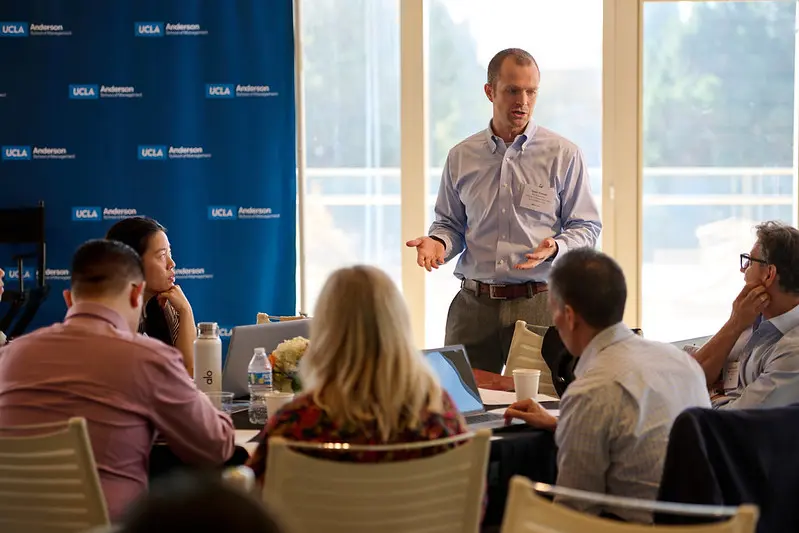
His work with investors challenged some of his own assumptions. Timmer expected the specific way sustainability information was presented to influence investment decisions, but his results suggested otherwise.
“To my surprise, investors don’t care,” he said. The baseline importance they place on sustainability “is primarily driven by their political ideology.”
An investor’s reaction to sustainability information did not vary with the mode of delivery. Subjects already knew whether they cared if a company made an effort to be sustainable, which was most clearly linked to their political identity.
A similar trend held for prospective employees as well. In studies examining job applicants, Timmer found that diversity reporting has become a baseline expectation rather than a competitive advantage, while stronger climate commitments can make companies more attractive employers. Many individuals often accept lower compensation to work for sustainable companies, whereas they frequently demand significantly higher pay to join firms that don’t showcase their sustainability.
In this case as well, political identity proved to be the primary driver of individuals’ attitudes toward salary tradeoffs related to corporate sustainability.
Looking Ahead
Timmer will defend his dissertation at the end of August. In the future, he hopes to return to private industry while continuing one of his newfound passions: teaching. He hopes to bring the interdisciplinary perspective that shaped his research into both the classroom and the corporate world.
As sustainability reporting continues to expand, he hopes his work will help organizations better understand not only what information they share, but how that information ultimately influences the people making decisions.