
California isn’t using existing tools to make community solar work, study finds
UCLA researchers find that if the state applies existing valuation tools consistently, residents could reap the savings already enjoyed by other states.
Key takeaways
- Community solar programs deliver lower energy bills to customers in three states studied by researchers with UCLA’s California Center for Sustainable Communities. These programs let customers receive some of the benefits of rooftop solar without having to install solar panels.
- A report by UCLA researchers finds that California has failed for a decade to launch a workable community program because of how state regulators classify and value distributed energy resources like community solar.
- The analysis identifies AB 1813, which directs the state to use the California Public Utilities Commission’s own Avoided Cost Calculator to value community solar subscriptions and requires paired storage so projects deliver power when the grid needs it most, as a step toward community solar success.
California’s decade-long failure to launch a workable community solar program is not a failure of technology, economics, or demand, but of how state regulators classify and value distributed clean energy, according to a new UCLA study.
The study finds that the state built the analytical tools needed to measure the full value of community solar and storage, and then declined to apply them to the projects that would benefit ratepayers most.
“Where states value these resources properly, community solar does exactly what it promises,” said Robert Cudd, co-author of the report. Cudd is a doctoral student and researcher with California Center for Sustainable Communities, housed in UCLA’s Institute of the Environment and Sustainability.
“It applies real savings on the bills of renters and low-income households who have never been able to benefit from solar, it strengthens the grid by pairing clean power with storage when demand peaks, and it does all of that at a cost that works for every ratepayer. California has the same tools and the same potential as the states where this is working; it just needs to decide to use them,” he said.
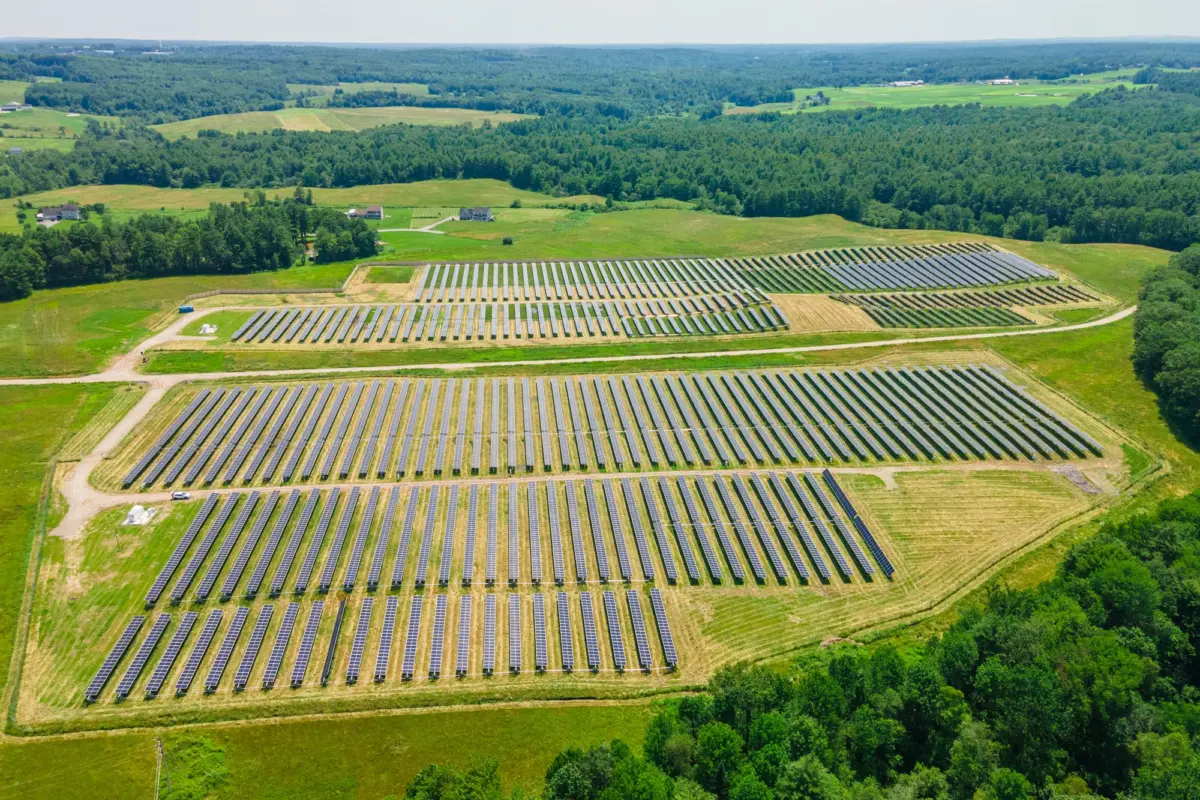
Community solar programs let people subscribe to energy generated by medium-sized solar arrays that are connected to distribution-level power lines, bypassing high-voltage transmission infrastructure that brings electricity from large power plants to homes.
These solar arrays sell electricity to utilities and other energy service providers, and previous community solar programs run by the California Public Utilities Commission have helped low-income subscribers receive a portion of the value they generate as a credit on their electricity bill.
The issue that has prevented the expansion of these programs is how to compensate the owners and operators of community solar systems, how to price electricity coming from community solar and storage systems, and how to value the other kinds of “non-energy services” they provide to the grid.
The report’s authors—Cudd and fellow PhD student and researcher Sid Shah—examined community solar programs in three states with slightly different community solar programs that deliver measurable savings to subscribers, reliable returns for investors, and real contributions to grid reliability. The report found that California stands apart from Illinois, New York, and Maryland, not because it answered the valuation question differently, but because its methodology keeps the question of what community solar and storage is worth from being asked and answered.
Central to the analysis is the state’s Avoided Cost Calculator, a tool California developed to measure the range of benefits that distributed solar and storage provide, from reduced peak demand to avoided transmission and distribution costs to resource adequacy.
The report documents how regulators have persistently declined to apply that tool to front-of-the-meter community solar and have excluded these projects from resource adequacy and load-modifying resource classifications.
The result, the authors argue, is a compensation framework built on assumptions the state has never actually tested against its own data. The authors find that applying California’s own valuation methods consistently, with appropriate geographic detail, could produce very different results than the ones the CPUC has assumed.
The analysis identifies AB 1813 (Ward), the Community Renewable Energy Program Act, as the first step toward resolving the years-long impasse between regulators, load-serving entities, and the broad coalition of groups supporting distributed generation and storage.
AB 1813 directs the state to use the California Public Utilities Commission’s (CPUC) own Avoided Cost Calculator to value community solar subscriptions and requires paired storage so projects deliver power when the grid needs it most. The bill has cleared the Assembly and the Senate Energy Committee and now awaits action on the Senate floor.
“California’s public utilities commission does not consistently apply valuation methodologies developed for other kinds of energy resources, and this is a reason why community solar, which is politically popular and successful in other states, hasn’t grown in the same way here,” Cudd said. “Our findings suggest that AB1813 could move California forward toward greater reliance on clean energy.”
Read the full report.
Learn more about UCLA’s Institute of the Environment and Sustainability and the California Center for Sustainable Communities.