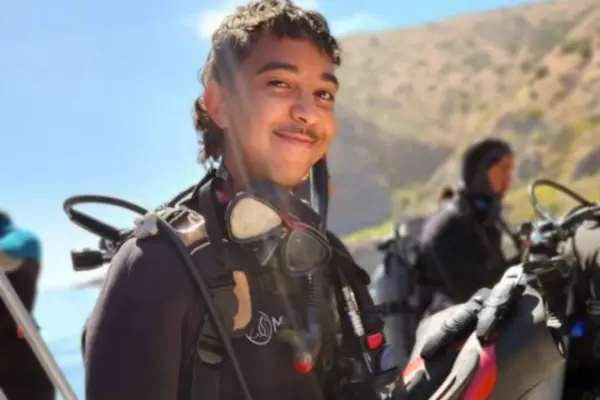
PhD Graduate Spotlight: Elijah Catalan centers community needs in his scientific research
Six years after arriving at UCLA, Dr. Elijah Catalan has graduated from the Institute of the Environment and Sustainability (IoES) with a Ph.D, a growing body of marine conservation research,…
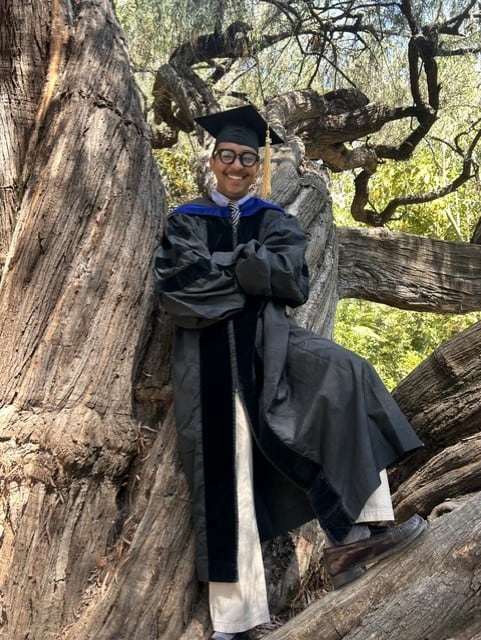
Six years after arriving at UCLA, Dr. Elijah Catalan has graduated from the Institute of the Environment and Sustainability (IoES) with a Ph.D, a growing body of marine conservation research, and a commitment to ensuring that environmental science serves all communities, especially those most impacted by environmental change.
Throughout his time at UCLA, Catalan’s research focused on environmental DNA (eDNA). This tool allows scientists to identify species present in an ecosystem by analyzing genetic material found in water. He used the technology to study biodiversity and evaluate the impacts of coastal restoration projects in California.
Why Marine Science?
Originally from Cincinnati, Ohio, Catalan did not grow up imagining a future studying the ocean. As an undergrad, he explored a wide range of research opportunities, from air quality and geographic information systems to public affairs and working with NASA to study the moon.
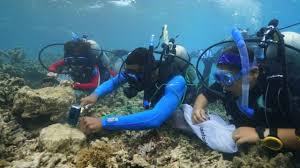
The draw to marine science came when he participated in UCLA’s Diversity Project, a summer program led by IoES faculty members Paul Barber and Peggy Fong.
The program introduced students from underrepresented backgrounds to marine science through scientific scuba diving and independent coral reef research in Mo’orea, French Polynesia.
“That entire experience really, really exposed me to marine science and made me so interested,” Catalan said.
Beyond the research, the mentorship and community he found through the program left a lasting impression, leading Catalan to pursue his graduate degree at UCLA. He had remained in contact with Paul Barber, who served as his doctoral advisor along with Robert Eagle.
Research with Real-World Impact
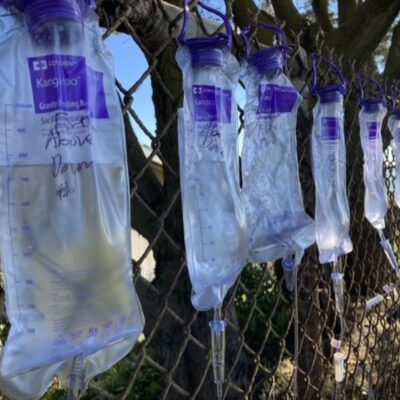
At IoES, Catalan applied eDNA to a variety of restoration and conservation projects. His work included studying changes in biodiversity on an artificial reef in Palos Verdes and examining the ecological impacts of dam removal in Mill Creek near Santa Cruz.
The projects were carried out in partnership with local and indigenous communities, reflecting a theme that would define much of Catalan’s research: ensuring that scientific knowledge includes and benefits historically marginalized communities.
Catalan’s research in Mill Creek focused entirely on the area’s indigenous tribe, working closely with the Amah Mutsun Tribal Band. “It’s more so about building the capacity within the tribe to have that expertise as their own and own eDNA as a research tool,” he said.
Catalan also received the Pritzker Fellowship through IoES, which paired him with conservation leaders working on real-world environmental challenges. Through the fellowship, he collaborated with The Nature Conservancy to study how kelp aquaculture affects biodiversity in coastal ecosystems, work that would go on to shape his future research.
Engaging Communities
Influenced by his upbringing and education, he sees environmental health and human well-being as indivisible.
“I’ve always thought of the environment and the people that are in it as intertwined,” he said.
That perspective shaped the way he approached his research partnerships. Rather than treating communities as subjects of research, Catalan prioritized long-term relationship building, trust, and collaboration. Community members were involved from the earliest stages of projects, helping to determine the outcomes being pursued.
“Centering whatever their needs were, whatever questions they wanted to ask were the ones that kind of drove my research,” he said.
Catalan credits IoES for creating an environment where that interdisciplinary approach could thrive.
“There are very few programs like IoES.” He said, “They just give you, honestly, a lot of freedom to figure out what you want to study.”
That freedom allowed him to combine marine conservation, environmental justice, and community engagement while receiving support from faculty committed to helping students pursue interdisciplinary and impactful work.
Next Steps
Now, Catalan is beginning the next chapter of his career as a postdoctoral researcher at California State University, Northridge, where he will continue studying kelp aquaculture and biodiversity, with hopes to “continue his career as a community scientist.”
While environmental DNA remains an important tool in his work, Catalan sees it as just one way to address broader environmental challenges.
“It’s less about the tool and more so about what does the community need and what kind of questions so we need to answer,” he said.
Though his research may continue to evolve, Catalan’s mission remains the same: using science to answer questions that matter to communities in need and help create a more sustainable future for all.
Meet the Author