
Story
The Power of Positive Climate Action: Professor Tim Lenton Delivers IoES’s Inaugural Richard P. and Linda S. Turco Lecture
Climate scientist Tim Lenton warns that the planet is nearing dangerous climate tipping points but argues that the same self-reinforcing dynamics can be used to drive rapid, positive change.
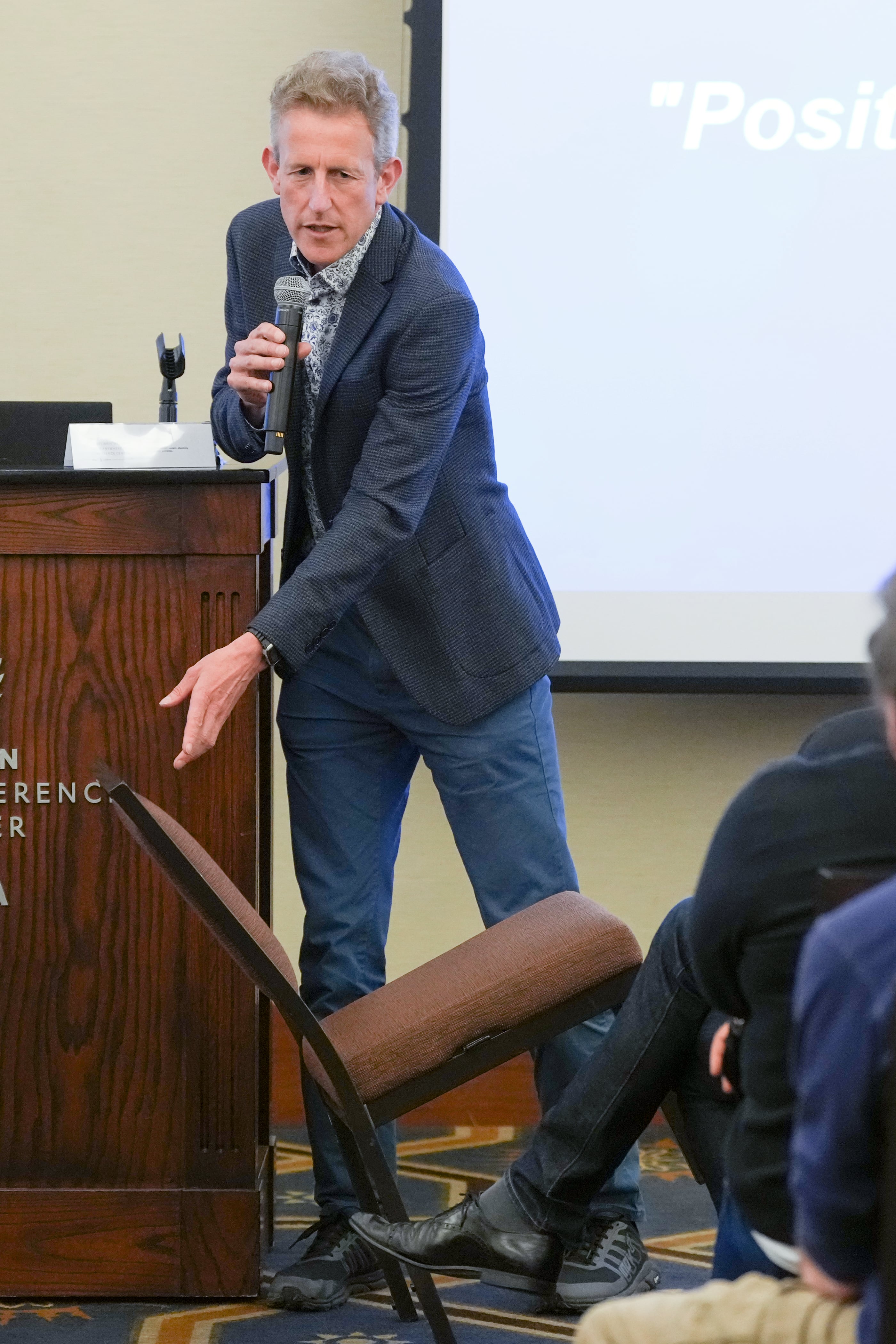
“Have you ever leaned back in your chair to the exact point where you almost fell?”
That moment, climate scientist Tim Lenton explained, is a tipping point, a self-propelling change that accelerates beyond our control.
On Thursday April 16 at the UCLA Institute of the Environment and Sustainability’s (IoES) inaugural lecture of the Richard P. and Linda S. Turco Lecture Series, Tim Lenton, chair of Climate Change and Earth System Science at the University of Exeter, addressed a capacity crowd gathered in the UCLA Luskin Conference Center.
He argued that we are living in a moment where we have a critical choice to make:
While our planet is on the brink of multiple tipping points into potential climate disaster, he emphasized that similar dynamics could be harnessed to drive positive change and pull us back from the brink. So which path do we choose?
Honoring A Legacy of Environmental Leadership
Thursday was the first in IoES’s new Richard P. and Linda S. Turco Lecture Series, made possible by the support of Richard Turco, UCLA professor emeritus of Atmospheric and Oceanic Sciences and the founding director of IoES, and his wife Linda Turco.
In his opening remarks, IoES’s current director Alex Hall celebrated Turco’s legacy and “scientific work… helped bring global-scale environmental challenges into sharper focus.”
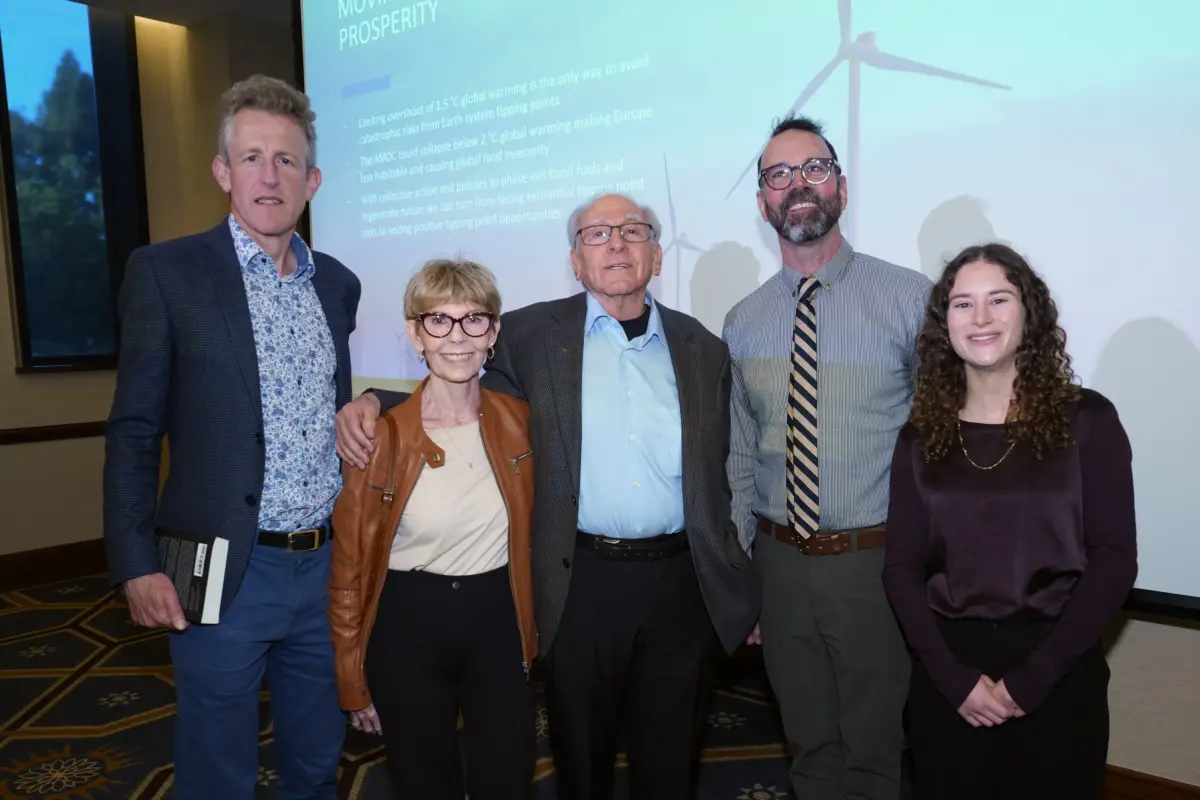
In addition to bringing leading thinkers in the environmental space to UCLA, this new lecture series honors emerging leaders. Before Lenton’s lecture began Thursday, IoES graduate student Rachel Sheinberg received the Richard P. and Linda S. Turco Graduate Publication Award, presented by Senior Associate Director Travis Longcore.
The Turcos continue to support the IoES in its mission to connect academia to real-world action, an aim Lenton’s work reflects, Hall said in his introductory remarks.
Irreversible Changes In Motion
In his talk, Lenton warned that several tipping points are already unfolding in the climate crisis.
Coral reefs have nearly collapsed due to rising ocean temperatures, a crisis that goes beyond ecological impacts:
“Around 500 million or more people rely on tropical reefs for their livelihoods,” Lenton said.
Additionally, the Amazon Rainforest risks transforming into a savannah, disrupting global climate systems, and devastating food supplies.
Meanwhile, the Antarctic ice sheet is melting, threatening to flood “many megacities and land occupied by hundreds of millions.”
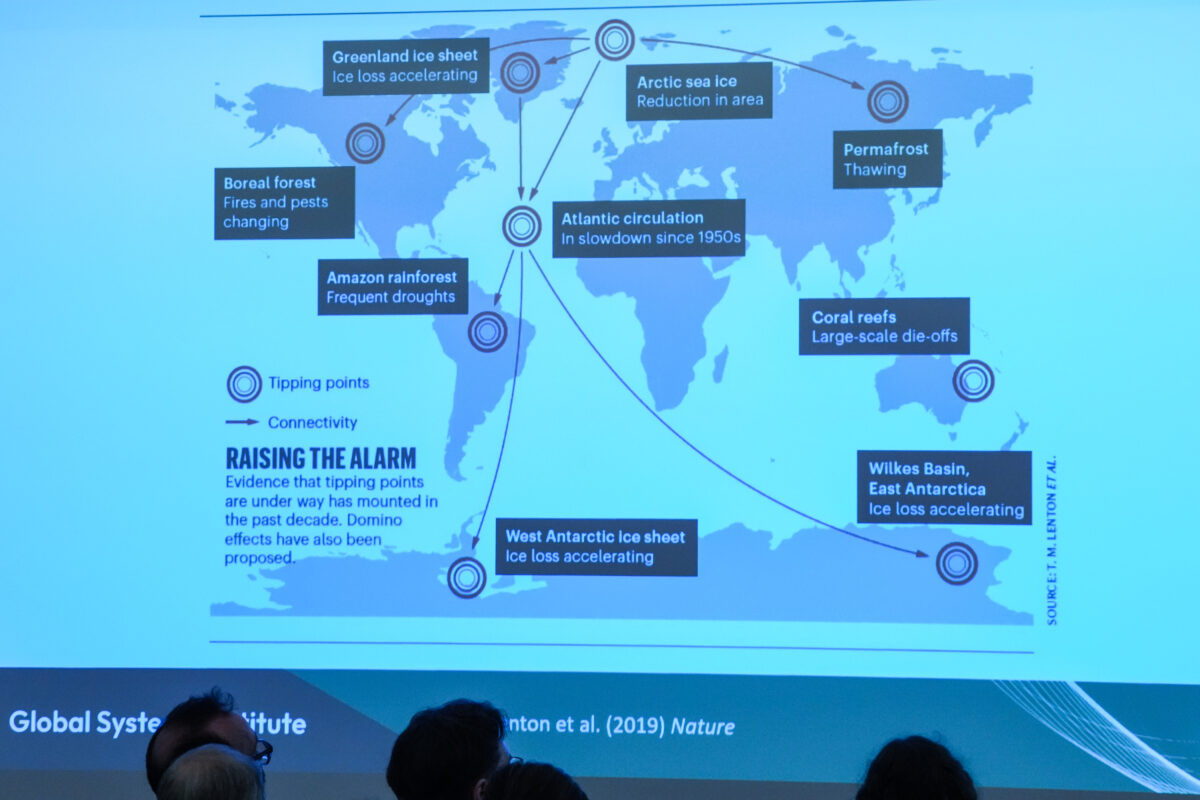
Lenton explained that the potential loss of Earth’s most important climate regulator, the Atlantic Meridional Overturning Circulation (AMOC), is especially concerning.
Changes in ocean temperature and salinity will disrupt weather patterns, causing extreme heat and extreme cooling in abnormal regions, with major consequences for agriculture and water systems.
These systems are deeply interconnected; one tipping point could trigger another, setting off cascading effects that we can’t reel in.
“We are facing existential risks… and the window preventing these damaging and irreversible tipping points is closing,” he said.
Positive Tipping Points
The same amplifying forces and feedback that can drive collapse can also drive solutions at the same scale. These positive tipping points, Lenton said, are small, targeted actions that spark rapid, self-reinforcing shifts toward sustainability. However, this requires individual empowerment.
Central to this idea is social contagion. Lenton highlighted climate activist Greta Thunberg, whose solitary strike spread into a global movement, putting pressure on policymakers to take climate change seriously.
Action spreads, Lenton said. By starting, “you make it easier for the next person, and the next.”
The same dynamic occurs with technology. Electric vehicles, once expensive and impractical, have improved rapidly as adoption has increased. Performance has improved, and costs have “dropped like a stone” over the last decade, making EVs desirable, he said.
In Norway, persistence by a small group of activists has led to a near-total transition to EVs, demonstrating that large-scale change is feasible. A cascade starts where adoption drives improvement, which in turn drives further adoption.
Energy systems worldwide are also following this pattern.
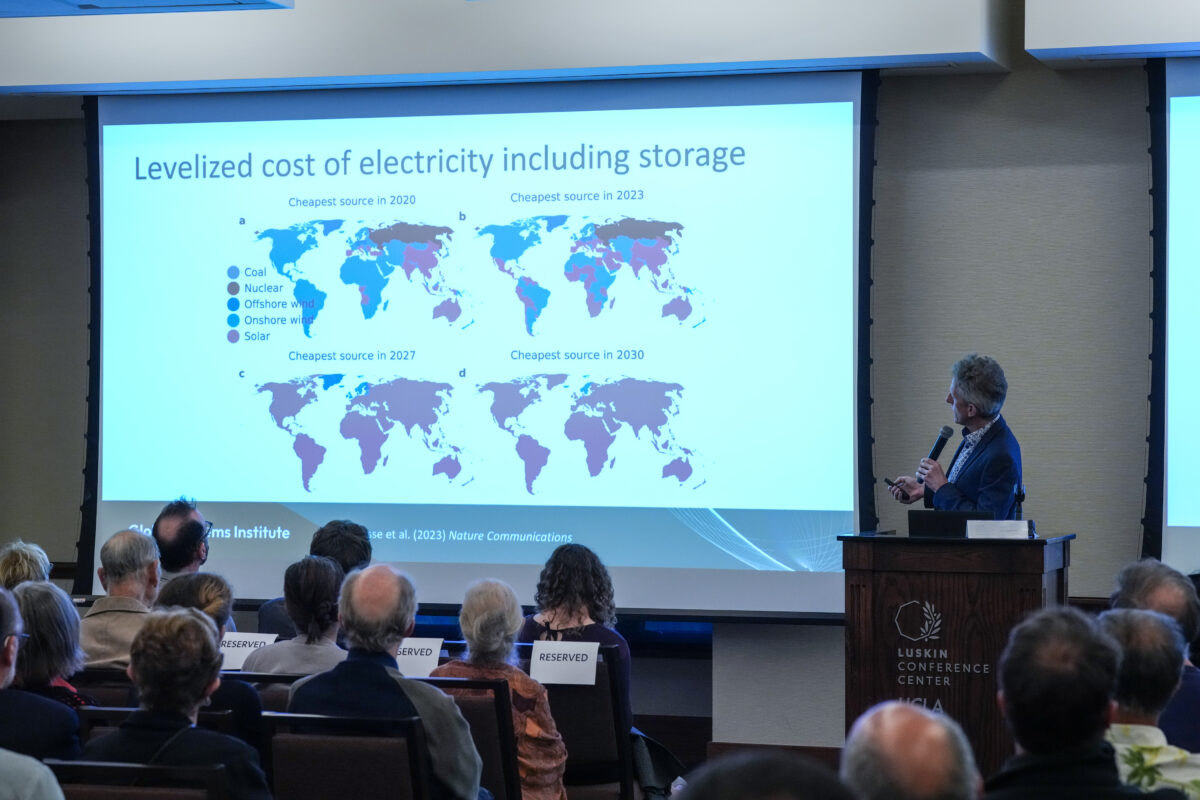
Solar and wind power are “the cheapest source of electricity ever,” Lenton noted. Falling costs for lithium batteries and renewables are expanding access to clean energy worldwide.
In remote regions, off-grid solar is providing electricity for the first time. Accessibility accelerates adoption through social contagion; as people see others making the shift to solar or an EV, they follow.
The Ripple Effect of Action
Big change can start small. Lenton told the story of his relative, British suffragette activist Lydia Lenton, who played an integral role in challenging social norms and ultimately succeeded in transforming democracy in the early 20th century. History repeatedly attests that a “small group of courageous people can tip the norms we all abide by,” he said.
No one exists in isolation. The question is not whether individual actions matter, but who they influence. Lenton reminded us that “we all have skin in the game; we all have agency to be a part of the change.” We are at the tipping point. Do we let the chair fall, or do we reach forward and catch ourselves?