
Living Minerals: Nature, Trade, and Power in the Race for Lithium
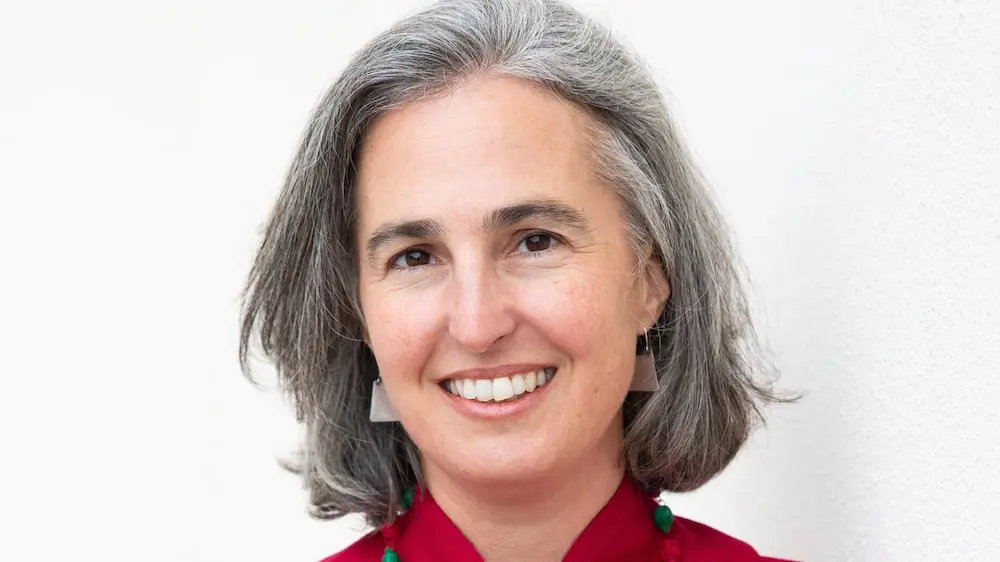
The Climate Politics Working Group invites you to the book talk by Professor Javiera Barandiaran (UCSB).
-
Bunche 4357
The Climate Politics Working Group invites you to the book talk “Living Minerals: Nature, Trade, and Power in the Race for Lithium” by Professor Javiera Barandiaran (UCSB).
Registration: This is a public event. To confirm your participation either in person or on Zoom, send us an email to yuto@yohta.org and/or loredlpb@g.ucla.edu.
When: Thursday Feb 12, 2026 ⋅ 12:15pm – 1:30pm (Pacific Time – Los Angeles)
Location: Bunche 4357 and Zoom.
Book: “Living Minerals” (2026) Open access.
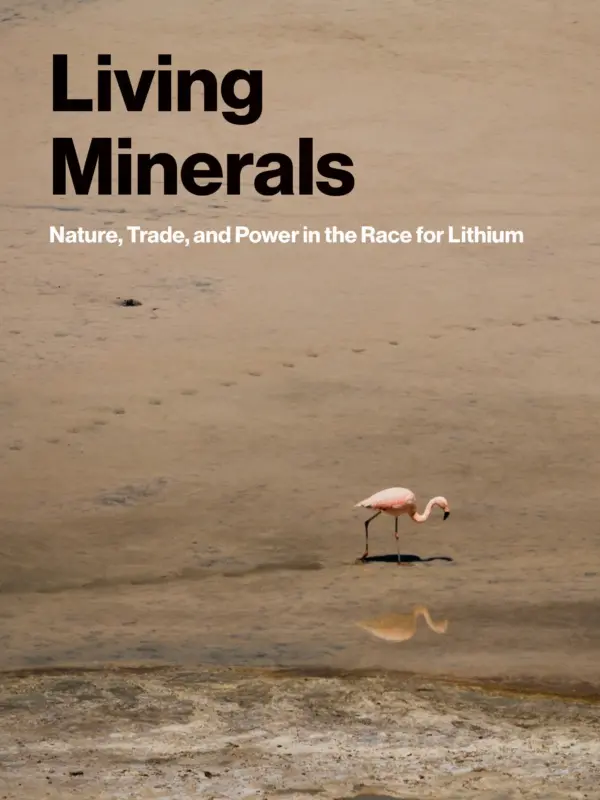
Book description:
Consumers today are buying electric vehicles with lithium-ion batteries motivated by the belief that they are doing good and decarbonizing society. But is sustainable lithium extraction possible? In Living Minerals, Javiera Barandiarán examines the history of lithium mining and uses during the 20th century, with a specific focus on the two oldest brine-lithium mines: Silver Peak, Nevada and Salar de Atacama, Chile, where lithium is found as one more element in a liquid mix of salts, minerals, and organisms.
For six decades, mining experts have failed to ask about water usage, about waste or brine leakage, and about the ecosystem impacts in delicate deserts. Instead, they have relied on various fictions about the size of reserves, the fate of leaked brine, or the value of waste in facilitating mine development. These fictions, rooted in brine-lithium’s material qualities, could be sustained thanks to powerful mining memories that celebrated resource nationalism. Unique in its historical and multi-dimensional approach to minerals and mining, based on the novel Rights of Nature paradigm, and the use of new archival materials from both Chile and the U.S., the book argues that decarbonizing society requires that we reckon with these realities—or risk deepening our dependency on an unsustainable mining industry.
The book challenges the pervasive idea of resource nationalism, which has endured even in the era of free-trade globalization, and proposes instead that policymakers and scientists see minerals as part of living ecosystems. In this new perspective, mineral scarcity is analogous to the extinction of life and the question is not whether there is enough lithium to power all the electric vehicles to be made but whether life itself can be sustained at this rate of extraction. The answers lie in recognizing nature’s rights to exist, flourish, and regenerate, and in slowing down consumption and extraction rates.
The Climate Politics Working Group fosters scholarly discussion on natural resource and energy governance in the context of climate adaptation and mitigation. It is an initiative led by Professor Michael Ross and UCLA graduate students in Political Science, Geography, Sociology, and the Institute of the Environment and Sustainability (IoES).