Mapping Community: CDLS Fellow Olivia Zhang on Climate, Data, & Storytelling
From experiencing the effects of climate change to working towards solutions: read about Olivia's journey.
Even from an early age, community has been a central theme in Olivia Zhang’s life.
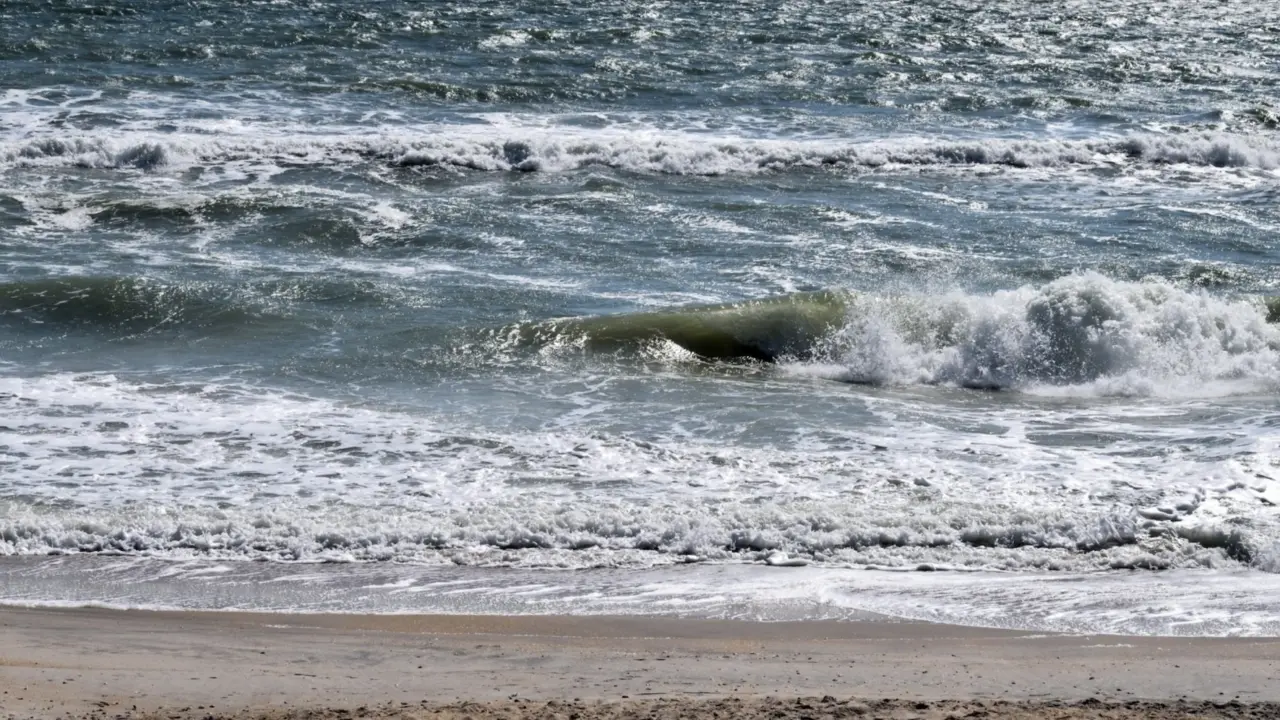
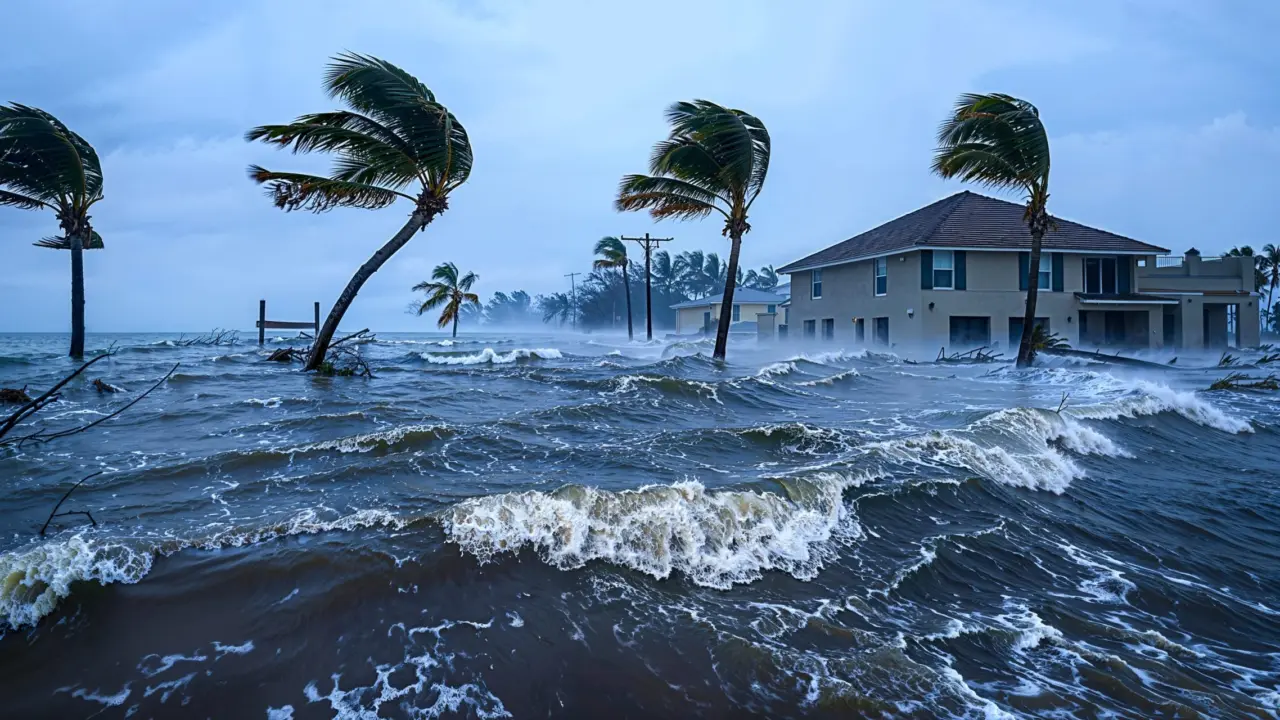
At just a few months old, Hurricane Katrina hit her birthplace of New Orleans, fully flooding her family’s entire neighborhood. Her mother, 18-month-old brother, and grandfather piled into a car and made the nearly 350 mile drive to Houston, seeking refuge. When they arrived in Houston, community members noticed her mother’s New Orleans license plate and gave them food and supplies.
“I…would always hear this story growing up,” Olivia says. “I’m just very inspired by [this] kind of coming together in the aftermath of disaster.”
Olivia grew up in South Florida, a region that faces sea-level rise, flooding, hurricanes, and other effects of climate change. There, she also witnessed the power of community; with such a rough hurricane season, it’s no surprise that South Floridians regularly seek support from one another. Olivia attributes her passion for finding community-centered climate solutions to her frontline experiences with climate change in both these places.
It wasn’t until senior year of high school that Olivia discovered Geographic Information Systems (GIS) as a career path. Over the years, she had developed a love for making maps and telling stories with data, so when she realized she could pursue geography as a major, it was the obvious answer. She had also always harbored a fascination with citizen science—scientific research that invites participation from the general public. Volunteers collect and report data to be used in real-life, ongoing research projects. Anyone can volunteer, from early-career scientists to curious high school students, like Olivia at the time.
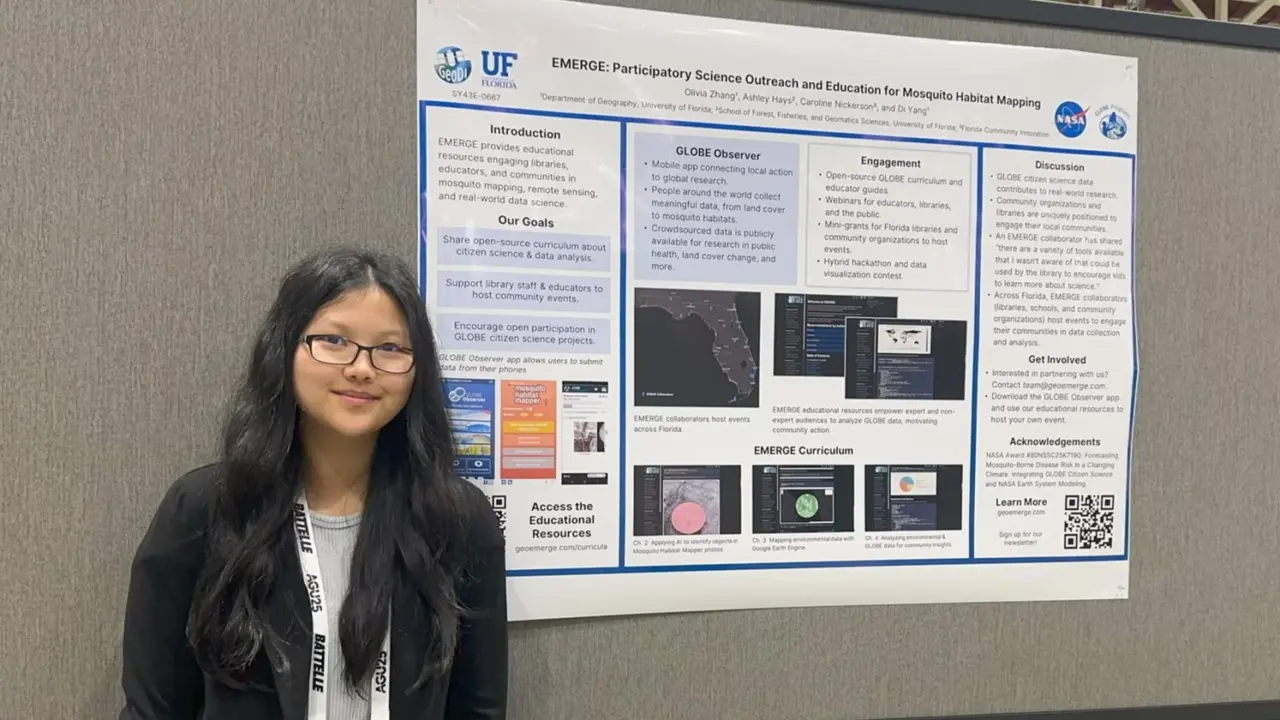
In a full circle moment, Olivia now works as a research assistant in the Geospatial Digital Informatics (GeoDi) Lab at the University of Florida, where her very job is to teach folks about citizen science. One of the lab’s current NASA-funded projects examines how climate change impacts mosquitos, their habitats, and public health using crowdsourced data. Olivia, along with Dr. Caroline Nickerson and Ashley Hays, developed a curriculum titled Environmental Monitoring through Education, Research & Geospatial Engagement (EMERGE) that pairs with this project in order to educate people on how to collect mosquito data and use GLOBE Observer, the app where data is to be submitted. The curriculum also covers coding, with a hope that individuals will be inspired to not just gather data, but also analyze it.
“We want to empower people to collect data from their own communities,” Olivia shares. If they have an understanding of coding and data analysis, they can use that data to “inform management and climate decisions” back home.
Olivia and her collaborators’ goal is to help the public engage with environmental and citizen science—and their curriculum has done just that. EMERGE has been used in schools, libraries, and non-profits across Florida. Overall, both the project and accompanying curriculum are really rooted in bringing research into communities, and allowed Olivia to connect her interest in data-analysis with community education.
While Olivia mainly uses her data visualization skills in scientific settings, in 2024, she had the opportunity to use them to make art as a part of Climate Storytelling 2075. Growing up, Olivia was always interested in art, but saw it as something completely separate from science and the environment
“It’s something that I thought I would have to give up when I started school because I’m studying geography and data science…I’d always viewed these as different things,” she explains. Really, art can be an incredibly powerful tool for scientists because it can disseminate information in a unique, digestible form.
According to the Climate Futures Studio website, Climate Storytelling 2075 is a “year-long initiative that supports emerging artists in crafting visions of just climate futures.” The opportunity provided her with both a way of intersecting all of her interests, and with a new community of fellow artists and environmentalists. As a member of the 2024 cohort, Olivia regularly attended brainstorming meetings and shared drafts of her creation. In the end, she produced an artwork entitled “Over the Years.” The multimedia piece centers on sea level rise in Florida, and contains a portrait, a line graph, a timelapse of projected sea level rise, and a short poem. It’s an exploration of how data can be communicated in creative ways, but also of Olivia’s personal feelings towards how climate change is affecting the state she calls home. It was through Climate Storytelling 2075 that Olivia got connected with CDLS to continue working at the intersections of climate science, storytelling, and community engagement.
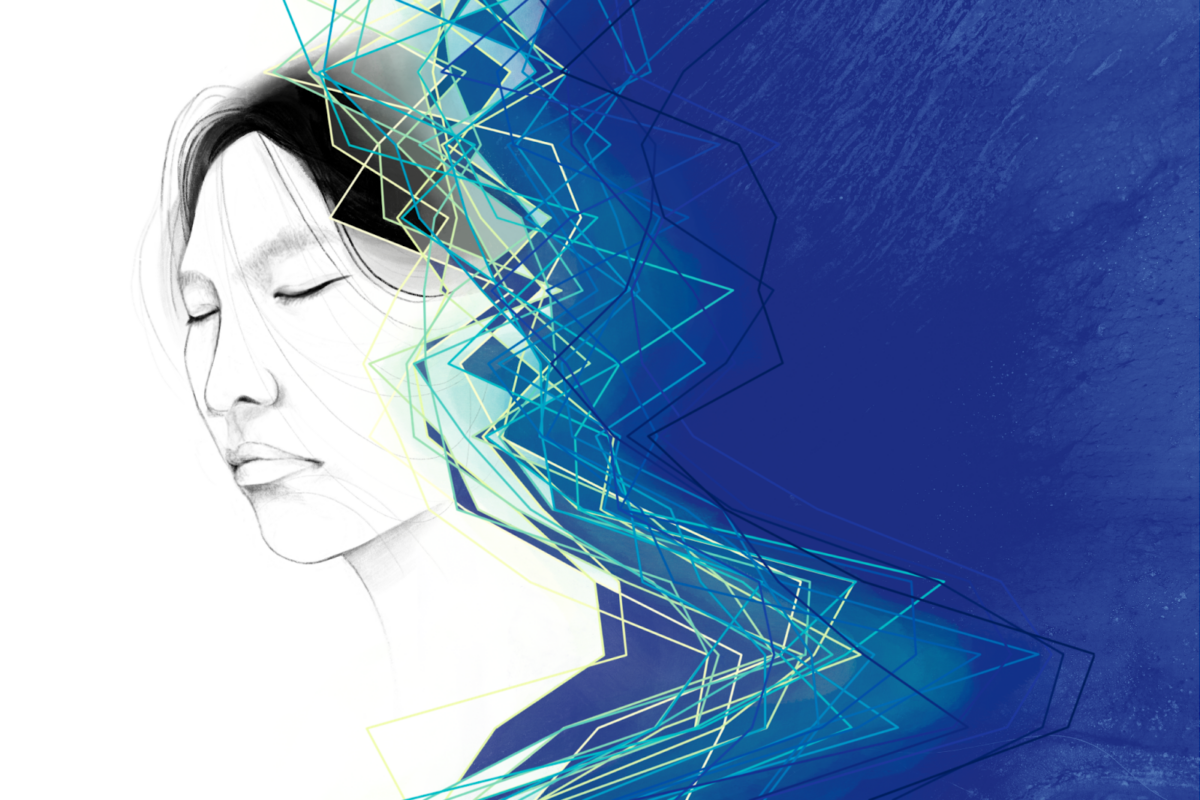
The full multimedia piece can be viewed at https://climatefutures.art/over-the-years
When it comes to creating art and communicating data, Olivia wants to be very intentional.
“In this climate space…there’s so much dread. It’s very easy to lose hope, but…I’m so inspired by community, by my mother, by the strength that I see in those around me, and I feel like with that, it’s inspired me to kind of bring a lot of joy and…creativity into my work,” Olivia says. “It’s something I always try to keep in mind…how can I communicate this in a way that’s not just the dread?”
With dread often leading to inaction on climate solutions, Olivia chooses to lead with optimism. “The goal is really to inspire, rather than being like, here are all the problems,” she adds.
Olivia is a daughter, researcher, data scientist, and artist. She doesn’t know what the future holds, but wherever she goes, she’ll keep inspiring people to show up for their communities.
To learn more about Olivia’s work, visit https://via-zhang.github.io
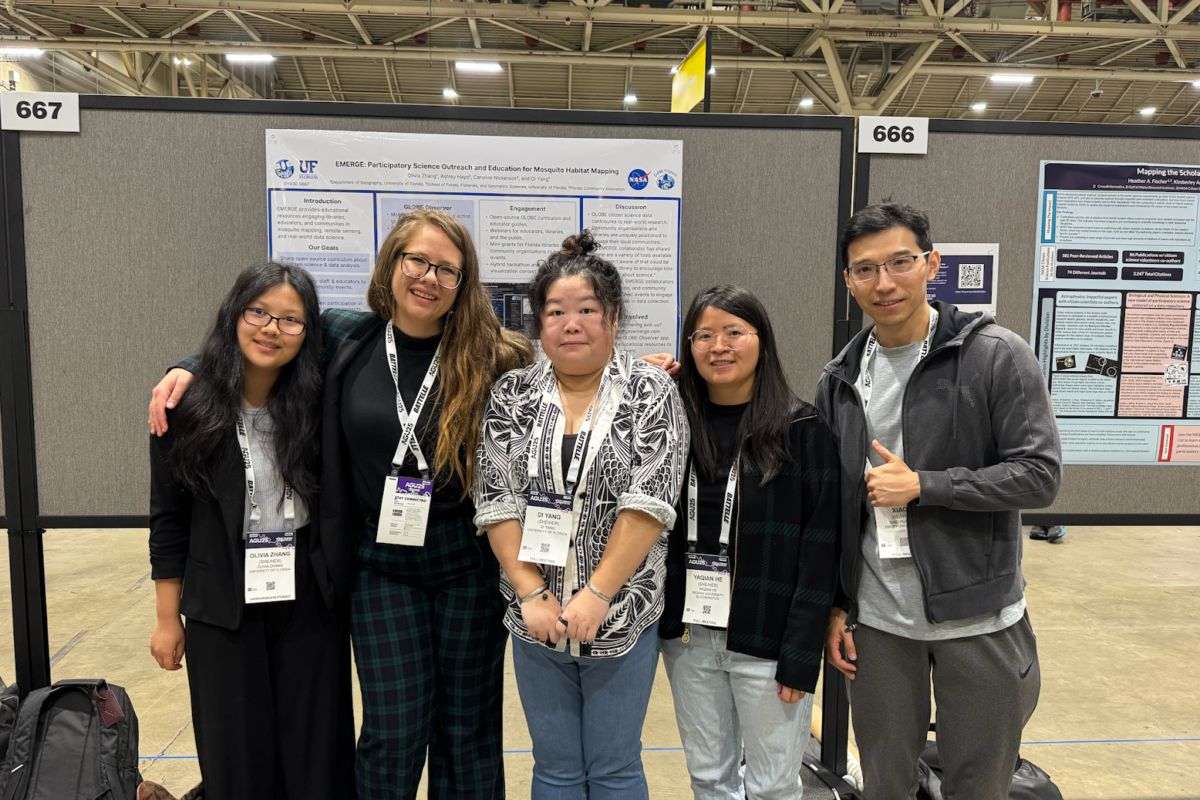
The title image for this post is Olivia presenting about EMERGE at the American Geophysical Union (AGU) conference in December 2025.