Exploring the Cold-Water Corals of the California Coast
An expedition to Catalina Island’s deep reefs investigates rare California cold-water corals, using lab-based geochemical and molecular tools to understand how these fragile species build skeletons and endure ocean change.
Few people realize that California’s coast is home to vibrant and diverse cold-water coral communities. These corals, also called deep-sea corals, do not rely on photosynthesis for survival and can therefore be found at depths ranging from 10 feet to over 10,000 feet, far below the limits of the sun’s reach. Cold-water corals are an integral part of the state’s biodiversity and support important fisheries, but these slow-growing, fragile species are threatened by both ocean acidification and damage from bottom-contact fisheries.
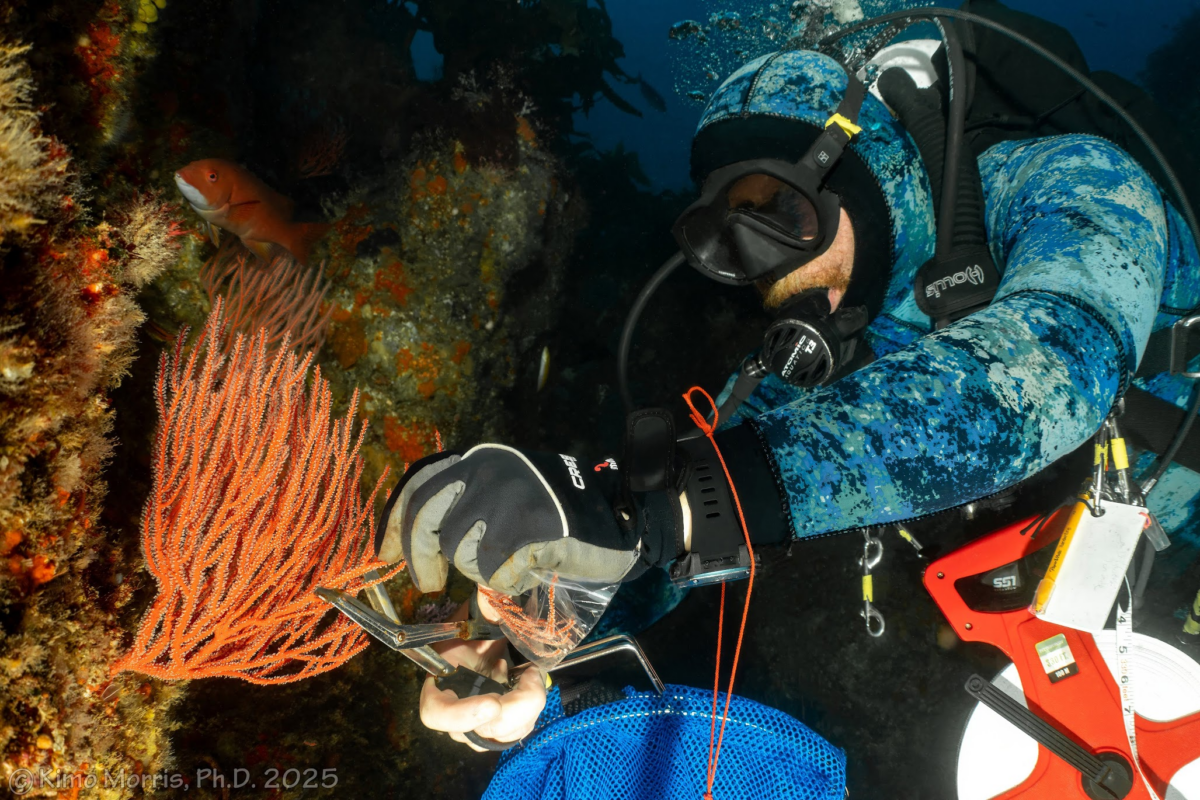
Recently, Olivia Simon, from Robert Eagle’s group, led a field expedition to Farnsworth Bank SMCA, a marine protected area southwest of Catalina Island known for its stunning cold-water coral assemblages. Working with two scientific divers and USC’s Wrigley Marine Science Center, she collected cold-water coral samples, including California’s native and rare Purple Hydrocoral.
These corals will be studied using geochemical and molecular tools to learn more about how they build their skeletons and to gain insight into their resilience in a changing ocean.
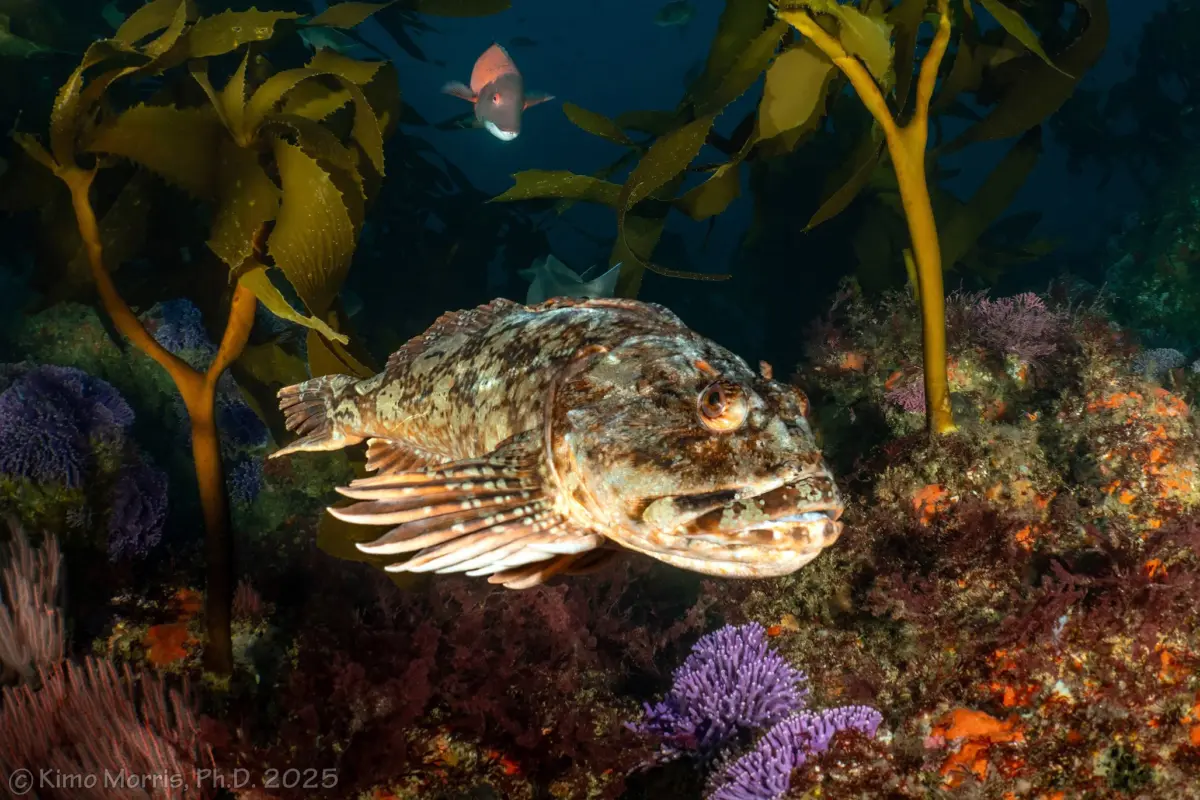
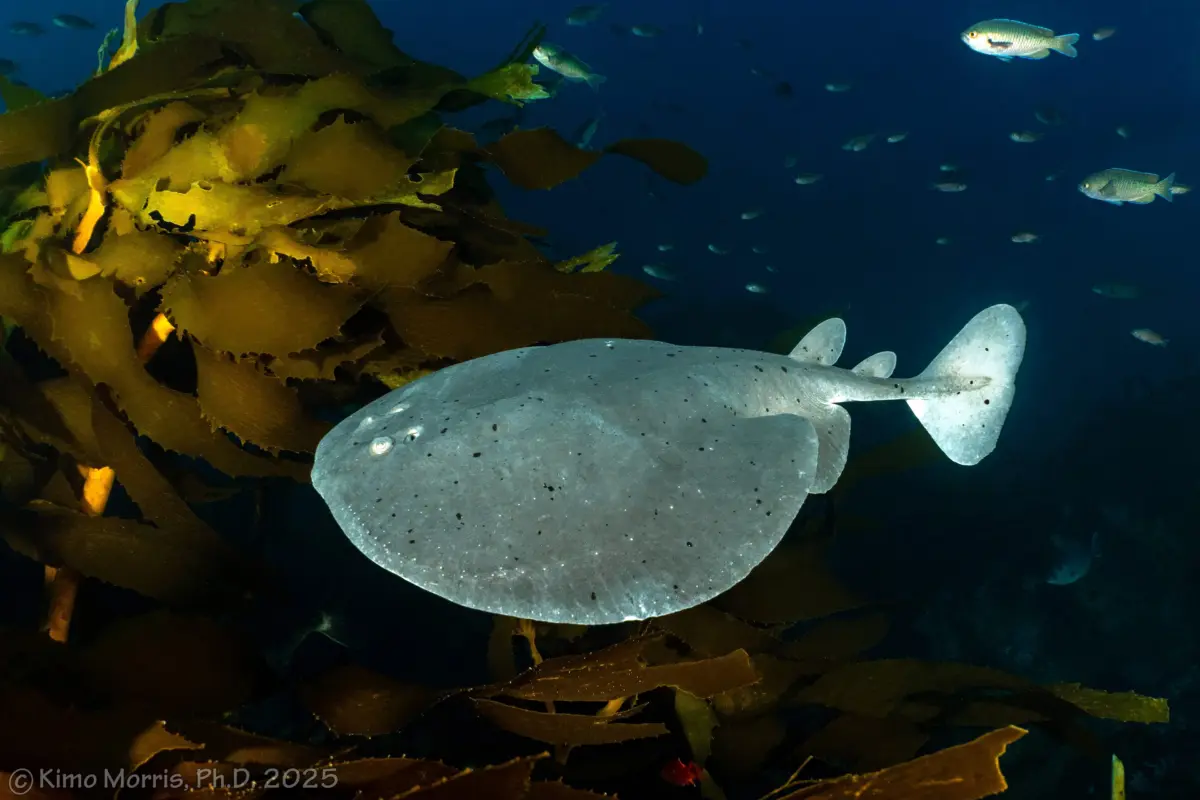
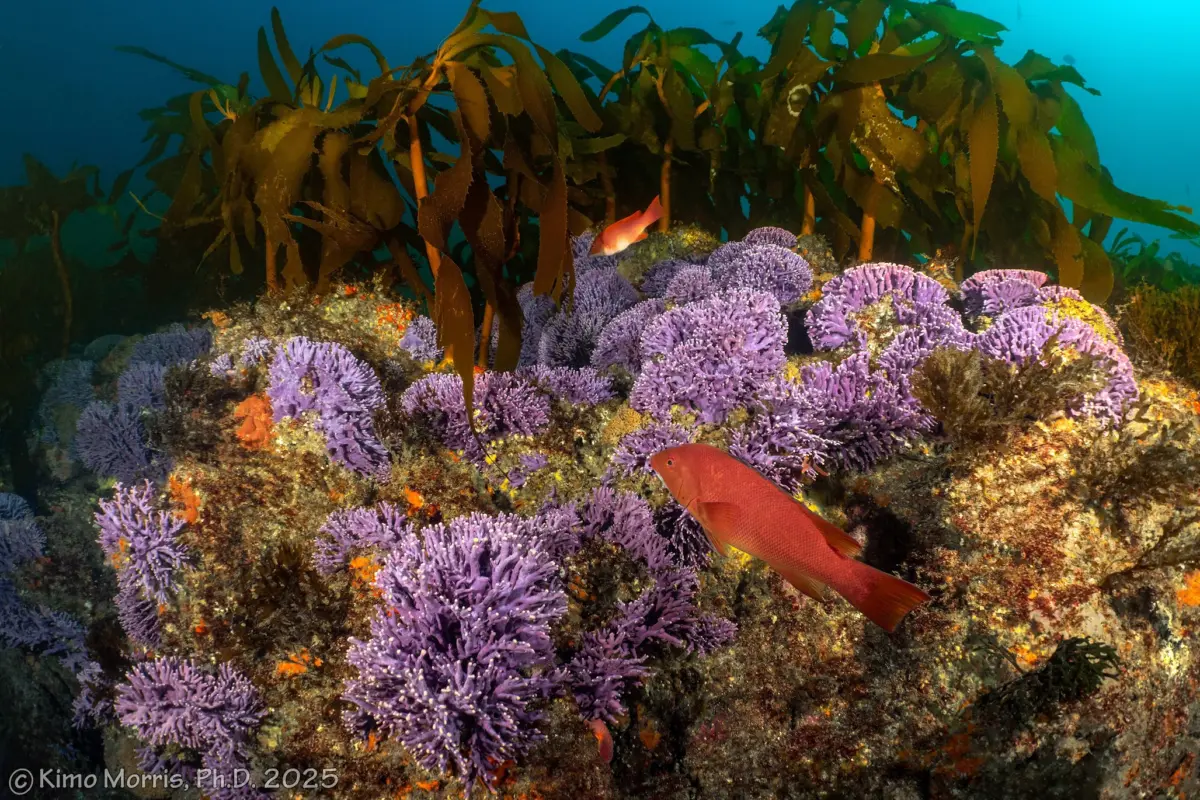
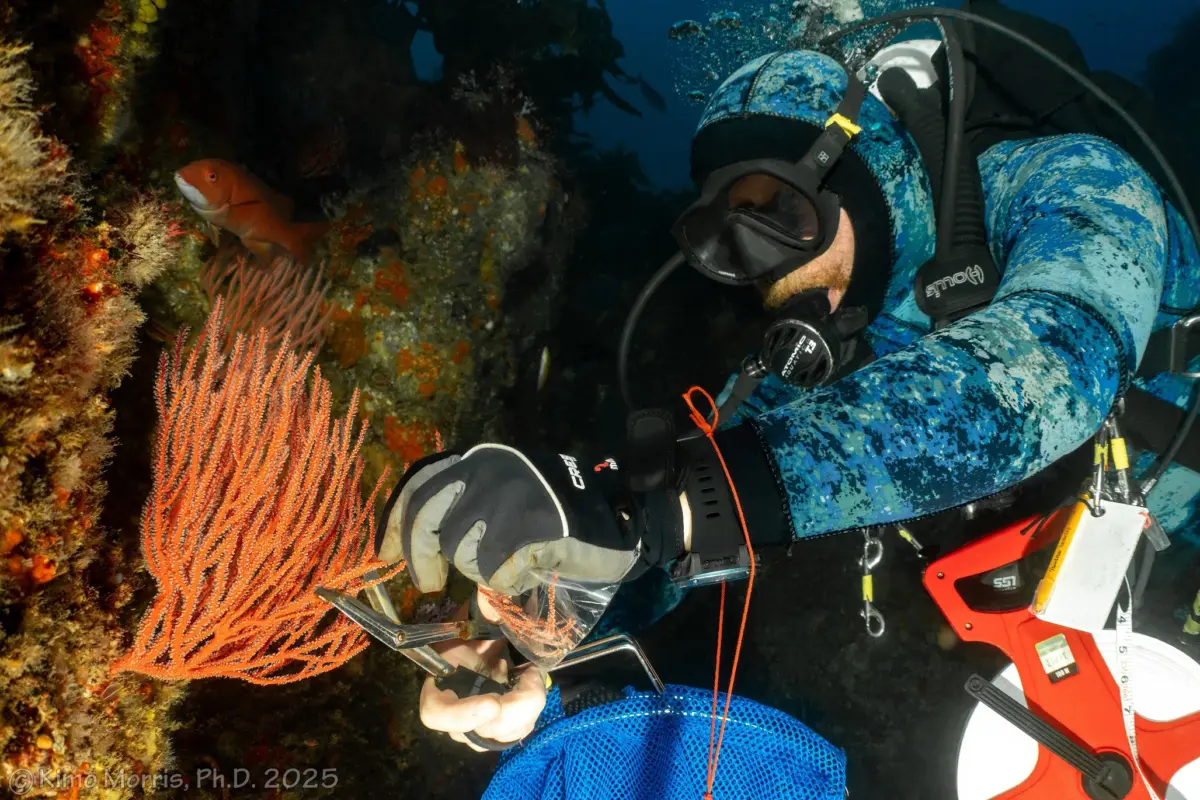
Photo Credit: Kimo Morris
Divers: Kimo Morris, Clint Nelson (pictured)