In memoriam: Benedict Schwegler, D.Env. ’99, environmental engineer who redefined sustainability in Disney’s global theme parks
Remembering the UCLA alumnus and Disney Imagineer who made it ‘safe to have fun’
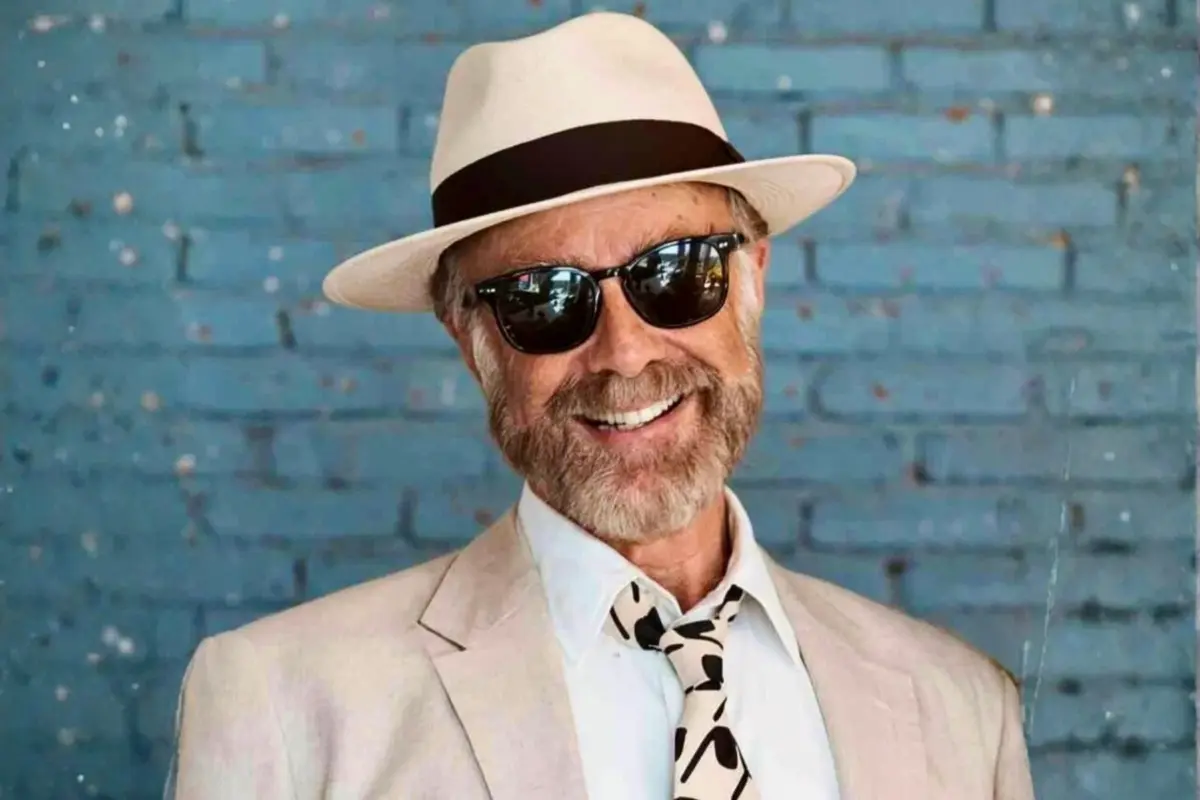
Benedict Richard Schwegler Jr., Walt Disney Imagineering’s longtime chief scientist who transformed the world’s most famous theme parks into laboratories for urban sustainability, and a distinguished alumnus of UCLA’s Environmental Science and Engineering doctoral program, died Dec. 6, 2025, in Long Beach, California. He was 76.
A world-renowned engineer whose expertise ranged from the chemistry of commercial fireworks to the logistics of global supply chains, Schwegler spent 37 years proving that the ‘happiest place on earth’ could also be the most resource-efficient.
As Senior Vice President and Chief Scientist, Schwegler occupied a unique orbit at Disney, bridging the gap between the expansive “blue sky” concepts of artists and the hard physics of civil engineering. His mission was simple: “Make it safe to have fun” — not just for guests, but for the environment.
Schwegler’s work focused on the complex systems required to keep Disney’s parks running. Early in his career, he used hyacinth plants to treat wastewater at the company’s Florida properties. As his work evolved, he developed 4D simulation tools to coordinate how guest behavior, energy use and water flow would interact before construction began — a precursor to what is now known as “digital twin” technology.
Under his leadership, his team also developed the first closed-loop control for wastewater treatment plants and created “smokeless” fireworks, a breakthrough that significantly reduced the particulate pollution produced by the parks’ nightly shows.
In Schwegler’s work, sustainability was not a downstream compliance task; it was a design variable that belonged in the earliest drawings and models, right alongside narrative beats and guest pathways.
Disney’s international parks made this systems-based approach a necessity. The resorts in Tokyo, Hong Kong, Paris and Shanghai occupy compact sites and manage resource budgets closer to small cities than leisure destinations. Because these locations operate on such tight margins, a single pump failure or a wastewater backup could disrupt the experience for tens of thousands of guests. Schwegler’s response was to model water, power, mobility and human behavior as interdependent systems long before the gates opened.
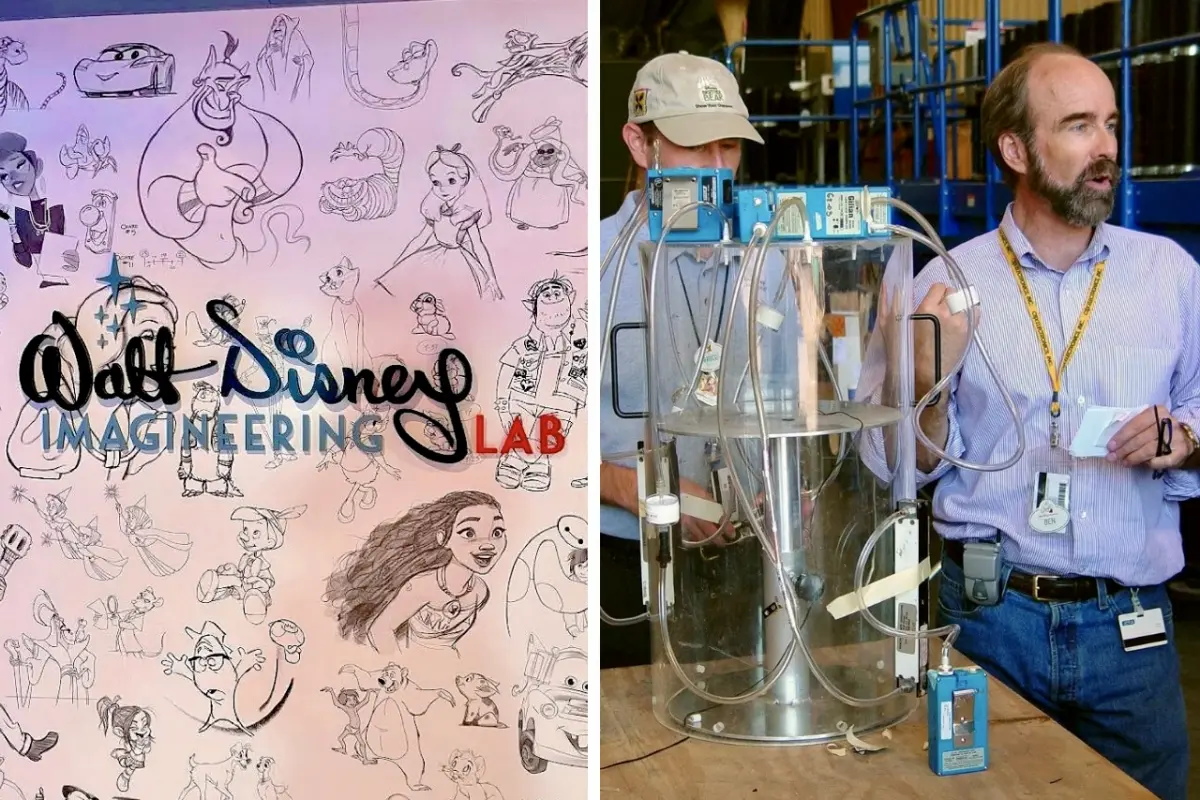
While his work served as crucial scaffolding for Disney’s expansion in Europe and Asia, Schwegler transitioned to a broader urban focus when he founded the company’s first research laboratory in China. Living in Shanghai for a decade, he utilized the region’s rapid urbanization as a real-world testbed for “integrated infrastructure.” He championed a model where transit, power and water functioned as a single, connected system.
This approach allowed his team to explore how “up-cycling” materials and district-scale design could balance aggressive economic growth with environmental health — resulting in the most energy-efficient theme park and resort complex Disney had ever built.
That same cross-sector philosophy defined Schwegler’s long relationship with UCLA. He earned his doctorate in 1999 through the Environmental Science and Engineering program, a curriculum designed specifically to bridge the gaps between academia, industry and the public sector. Decades later, the university recognized the global impact of his work by naming him a 2021 UCLA Centennial Luminary, an award honoring those whose scientific contributions solved large-scale, real-world problems.
“Ben’s career was a testament to the core mission of our doctoral program,” said Travis Longcore, co-chair of UCLA Environmental Science and Engineering. “He demonstrated that the most effective, high-level leaders are those whose decisions are deeply informed by technical excellence in science and engineering.”
Ben is survived by Jan, his wife of 46 years; daughters Lyzz and Vera; and granddaughter Frances.
At the family’s request, gifts in his memory may be made to the Environmental Science and Engineering doctoral program at UCLA’s Institute of the Environment and Sustainability.
MEET THE AUTHOR