
Ken Button

Ken Button is Co-Founder and CEO of ContractSafe. He has 20+ years of experience founding, leading, investing in and advising growth companies. He previously co-founded and served as President and Chairman of Verengo Solar, which he and his partner built to over $100 million in annual sales. He also served as a senior executive in the financial technology and software industry, with responsibility for legal, finance and administrative matters.

Ken is an attorney with extensive legal expertise in legislative, regulatory and corporate law. He practiced at O’Melveny & Myers, where he specialized in representing emerging growth companies. He also served in the Federal Legislative and Regulatory Affairs practice group of Winston & Strawn in Washington DC.

Ken received a J.D. from the UCLA School of Law and his undergraduate degree from the University of California at Berkeley. He is also a member of Young Presidents Organization.

Ken lives in Malibu with his wife, Leslie, and two sons.
Colleen Callahan

Colleen Callahan is deputy director of the Luskin Center for Innovation (LCI). She has served in this role since 2010, helping to build LCI from the ground up. Collaborating with colleagues and civic partners, she helps to ensure that LCI’s research informs evidence-based environmental policy. Colleen conducts strategic planning, partner engagement and oversees research projects, communications, events, and more.

Colleen’s research addresses environmental equity, climate, transportation, and access to public space. This includes leading LCI’s California Climate Investments research, which has helped inform how billions of dollars are invested to reduce greenhouse gas emissions and provide local benefits, particularly in front line communities affected by pollution and poverty.

She has more than 15 years of experience in social entrepreneurship, environmental policy, and urban planning. Colleen is co-founder of the Los Angeles Sustainability Collaborative, a nonprofit that mentors and empowers emerging environmental leaders. Previously, she directed and taught in the UCLA Leaders in Sustainability (LiS) Certificate Program, which benefits about 100 graduate students annually from 20 plus disciplines across campus. Before coming to UCLA, she established the Los Angeles office of the American Lung Association, later serving as their manager of air quality policy.

She is a Switzer Environmental Fellow, recipient of the Neville Parker Award from the U.S. Council of University Transportation Centers, and co-recipient of two national awards from the American Planning Association. She holds a M.A. in Urban Planning from UCLA and a B.A. in Urban and Environmental Policy from Occidental College, Phi Beta Kappa.

Ann Carlson

Ann Carlson is the Shirley Shapiro Professor of Environmental Law, and the Faculty Director of the Emmett Institute on Climate Change and the Environment at the UCLA School of Law. She is also on the faculty of the UCLA Institute of the Environment and Sustainability.

Professor Carlson is one of the country’s leading scholars of climate change law and policy. Two of her articles, Iterative Federalism and Climate Change and Takings on the Ground, have been selected by the Land Use and Environmental Law Review as among the top five environmental articles of the year, and her work has been published in leading journals including the UCLA, California, Northwestern and Michigan law reviews.  She is co-author (with Daniel Farber and Jody Freeman) of a leading casebook, Environmental Law (8th ed.). She recently served on a National Academy of Sciences panel, America’s Climate Choices:  Limiting the Magnitude of Future Climate Change, and she is currently serving on an American Academy of Arts and Sciences panel studying the future of America’s energy systems. Carlson is also a frequent commentator and speaker on environmental issues, particularly on climate change, and she blogs at Legal Planet.

Professor Carlson teaches Property, Environmental Law, Climate Change Law and Policy, and a Climate and Energy Law workshop.  She is an outstanding teacher who was the 2011 recipient of the University’s Eby Award for the Art of Teaching and the UCLA Distinguished Teaching Award, as well as the 2006 recipient of the Law School’s Rutter Award for Excellence in Teaching. Carlson received her J.D. magna cum laude from Harvard Law School in 1989 and her B.A., magna cum laude, from the University of California at Santa Barbara in 1982. She served as the law school’s academic associate dean from 2004-2006, and as Vice Dean for Faculty Recruitment and Intellectual Life from 2013-2015.

Judith Carney

Education

Ph.D. in Geography, University of California, Berkeley 1986.

Research Interests

West Africa; gender, environment, and agricultural development; African Diaspora

Selected Publications

J. Carney and R.N. Rosomoff. In the Shadow of Slavery: Africa’s Botanical Legacy in the Atlantic World (Berkeley: University of California Press, 2009).

J. Carney. Reconsidering Sweetness and Power through a Gendered Lens, Food and Foodways, 16, no. 2(2008): 127-34.

J. Carney. The Bitter Harvest of Gambian Rice Policies, Globalizations, 5, no.2 (2008): 129-42.

J. Carney and M. Elias. “Revealing Gendered Landscapes: Indigenous Female Knowledge and Agroforestry of African Shea, Canadian Journal of African Studies, 40, no.2 (2006): 235-267.

J. Carney. “Rice and Memory in the Age of Enslavement: Atlantic Passages to Suriname,” Slavery and Abolition, 26, no. 3 (2005): 325-347.

J. Carney. “Gender Conflict in Gambian Wetlands,” R. Peet and M. Watts (eds.) Liberation Ecologies: Environment, Development, Social Movements (Routledge: New York, 2004),pp. 316-335.

J. Carney. “‘With Grains in Her Hair’: Rice History and memory in Colonial Brazil,” Slavery and Abolition, 25, no.1 (2004): 1-27.

J. Carney. “African Traditional Plant Knowledge in the Circum-Caribbean Region,” Journal of Ethnobiology, 23, no.2 (2003): 167-185.

J. Carney and R. Voeks. “Landscape Legacies of the African Diaspora in Brazil,” Progress in Human Geography, 27, no.2 (2003): 139-152.

J. Carney. Black Rice: The African Origins of Rice Cultivation in the Americas (Cambridge, Mass.: Harvard University Press, 2001).

Luis Carrasco

Troy Carter

Troy Carter is a Professor of Physics at the University of California, Los Angeles. Prof. Carter is the Director of the Basic Plasma Science Facility (BaPSF), a national user facility for plasma science supported by DOE and NSF. He is also the Director of the Plasma Science at Technology Institute (PSTI), an organized research unit at UCLA. His research focuses on enabling carbon-free electricity generation via nuclear fusion specifically via magnetically confined plasmas. His work focuses on studying and mitigating instabilities, turbulence and transport in magnetically confined plasmas. He was a recipient of the 2002 APS DPP Excellence in Plasma Physics Research Award and is a Fellow of the APS. Prof. Carter received BS degrees in Physics and Nuclear Engineering from North Carolina State University in 1995 and a PhD in Astrophysical Sciences from Princeton University in 2001.

Luis Chiappe

Ryan Calsbeek

Scott Carroll

Anthony Chasar

Research Interests

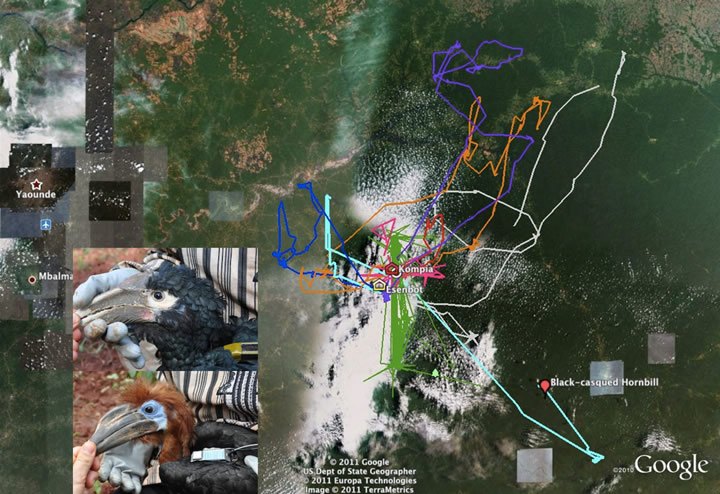
I work on tracking the long-distance movement of hornbills in Cameroon. These birds are vital to the survival of primary forests, as they are one of the primary seed dispersers in this region. I am also part of a collaborative effort investigating avian influenza spillover in Cameroon, the Republic of Congo, and Egypt.

anthony chasar
Map showing hornbill movement data in southern Cameroon.

Education

Master of Science in Ecology and Systematic Biology (February 2009)
San Francisco State University, San Francisco, CA, USA
Cumulative G.P.A: 4.0

Bachelor of Science in Biological Sciences (March 1997)
Florida State University, Tallahassee, FL, USA
Cumulative G.P.A: 3.0

Publications

  • R. Sehgal, W. Buermann, R. Harrigan, C. Bonneaud, C. Loiseau, A. Chasar, G. Valkiūnas, T Iezhova, I Sepil, S. Saatchi, and T. B. Smith. 2010. Spatially explicit predictions of blood parasites in a widely distributed African rainforest bird. Proceedings of the Royal Society of London Series B. doi:10.1098/rspb.2010.1720
  • C. Loiseau, G. Valkiūnas, A. Chasar, A. Hutchinson, T. Iezhova and R. Sehgal. 2010. Spatial variation of haemosporidian parasite infection in African rainforest bird species. Journal of Parasitology. 96: 21-29.
  • A. Chasar, C. Loiseau, G.Valkiūnas, T. Iezhova, T. B. Smith, R. Sehgal. 2009. Prevalence and diversity patterns of African avian blood parasites in degraded habitats. Molecular Ecology. 18: 4121-4133.
  • G. Valkiūnas, T. A. Iezhova, C. Loiseau, A. Chasar, T. B. Smith and R. Sehgal. 2008. New species of haemosporidian parasites (Haemosporida) from African rainforest birds, with remarks on their classification. Parasitology Research. 103(5): 1213-28.