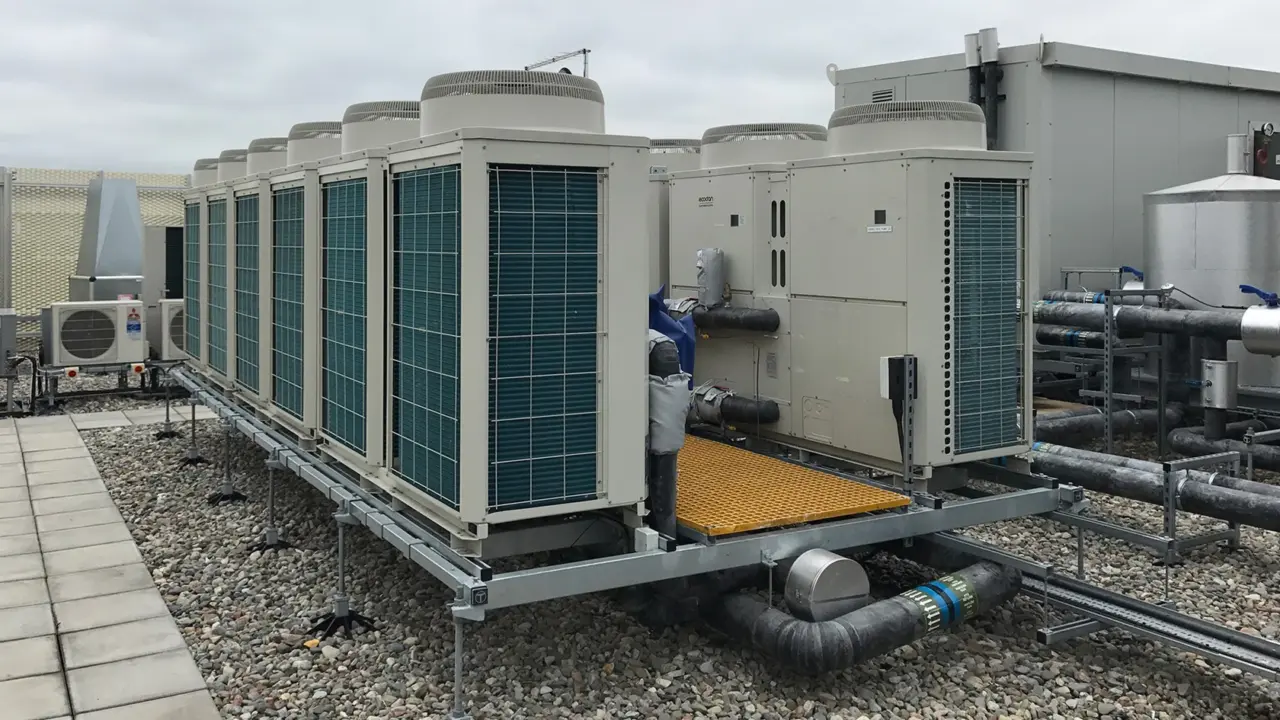
The California Center for Sustainable Communities (CCSC) at UCLA, with funding from the California Air Resources Board (CARB), is conducting a study on the retrofit needs for installing zero-emission equipment (e.g. heat pumps, induction stoves, heat pump water heaters) in existing non-residential and commercial buildings. These include large multifamily buildings, offices, food stores, warehouses, health care facilities, restaurants, hotels, retail buildings, and schools.
The goal of this study is to understand what electrification projects look like in the real world. We’re seeking professionals who have worked or have been involved on these projects to participate in a short survey and 1.5 hour focus group (offered in person or remotely). Participants will be compensated for their time.
For more information about the study continue reading this page. If you are a professional with this type of experience, please register your interest by completing the form below.
FAQ
The California Center for Sustainable Communities (CCSC) at UCLA, funded by the California Air Resources Board (CARB), is conducting a study on retrofit needs for installing zero-emission equipment in existing commercial buildings (e.g., large multifamily, offices, food stores, warehouses, health care, restaurants, hotels, retail, schools, etc.) We will host focus groups with professionals who have worked on real-world projects involving zero-emission equipment installation or related electrical, mechanical, or plumbing upgrades. Participants include:
• Contractors
• Electricians
• Engineers and architects
• Plumbers
• Permitting and inspection professionals
• Building owners and property managers
Results of this project will inform CARB and other policymakers’ efforts to pursue zero-emission equipment regulations and rapid building decarbonization, as well as set the groundwork for future primary data collection efforts, including building site visits.
Eligible participants must meet at least one of the following criteria:
- Have completed a project installing or supporting the installation of zero-emission equipment or associated electrical, mechanical, or plumbing work in an existing non-residential building.
- Have attempted such a project, even if it was not completed.
- Have supported permitting or inspection for such a project.
Participation in this project will consist of:
- Completing a pre-focus group survey (up to 20 questions).
- Attending one focus group (1.5 hours), offered in person or remotely. Focus groups will be organized by profession, experience, and building sector.
- (Optional) Submitting project photos or documentation for up to seven projects.
We are currently scheduling in-person focus groups at the following dates and times. Register your interest now if you are available to attend any of these meetings! We are additionally offering remote focus groups on zoom on a rolling basis. Focus groups will conclude May 8th. If none of these dates or times work email us and we will work with you to find a suitable time for you to participate.
Southern California
April 20 2pm – Fountain Valley with Orange County Power Authority
April 29 10am – Diamond Bar with SCAQMD
April 29 2pm – Diamond Bar with SCAQMD
April 30 10am – Diamond Bar with SCAQMD
April 30 2pm – Diamond Bar with SCAQMD
May 4 11am – Downtown Los Angeles with Clean Power Alliance
Northern California
April 16 2pm – San Jose with San Jose Clean Energy
May 4 9:30am- Oakland with Ava Community Energy
May 4 1pm – Oakland with Ava Community Energy
May 5 9:30am – Oakland with Ava Community Energy
May 5 1pm – Oakland with Ava Community Energy
May 6 9:30am – Oakland with Ava Community Energy
May 6 1pm – Oakland with Ava Community Energy
May 7 9:30am – Santa Rosa with Sonoma Clean Power
May 8 9:30am – Santa Rosa with Sonoma Clean Power
May 8 1pm – Santa Rosa with Sonoma Clean Power
- $25 for completing the pre-focus group project experience survey.
- $25 for each (optional) set of project photos/documentation (up to 7 projects; max $175 total).
- $100/hour for focus group participation (meetings up to 1.5 hours).
- $50 for each referral of a participant that completes a focus group (up to 3 participants; max $150 total)
Eligible participants can receive the following compensation:
Participants may earn up to $450 total.
Compensation will be issued at the completion of the focus group portion of this project in late May-early June.
- Their role and experience working on building upgrades (such as electrical, mechanical, construction, operations, or permitting work) and the types of buildings they typically work in.
- What electrification projects look like in practice, including whether upgrades are planned in advance or happen during emergency replacements.
- Common challenges on the job, such as tight timelines, limited space, older buildings, unclear information at the start of projects, or coordination issues.
- Electrical system and infrastructure constraints, including situations where existing power systems aren’t sufficient and how those challenges are handled.
- How well electric equipment performs once installed, and whether building owners and operators are satisfied over time.
- Impacts on labor, training, and workforce needs, including whether there are gaps in skills, staffing, or experience.
- Costs, schedules, and delays, including factors that increase project time or expense.
- Experiences working with building owners, inspectors, and utilities, and how those relationships affect project success.
- What would make these projects easier to deliver, such as better planning, clearer rules, more training, improved coordination, or policy changes.
- Participants will also be asked to share their ideas about what changes could help accelerate building upgrades while supporting good jobs, safe working conditions, and successful project outcomes.