
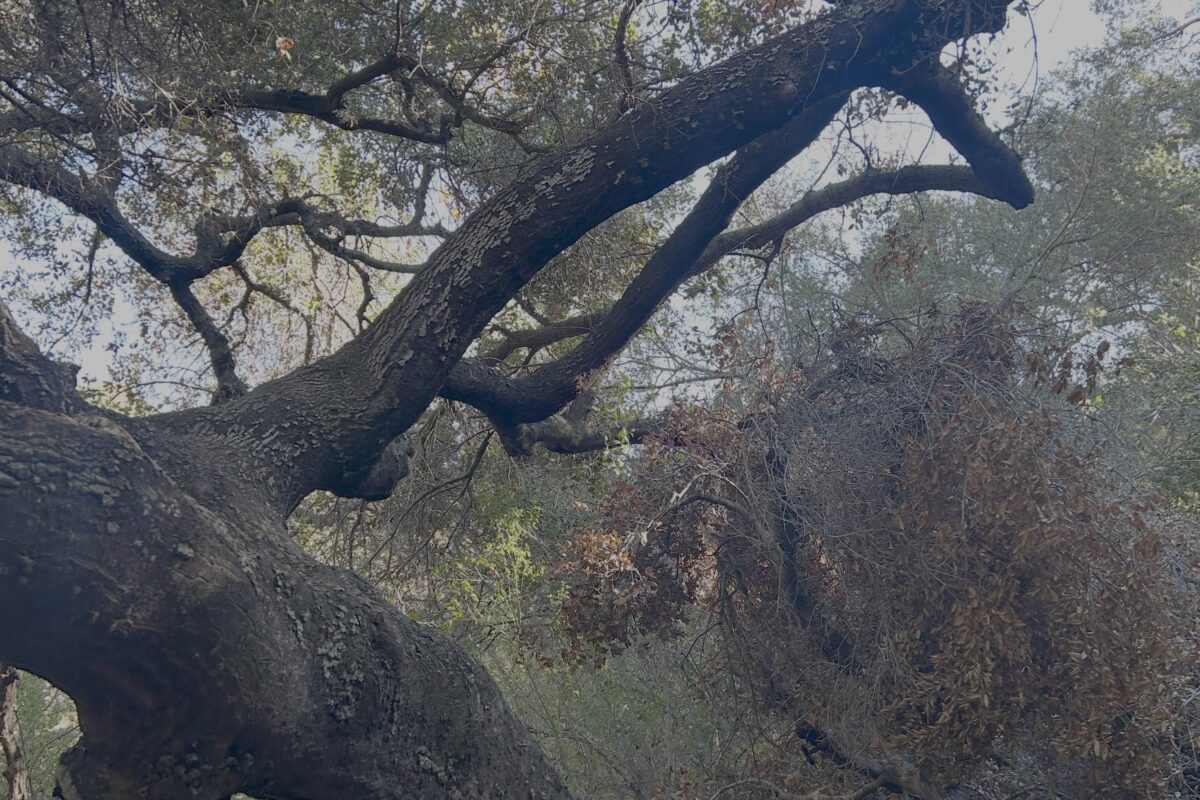
Monitoring Goldspotted Oak Borer (GSOB) Spread in Southern California with Imaging Spectroscopy
Awardee: Willow Coleman, Graduate in the Geography department
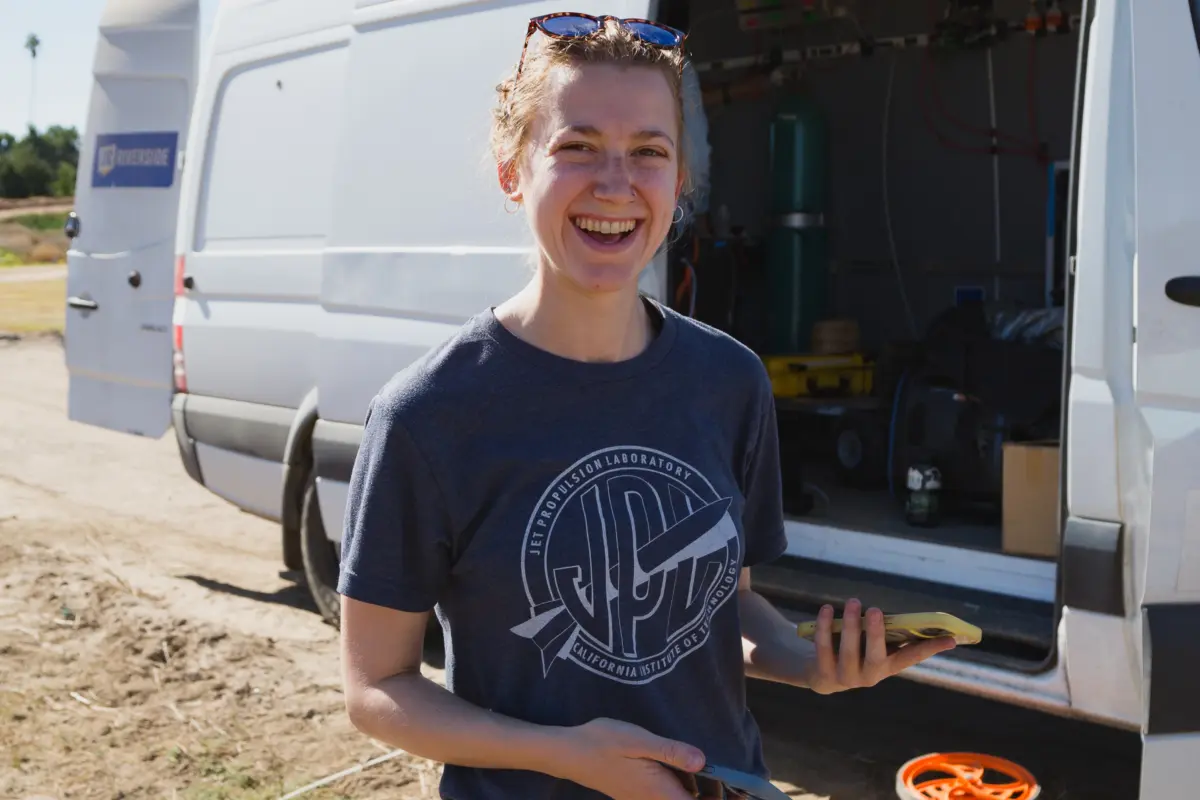
Awardee: Willow Coleman
Bio:
Willow Coleman is a second-year Ph.D. student in the Geography department advised by Dr. Gregory Okin. Prior to attending UCLA, she received a B.S. in Mathematical and Computational Biology with an emphasis in environmental analysis from Harvey Mudd College. Her work centers on using remote sensing and imaging spectroscopy data to better understand drivers of climate change in urban areas like Los Angeles. Most recently, she has been looking at the relationships between post-Eaton/Palisades fire structural damage and the presence of urban vegetation in the wildland-urban interface.
Project:
The goldspotted oak borer (Agrilus auroguttatus) is an invasive species of beetle causing widespread oak die-off across southern California, especially in San Diego, Riverside, and San Bernardino counties. When the goldspotted oak borer inevitably reaches the Santa Monica Mountains – if it hasn’t already done so undetected – it has the potential to devastate the biodiverse oak woodland habitat. This project will combine new community-driven BioBlitz data, field spectroscopy, and airborne hyperspectral data to map oak health and potentially detect early infestations at the Stunt Ranch and Emerson Oaks Reserves.