Alexandria Pivovaroff

Alex Pivovaroof is a plant eco-physiologist specializing in water relations, hydraulics, and functional traits.  A California native herself, she is particularly interested in the California Floristic Province and other Mediterranean-type climate regions.

As a La Kretz Center postdoc, Alex studied how plants respond to changes in their environment. Her research focused on live fuel moisture, an important fire behavior trait.  She also worked on a collaborative project monitoring plant carbon and water fluxes to determine how native species will respond to climate change.

Alex earned her Ph.D. in Plant Biology from the University of California Riverside, where as a National Science Foundation Graduate Research Fellow she studied chaparral and coastal sage scrub responses to drought and nitrogen deposition.   She also holds a B.A. in Biology from Whittier College.

Alex continued her work as a postdoctoral associate at the Pacific Northwest National Lab, and is now an Assistant Professor for the Biology department at Occidental College.

Sonal Pandya-Dalal

Bikash Parida

V. Thomas Parker

James Patton

Debra Pires

Dennis Ndeh

Research Interests

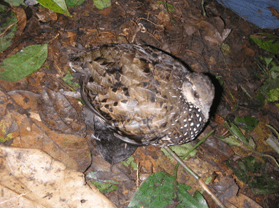
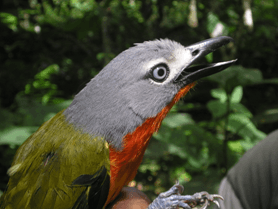
Generally I’m interested in wildlife health, the impacts of disease on the ecology and management of wildlife populations, and the role of insect vectors in zonotic disease transmission. My major focus is the use of Geographic Information Systems (GIS) as a tool in the management of wildlife diseases. Emerging and re-emerging wildlife diseases impact wildlife and human and domestic animals around the world, especially in Africa. These situations emphasize the need for comprehensive wildlife disease information in order to build a foundation to facilitate strategic planning and actions to protect human health. I am working on projects to improve monitoring efforts for avian diseases and to further the conservation of Cameroon’s unique biodiversity.
dennis ndeh dennis ndeh

Education and Training

M.Sc. (Wildlife Management) Department of Wildlife and Fishery management. University of Ibadan, Nigeria. February 1998. Thesis: Utilisation of Biodiversity in the Buffer zones of Korup National park, Cameroon. A case study of some plant and animal species. (Supervisor Prof. S.S. Agayi)

B.Sc. Hons (Zoology) University of Calabar Nigeria. December 1996: Dissertation topic: Antifertility effects of Hibiscus rosa sinensispetals on the gonads of male Albino rats. Department of Biological Sciences, University of Calabar Nigeria.

Diploma: Certificate in the epidemiology and Applications of Geographic Information Systems for Avian Influenza. October to November 2006. A&M Texas University USA.

Diploma: Certificate in the Establishment and use of Geographical Information Systems (GIS)/Global Positioning System (GPS) in data collection, compilation, storage, analysis, and presentation. May 2004 Limbe Botanical Garden Cameroon.

Internship with the Eco-monitoring team of Kilum/Ijim Forest project Bamenda Highlands, Birdlife International. Learnt field methodologies in monitoring endangered species of Wildlife in Mt Oku. Cameroon. December 1998.

Field-training courses in bird identification and surveys (coupled with the use of mist nets and ringing of birds) in the framework of the Important Bird Areas Project (IBA), BirdLife International Cameroon. January to April 1999.

Trained in the field to use Line transect and Recce walk to study Primates and medium to large sized mammal`s ecology in the Campo Ma’an National Park Cameroon. This was in collaboration with Primatologist German Colleagues from Freie University Berlin, Germany. April to August 2000.

Training program in Participatory Rural Appraisal (PRA) approach in need identification, with the Rural Communities of the Gashaka Gumti-Tchabal Mbabo transboundary Conservation project. Transboundary Diagnostic Analysis.Cameroon and Nigeria. March 2004.

Trained in more skills in mist-netting and banding birds, morphometric data collection by Thomas Smith of UCLA. University of California Los Angeles, Center for Environment Tropical research, USA. July 2005.

David Neelin

Education

B.S. and M.S., University of Toronto; Ph.D., Princeton University

Research Interests

Climate Dynamics Coupled Ocean-Atmospheric Modeling El Niño Geophysical Fluid Dynamics

William Newman

Education

B.Sc. (Hon.), Physics, University of Alberta, Canada, 1971.

M.Sc., Physics, University of Alberta, Canada, 1972.

M.S., Astronomy and Space Science, Cornell University, 1975.

Ph.D., Astronomy and Space Science, Cornell University, 1979.

Research Interests

Professor Newman’s research interests reside in applying methods from theoretical physics and applied mathematics to “real-world” problems. These range from the development of new statistical techniques that can be applied to assessing the significance of climate change and earthquake hazards, to models for solar system evolution including the potential for small bodies resident outside the orbit of Jupiter to collide with Earth, resulting in large-scale species extinction, as well as the other terrestrial planets. Other research he and his students have engaged in relates to energetic flows near the speed of light of charged particles in astrophysical environments possibly collimated by massive magnetic fields, to the emergence of pattern in complex systems due to random processes and how this can manifest in observations of apparent periodicities in animal populations. He has published graduate textbooks via the Princeton and Cambridge University Presses and over 100 refereed professional papers. He has created courses particularly germane to the IoES relating to natural disasters, an undergraduate GE course which also satisfies the diversity requirement, as well as graduate courses relating to planetary atmospheres and the continuum mechanics underlying earthquakes. He is currently on sabbatical at the Institute for Advanced Study in Princeton. 

Tim O’Brien