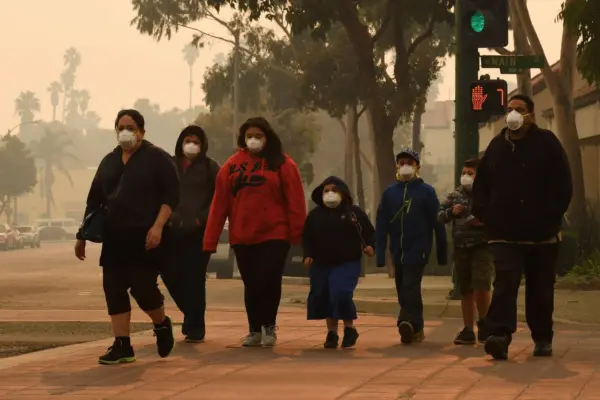
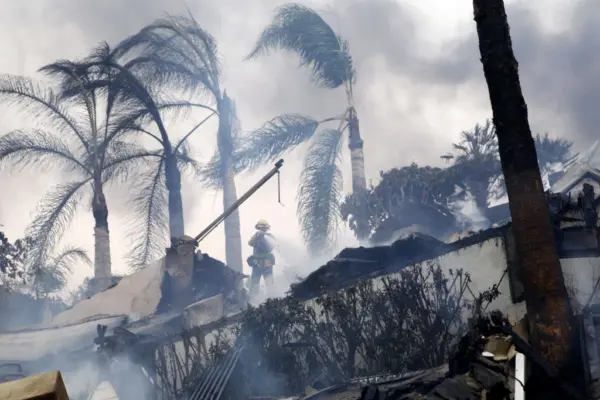
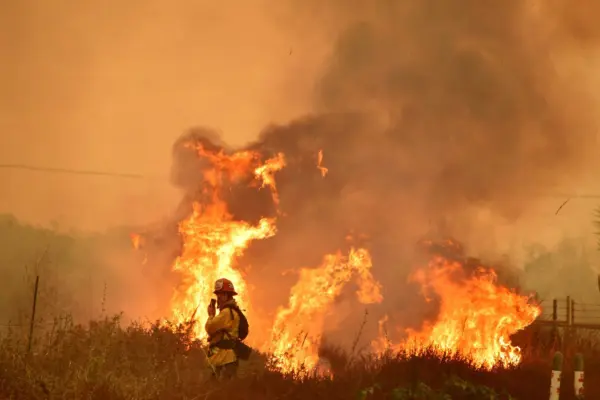
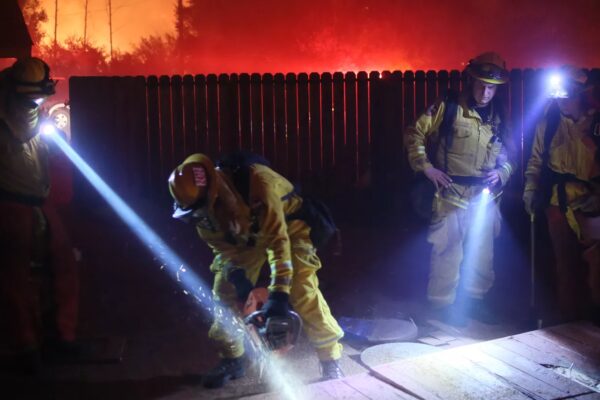
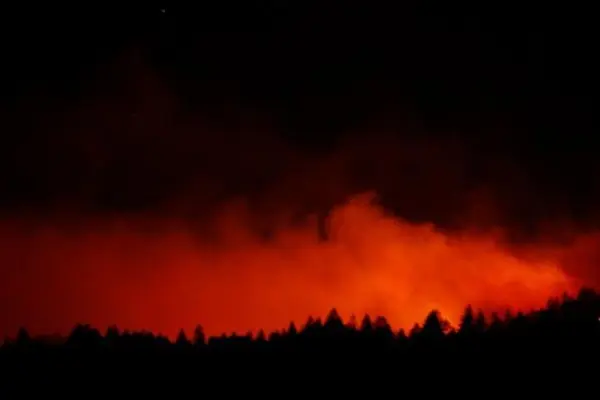
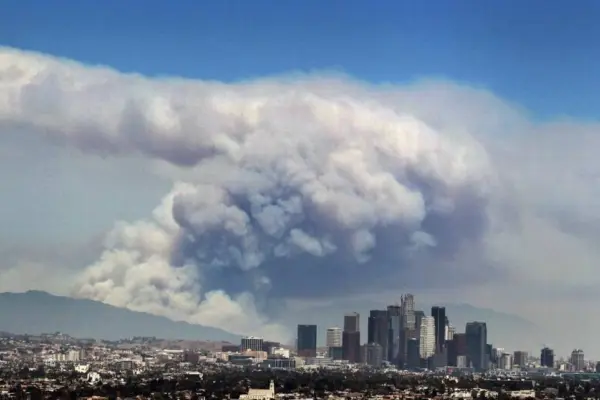
Michael Jerrett, chair of UCLA’s Environmental Health Science department, and Yifang Zhu, environmental health sciences professor, spoke with Seattle’s King5 news about Los Angeles’s decreased air quality after the Santa…
89.3 KPCC referenced a 2015 study led by UC scientists, including Alex Hall, that found Santa Ana fires spread three times quicker than other wildfires in CA and consulted with…
Delayed rainy seasons, record setting warm summers, increasingly frequent high pressure system, and more. NPR consulted with climate scientist Daniel Swain about why fires are becoming a new norm in…
“‘The sky is orange, you can smell the smoke, and you know people are losing their homes,’ said University of California Los Angeles environmental scientist Glen MacDonald. ‘It really shows…
Inside Climate News asked Daniel Swain about the climate connection to the Southern Californian wildfires. “There’s a clear climate signal in these fires because of the drought conditions connected to…
IoES’ Allison Carruth, Daniel Swain, and Alex Hall are featured in Science magazine’s article on the wicked wind of the West- the Santa Ana winds that have caused massive damage…
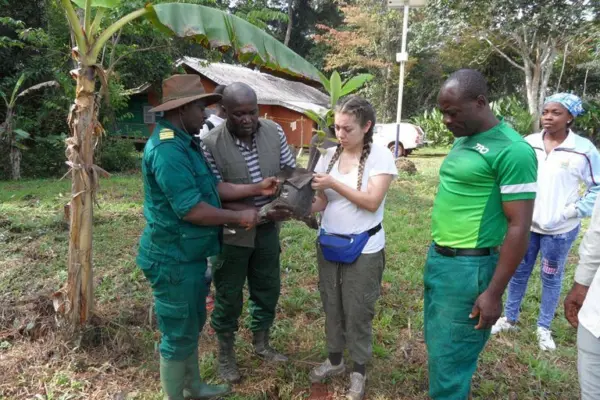
“. . . you almost never see a statistical significance that strong. It was compelling,” stated Trevon Fuller, assistant adjunct professor at the Center for Tropical Research to Mongabay in…
The Mercury News consulted with IoES post-doctoral scholar/ climate scientist Daniel Swain about about the, “Ridiculously Resilient Ridge” of high pressure that causes droughts and how it affects the weather…
“The big question mark and the potential big difference is, just how long does this persist? . . . Unless it persists really though the winter, it’s not quite as…
Inside Philanthropy featured an article about the Pritzker Emerging Environmental Genius Award, hosted by IoES and funded as part of a $20 million gift to UCLA from the Anthony and Jeanne…
“I try to connect the research and education that I do on the environment, climate change and earth science to social justice and to the quest to create a much…
“Just by waiting and choosing the standard shipping option,” says Christensen, “you could reduce your carbon footprint dramatically.” 89.3 KPCC’s Take Two segment consulted with IoES faculty member Jon Christensen…
IoES researchers Trevon Fuller, Ryan Harrigan, and Thomas Smith found that Zika and Chikungunya outbreaks generally occur three weeks after heavy rainfall. This study can help health officials prepare for…
91.5 KJZZ spoke with Cara Horowitz, Co-Director of the UCLA Environmental Law Clinic and IoES faculty member about the climate change talks in Bonn, Germany.
The LA Times consulted with Sean Hecht, an IoES faculty member, in regards to a ruling that found paint manufacturers responsible for lead paint health hazards- which could affect climate…
When the snow disappears, California will lose what for decades has acted as a natural storage system. Alex Hall, a UCLA professor whose research focuses on reducing uncertainties associated with climate change, said there is mounting evidence that the pattern of long droughts followed by big wet years will become more exaggerated.
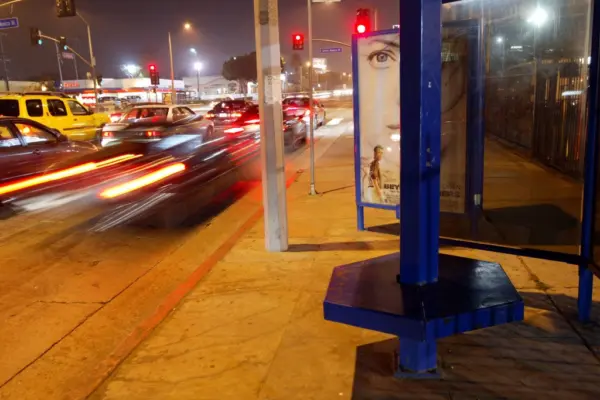
89.3 KPCC discussed a UCLA study authored by IoES faculty member Suzanne Paulson and affiliated faculty J.R. DeShazo that found moving bus stops further from vehicle stops and accelerations at intersections can…
The EITI, which was founded in 2003, and which the United States joined in 2014, sets a global standard for governments to disclose their revenues from oil, gas, and mining assets, and for companies to report payments made to obtain access to publicly owned resources, as well as other donations.
“It put more information in the hands of the public,” said Michael Ross, executive director of the Project on Resources, Development, and Governance at the University of California Los Angeles.
“The COP president typically has a fair amount of power to set the tone for negotiations,” Horowitz explains. “I expect we’ll see a lot at this COP that relates to the priorities of small island nations.” These nations are extremely vulnerable to rising oceans—their fate is tied to the success of the Paris accord. “They could be among the first to lose significant sovereign territory,” Horowitz says. They will likely push for greater greenhouse gas reductions as well as emphasize adaptation to climate change and paying for losses and damages.
Parfrey is part of a regional climate action and sustainability collaboration at the University of California, Los Angeles, where professor Alex Hall led a groundbreaking study that found climate change will push up temperatures by an average of 4 to 5 degrees by the middle of the century. The number of days where temperatures climb above 95 degrees will roughly double on the coast, triple in downtown Los Angeles and quadruple in the valley.
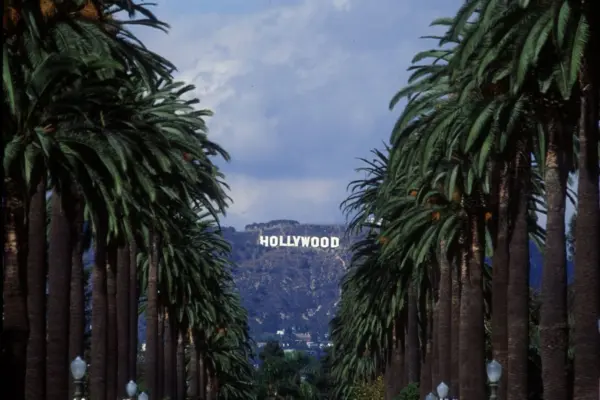
Los Angeles is the poster child for a city that has worked hard to dramatically reduce its air pollution levels. Over the past 50 years, most pollution levels are down more than 75 percent compared to their highs, and that’s despite massive population and economic growth, according to Paulson.
'No other city comes close,' she said.
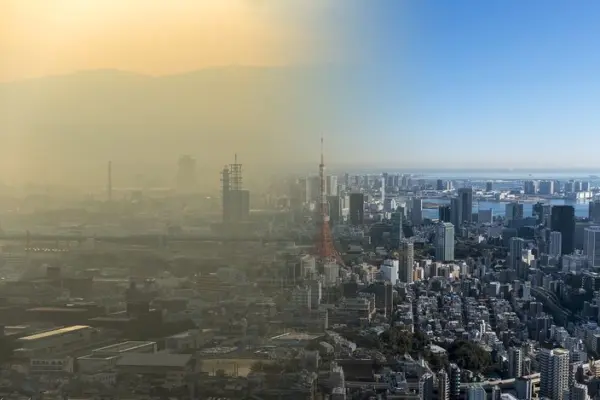
Los Angeles saw tremendous economic development over the past century. But as more people moved in, the city’s blanket of smog grew thicker and thicker. The main culprits were, and still are, vehicle emissions, fumes from industrial plants and the city’s proximity to two of the country’s largest ports.