(Pritzker candidate feature) Michael Twitty, writer, Judaic studies teacher, culinary historian and historical interpreter is a new kind of voice on the food scene. Twitty meshes cooking, food and history…
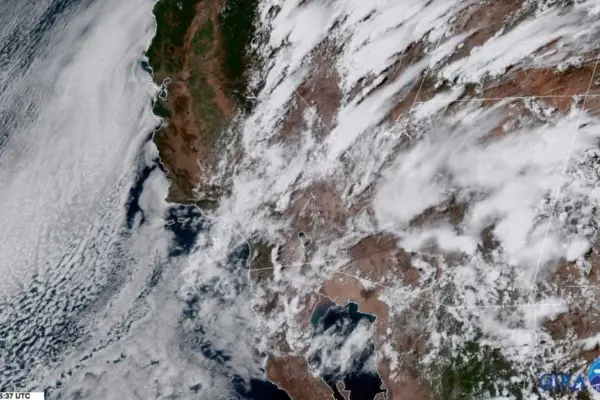
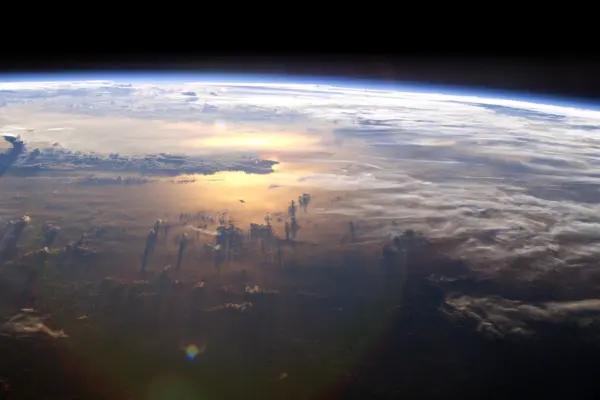
"I think a lot of people are always intrigued to find out there is, in fact, a monsoon in the desert Southwest,"said Daniel Swain, a climate scientist at UCLA and author of the California weather blog Weather West.
“We’re in uncharted territory here pretty fundamentally,” said Sean Hecht, co-executive director of the UCLA law school’s Emmett Institute on Climate Change and the Environment. “The theory behind it is an interesting one: that essentially, petroleum products should be considered defective when used as directed because of the harms that they cause.”
“I consider A.B. 398 to be a pretty good compromise and one that doesn’t threaten the environmental integrity of the climate program in any serious way,” said Cara Horowitz, co-director…
A number of earlier lawsuits against oil and gas companies failed because they focused on reducing greenhouse-gas emissions, said Ann Carlson, faculty director of the Emmett Institute on Climate Change and the Environment at the UCLA School of Law.
“Here, this is a more conventional lawsuit” in the sense of asking for damages, she said. “The lawyers have done a very good job. The courts will have to take this seriously.”
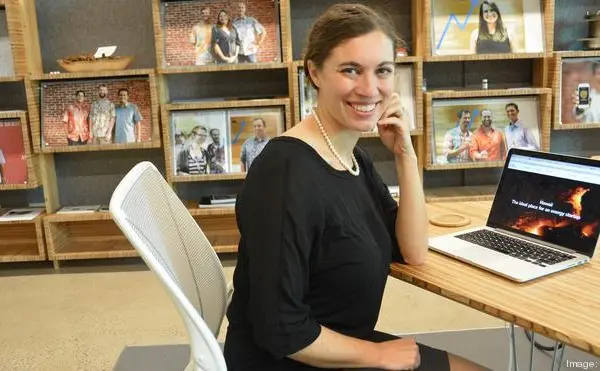
Elemental Excelerator co-founder and CEO Dawn Lippert has made the short list for the Pritzker Emerging Environmental Genius Award. Lippert, who heads the Honolulu-based accelerator, is one of 20 nominees for the…
“For young innovators just starting out … awards can open doors and inspire investors. They can mean the difference between grand success or ideas prematurely scrapped for lack of support,” the announcement states. The winner takes home $100,000.
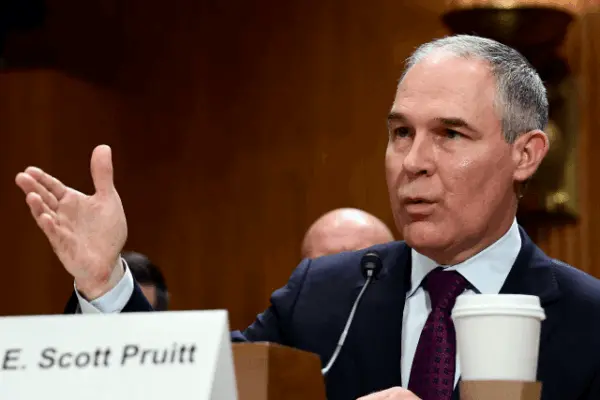
Is Scott Pruitt’s plan to televise climate change “debates” a good idea? No, say Center for Climate Science associate director Katharine Reich and a host of climate scientists and policy…
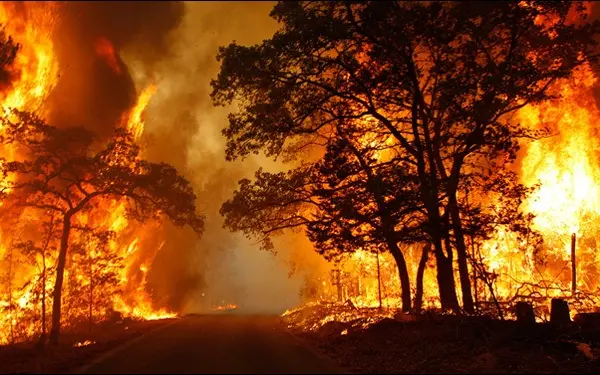
“One of the changes that’s happened over the last two decades (in Southern California) is more and more conversion of chaparral and particularly sage scrub into annual grasslands,” said Phil Rundel, a professor of ecology at the University of California, Los Angeles.
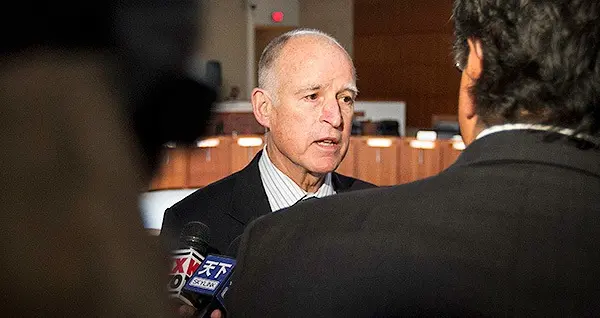
Up until Monday evening, the future of the program looked uncertain. But, after months of discussion, Governor Jerry Brown revealed legislation Monday that extends the program to the year 2030.
For analysis, Take Two spoke to Cara Horowitz, co-executive director of the Emmett Institute on Climate Change and the Environment at UCLA.
“Literally every decade we have more record-breaking years with respect to temperatures,” said Aradhna E. Tripati, a climate scientist at UCLA. “We’re already paying a cost and it’s going to keep going up.”
Seniors are especially vulnerable during heat waves because they have a harder time than younger adults adjusting to sudden changes in temperature.
Sean Hecht, Co-Executive Director of UCLA's Emmett Institute on Climate Change and the Environment, explained the role that public comments play in the review process.
Last month, Brown discussed climate change with Chinese President Xi Jinping in Beijing, an unusual level of engagement between the Chinese head of state and a governor. (Energy Secretary Rick Perry, by contrast, did not meet with Xi in a recent trip to China).
“He wants to make clear that if you can’t look to Washington, you can look to California on progressive environmental policy,” said Ann Carlson, professor of environmental law at UCLA.
Center for Climate Science associate director Katharine Reich and UCLA climate law experts explore the parallels between the HBO hit fantasy saga Game of Thrones and climate change in the…
“In California, we are always going to have drought,” said Glen MacDonald, the John Muir Memorial Chair of geography at the University of California, Los Angeles. “So we’ve had one good year of precipitation this year. This is no time to relax and exhale and assume that this has passed.”
“This is the same thing with fire,” he said.
Brown's meeting with Xi took place a mere five days after President Donald Trump announced that the US would withdraw from the Paris climate accord, and according to Ann Carlson, a professor of environmental law at UCLA, this timing mattered.
"Governor Brown is essentially signalling to the world that he is going to be the face of progressive climate policy in the United States," Carlson told Al Jazeera.
China’s leaders have a self-interest above all else to champion clean energy because of the high costs it has paid and continues to pay for the pollution caused during its economic boom, said Alex Wang, professor of law at UCLA.
“Ten or twenty years ago most wetlands scientists in most places viewed sediment as a negative,” says Richard Ambrose, a marine ecologist at the University of California, Los Angeles. “Too much sediment would come in and bury the marsh. Now people realize sediment is a resource, and we need it to keep up with sea level rise.”
Climate researchers at the University of California, Los Angeles, have created forecasts of how many days of extreme heat — defined as more than 95 degrees — the Los Angeles region could expect if nothing was done to reduce greenhouse gas emissions. Downtown Los Angeles, for example, now has roughly a week’s worth of extreme heat days a year, said Alex Hall, a professor of atmospheric and oceanic sciences at U.C.L.A.
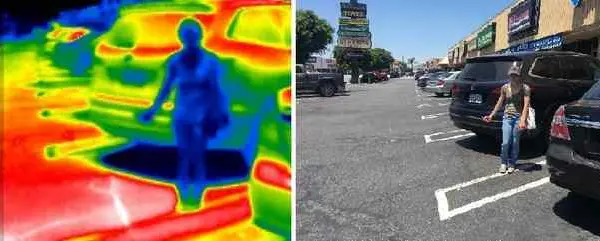
If a second federal grant is awarded by end of summer, the group will have received the full $2 million to complete a four-year project that studies how heat events, in part caused by global climate change, affects the most vulnerable local communities identified in a previous UCLA study: the San Fernando Valley, Huntington Park and Sunland and others.
“There’s a lot of power that subnational jurisdictions have over the sort of instruments and sources of greenhouse gas emissions, and if they’re willing to wield that power aggressively and ambitiously, they actually don’t need the federal government in order to do so”, said Cara Horowitz, co-executive director of the Emmett Institute on Climate Change and the Environment at the University of California Los Angeles.