
Chunyu Dong

Chunyu Dong is a postdoctoral researcher at UCLA’s Institute of the Environment and Sustainability and the Department of Geography. He has a research background in the fields of ecohydrology and snow hydrology. Chunyu’s research seeks to understand the impacts of climate change on water cycle and terrestrial ecosystems at various scales. Multiple methods have been applied in his studies, e.g. remote sensing, hydrological modeling, field observations, and hydrogeochemical analysis. He has developed novel algorithms for improving satellite snow data, which can significantly increase accuracy of the remotely sensed snow maps and remove all the cloud pixels. He has also contributed to developing the time-lapse photography as a snow process monitoring technique. Chunyu obtained his Ph.D. in Hydrology and Climatology at the Heidelberg University (2016). He currently works with Prof. Glen MacDonald, Prof. Gregory Okin and Prof. Thomas Gillespie, as a team member of an interdisciplinary project that aims at investigating the impacts and implications of the recent drought for the habitats and energy infrastructure in southern California. His research focuses on investigating the differential vegetation sensitivity to drought across ecological communities, the interactions between wildfire activities, vegetation dynamics, drought, and climate change in California.

Selected Publications

Okin, G.S., Dong,  C., Willis, K.S., Gillespie, T.W., & MacDonald, G.M. (2018): The impact of drought on native southern California vegetation: remote sensing analysis using MODIS-derived time series. Journal of Geophysical Research: Biogeosciences. 123, 1927–1939. https://doi.org/10.1029/2018JG004485

Gillespie, T.W., Ostermann-Kelm, S., Dong, C., Willis, K.S., Okin, G.S., & MacDonald, G.M.  (2018): Monitoring changes of NDVI in protected areas of southern California. Ecological Indicators, 88, 485–494. https://doi.org/10.1016/j.ecolind.2018.01.031

Dong, C. (2018): Remote sensing, hydrological modeling and in situ observations in snow cover research: a review. Journal of Hydrology, 561, 573–583. https://doi.org/10.1016/j.jhydrol.2018.04.027

Dong, C., & Menzel, L. (2017): Snow process monitoring in montane forests with time-lapse photography. Hydrological Processes, 31, 2872–2886.  https://doi.org/10.1002/hyp.11229

Dong, C.Y., & Menzel, L. (2016): Producing cloud-free MODIS snow cover products with conditional probability interpolation and meteorological data. Remote Sensing of Environment, 186, 439–451. http://dx.doi.org/10.1016/j.rse.2016.09.019

Dong, C.Y., & Menzel, L. (2016): Improving the accuracy of MODIS 8-day snow products with in situ temperature and precipitation data. Journal of Hydrology, 534, 466-477. http://dx.doi.org/10.1016/j.jhydrol.2015.12.065

Liu, Z.Y., Menzel, L., Dong, C.Y., & Fang, R.H. (2015): Temporal dynamics and spatial patterns of drought and the relation to ENSO: a case study in Northwest China. International Journal of Climatology, 8, 2886–2898.http://dx.doi.org/10.1002/joc.4526
Alison Partie

Alison is currently conducting her residency at L’Oréal USA in New York City where she helps to manage the water, waste and climate change efforts and programs within the company.  She is interested in the role that market-based solutions will play in the world’s transition to clean energy and responsible waste management, and how specific climate positive investments benefit a company’s triple bottom line.

While on campus, Alison worked on an interdisciplinary research team tasked with explicating the major barriers and drivers to solar panel adoption among Los Angeles County homeowners. Before entering the Environmental Science and Engineering program, Alison worked for an environmental consulting company that helped municipalities manage and implement programs to comply with the Clean Water Act. Previous to this, she got her Master’s in Public Health from the UCLA Fielding School of Public Health. With a focus on environmental health and policy, Alison completed an internship at The White House Council on Environmental Quality in 2013. Alison holds a Bachelor of Science in Physiology with a Minor in Chemistry from Seattle Pacific University.

With her pre-medical and environmental health background, Alison views environmental problems through the lens of health. Alison’s main motivation and passion for contributing to the work that tackles some of the earth’s most significant environmental issues is improving health and protecting people and the planet.  

Lia Protopapadakis Flynn

Lia Protopapadakis Flynn is an ESE alum.

She served in residency with the U.S. Army Corps of Engineers (Corps) Regulatory Division, Los Angeles District. The Corps Regulatory Division has arguably the broadest authority of any federal agency to regulate private activities in ocean waters. However, this authority is often overshadowed by the Corps’ permitting program for discharges of dredged or fill material in wetlands. As a result, very little is known about the impacts permitted activities have on marine habitats, whether compensatory mitigation is occurring and is successful, or even the basic patterns of permitting in marine habitats. Lia’s dissertation seeks to answer these questions at three levels: 1) nationwide in comparison to the Corps permitting in wetlands and freshwater systems, 2) for eelgrass in the Southern California Bight, and 3) California-wide in relation to the California Coastal Commission’s recent sea level rise adaptation policy. As a surfer, SCUBA diver, kayaker, and stand up paddleboarder, Lia is an all around waterwoman, with a passion for the ocean and facing challenges head-on.

Lia Protopapadakis came to the Environmental Science and Engineering program to enhance her analytical and technical skills and to forward a career reducing risks for coastal habitat and infrastructure by applying soft engineering solutions. She has an M.E.M. in Coastal Environmental Management from Duke University and a B.S. in Biology from USC (but don’t hold that against her!)

Prior to starting her doctoral degree, Lia worked for The Bay Foundation/Santa Monica Bay Restoration Foundation for over eight years. There she restored kelp forests, conducted research for fisheries management, and developed sustainable local seafood. She also staffed the Santa Monica Bay Restoration Commission’s Technical Advisory Committee and served on two stakeholder advisory groups for the California Department of Fish and Wildlife: the Marine Life Protection Act – South Coast Regional Stakeholder Group and the Lobster Advisory Committee. Her broad skill-set includes conducting shipboard oceanographic research in the waters of the tropical Pacific, tropical Atlantic, and Antarctica; performing underwater surveys as a scientific diver; collecting spatial data from small fixed-wing aircraft; evaluating ecosystem-based management of open-water fisheries; and developing ocean policy and legislation in the U.S. Congress as a Knauss Sea Grant Fellow. She is doing her residency with the U.S. Army Corps of Engineers Regulatory Division in Los Angeles where she is looking at the impacts of the Corps permitting program in ocean and coastal waters and how to “green” armored shorelines in an urban setting. She is published in Ecosphere and Fisheries Management and Ecology.

Krishna Krishnamurthy

Prior to pursuing the D.Env. degree at UCLA, Krishna was a climate risk and food security analyst at the United Nations World Food Programme – the largest humanitarian organization focusing on food assistance, where he worked in over fifteen countries in Asia and Africa. He received his Bachelors degree in Environmental Policy from the London School of Economics and his Masters in Environmental Change and Management from the University of Oxford.

Krishna’s research interests are on extreme weather events such as droughts and storms, and how those affect the most vulnerable communities in the world. In his free time, Krishna enjoys playing the classical guitar (and more recently also the flamenco guitar) and exploring remote parts of the world.

Sonali Abraham

Sonali is currently conducting her residency at the Pacific Institute where she conducts research to address challenges related to water supply, quality, and governance in the business community, with a focus on sustainable landscapes in the Southern California region.

While on campus, she worked on a project which deals with strategies to increase the sustainability of our water resources with a focus on water conservation in Los Angeles County.  She also worked on the water component of the 2017 Sustainable LA Environmental Report Card for Los Angeles County.

Sonali grew up in the Middle East and Bangladesh before getting her BS in Chemistry at St. Stephen’s College in New Delhi, India. Diverse experiences in these countries motivated a desire to work in the field of water resources, and more particularly, in the pursuit of clean water and directing it to people in need. She went on to get her MS in Environmental Engineering at Johns Hopkins University, where she worked on the disinfection byproducts produced during chlorination of drinking water. During this time, Sonali also interned at UNEP working on a proposal to mitigate climate change in the Russian Arctic.

Armed with a strong scientific background, Sonali is working to expand and widen these skills to include water policy and governance. Her goal is to work at the interface of science and policy to secure water resources at a local and subsequently, global level.

Daniel Swain

Bio

Daniel Swain, Ph.D., is a climate scientist focused on the dynamics and impacts of extreme events—including droughts, floods, storms, and wildfires—on a warming planet. Daniel formerly held an appointment as a climate scientist (Associate Researcher) in the Institute of the Environment and Sustainability at UCLA, and presently holds an appointment as a climate scientist (Associate Researcher) in the California Institute for Water Resources within University of California Agriculture and Natural Resources (UCANR).

He engages extensively with journalists and other media partners, serving as a climate and weather science liaison to print, television, radio, and web-based outlets to facilitate accessible and accurate coverage and conversations surrounding climate change. Daniel is an alumnus of the University of California, Davis (B.S., Atmospheric Science) and of Stanford University (Ph.D., Earth System Science), and completed his postdoctoral work at UCLA. He also authors the widely-read Weather West blog (weatherwest.com), which provides real-time perspectives on California weather and climate, and can be found on Twitter (@Weather_West), Bluesky (@WeatherWest) and YouTube (@WeatherWest).

daniel swain
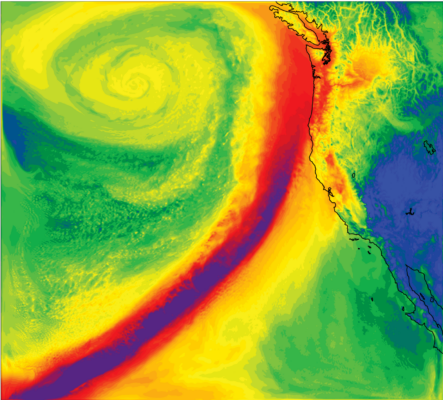
A simulated “atmospheric river” makes landfall.

Publications and More

My recent publications may be found below, as well as on Google Scholar, ResearchGate, and ORCID.

Justin Valliere

Justin Valliere was a La Kretz Center Postdoc from 2016-2019. He is now an assistant professor at UC Davis Cooperative Extension

I am a plant ecologist whose research is motivated by a passion for conservation and an interest in the processes that determine plant community composition. Multiple factors of global change, such as biological invasions, nitrogen (N) deposition and climate change pose a significant and growing threat to native ecosystems. A major challenge in conservation also continues to be bridging the gap between science and management. The goal of my research is to explore the impacts of human-caused global change on plant communities, identify mechanisms of change and inform land management and restoration. By studying disturbed and novel ecosystems, I aim to better understand the processes driving community assembly, while building on our capacity to predict changes under future global change. My research approach integrates biogeochemistry, community ecology, ecophysiology and soil ecology, and I utilize observational studies, manipulative field experiments and greenhouse studies to test hypotheses at multiple scales.

I earned my Ph.D. at the University of California, Riverside, studying ecological impacts of anthropogenic N deposition and drought on California’s severely threatened coastal sage scrub plant community.  Currently, I am pursuing two major research projects. The first is an exploration of potential adaptation to N pollution and climate in invasive plant species of southern California. The other aims to evaluate methods for restoring native plant and soil microbial communities of invaded and disturbed ecosystems that will be resistant to drought and re-invasion.

Curriculum Vitae

Monobina Mukherjee

I am currently focusing on the economic analysis of increasing local water supplies in the LA water basin. Increasing local water supplies is a strategy to make Los Angeles less depended on imported water and more resilient to water shortages especially during drought conditions. I am comparing the costs and benefits of imported water with alternative water supplies like recycled water, stormwater BMP’s, desalinated water and also conservation strategies, while accounting for different treatment types and different kinds of Best Management Practices (BMP’s). I finished my PhD in Natural Resource Economics and Policy in June 2013 from University of California, Riverside, with a special emphasis on California water issues.

Jasmine Rajbhandary

I am a conservation biologist dedicated to conserving bird populations globally through scientific research and community engagement. As the collections manager I curate, sequence, and collect samples in the field, as well as coordinate sampling efforts for the Bird Genoscape Project. My long term goal is to contribute towards the conservation and study of birds in my home country of Nepal.

Daniel Walton

Dr. Walton is a postdoctoral researcher in UCLA’s Institute of the Environment and Sustainability. His primary interests are regional climate change and the downscaling of climate change information to high resolution. He has developed robust, efficient downscaling methods that capture the key physical processes in the region of interest. His current work focuses on best practices for the downscaling of climate model information. He is also focusing on understanding how downscaling can add value to our understanding of regional climate change. Dr. Walton holds PhD in Atmospheric and Oceanic Sciences from University of California, Los Angeles.