
UCLA seniors model flood vulnerability in Tobago
Students traveled to Tobago to test their flood-risk model and gather local perspectives

Students traveled to Tobago to test their flood-risk model and gather local perspectives
The California Center for Sustainable Communities, along with UCLA research teams and departments, has been selected as a finalist for the Smart Electric Power Alliance (SEPA) 2024 Power Player Awards in the Equity category.

Founding Director of the California Center for Sustainable Communities and Chair of UCLA’s Environment and Sustainability Ph.D. program Dr. Stephanie Pincetl co-authored a study, “Advancing a Net Zero Urban Water Future in the United States Southwest.” Published in ACS ES&T Water, the research examines the feasibility of Net Zero Urban Water (NZUW) — cities becoming self-sufficient with local water sources. This is crucial for the water-stressed US Southwest, where the Colorado River can’t meet the demands of 40 million residents.
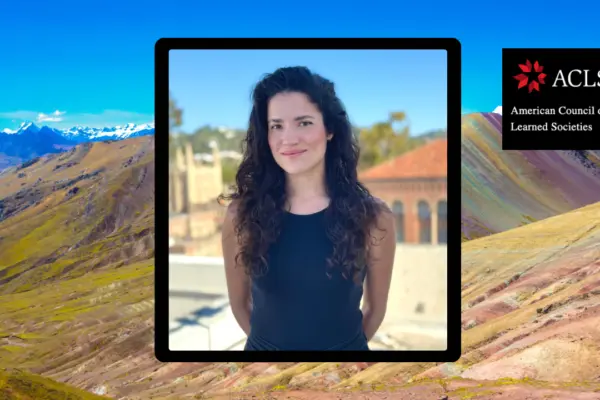
The Institute of the Environment and Sustainability is proud to announce that Lorena De la Puente Burlando has been awarded a 2024 Mellon/ACLS Dissertation Innovation Fellowship. The program supports doctoral students in the humanities and interpretive social sciences as…

UCLA has a long history of sustainability leadership — from early energy efficiency efforts and the formation of the Institute of the Environment and Sustainability in the 1990s, to the establishment of…
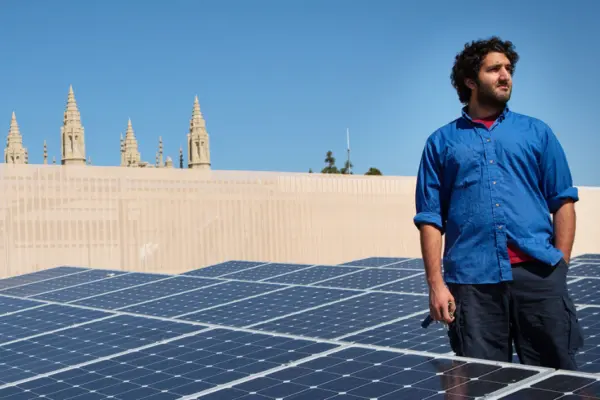
Since 2009, UCLA has made significant strides in reducing its carbon footprint, despite a notable increase in applicants and enrollment. Through the adoption of low-carbon, renewable energy sources such as wind,…
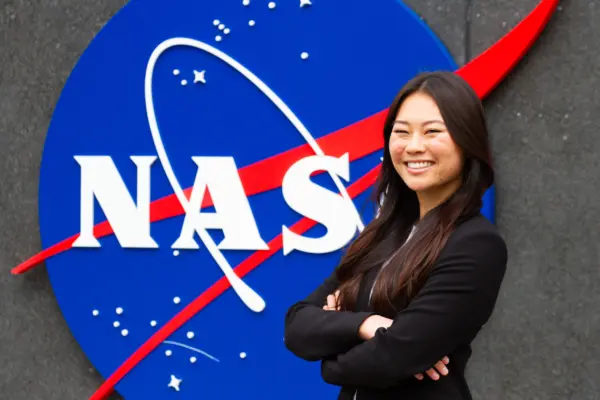
Graduating in 2023 with a B.S. in Environmental Science, Sonobe reflects on how UCLA prepared her for the professional world and provided valuable lessons
The World Health Organization identified heatwaves as one of the most dangerous natural hazards, and they’re on the rise worldwide. UCLA climate scientist and assistant professor Karen McKinnon has been…

In a new report, UCLA Professor Deepak Rajagopal and Ph.D. Candidate Narayan Gopinathan delve into sustainable transportation in India, focusing on the feasibility and benefits of a Zero Emission Vehicle (ZEV)…

UCLA adjunct professor Travis Longcore co-authored “The World at Night,” a comprehensive resource on global light pollution published by the Dark Sky Group of the International Union for Conservation of…

Authored by the team at CCSC about the UCLA Energy Atlas. "This book covers a remarkable breadth of topics across a compact seven chapters. The breadth is necessitated by the subject matter and authors’ ambition to construct an 'energy atlas' for the state of California from the most granular data available. The content covered will be of interest to a wide readership, particularly policymakers and researchers in the energy, built environment and policy domains. It is accessible enough to be read by non-specialists and would be of interest to anyone working or interested in the built environment or planning and the role of individuals and individual buildings in the wider transition to net zero."
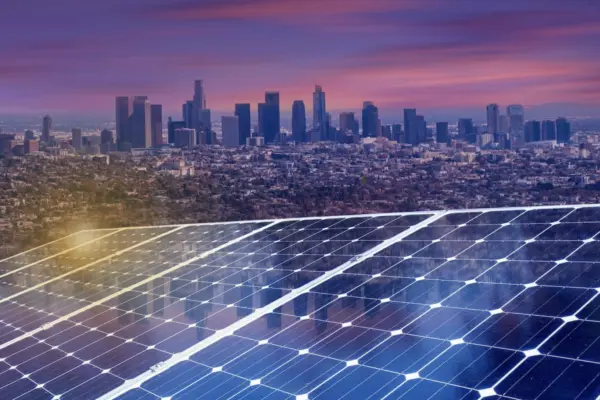
In 2021, after the LA100 analysis laid out pathways for the city of Los Angeles to produce 100% renewable electricity, the City Council and Los Angeles Department of Water and Power committed…
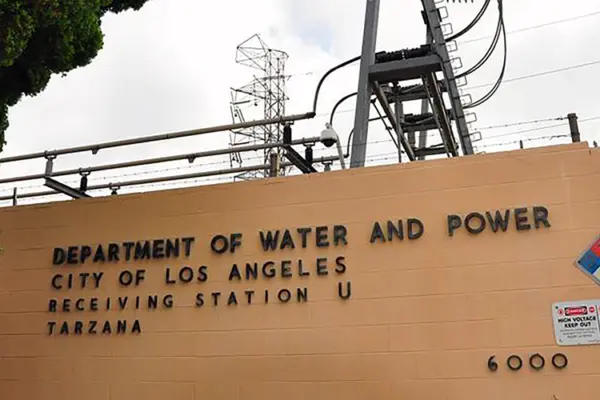
The public utility asked, and more than 20 UCLA faculty and researchers with expertise in engineering, environmental science, law, labor studies, public health, and public policy answer in a new report, LA100 Equity Strategies. Researchers, in partnership with Rachel Sheinberg, wrote Chapter 13: Energy Affordability and Policy Solutions, providing specific recommendations for robust, long-term, structural solutions to LADWP’s customers’ ability to pay their bills.
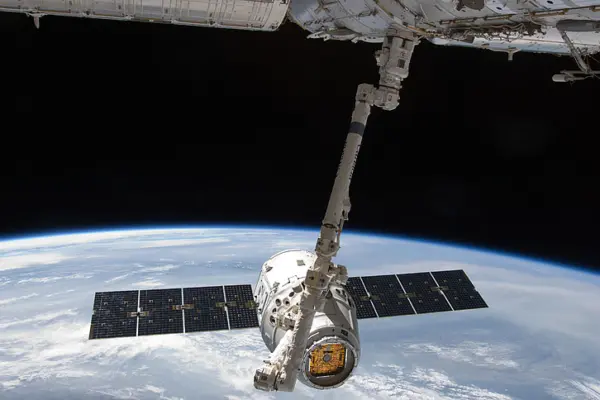
This shift underscores the growing significance of technological skills and tools — and the need for students to develop these abilities. Even having one such tool led to substantial improvements…
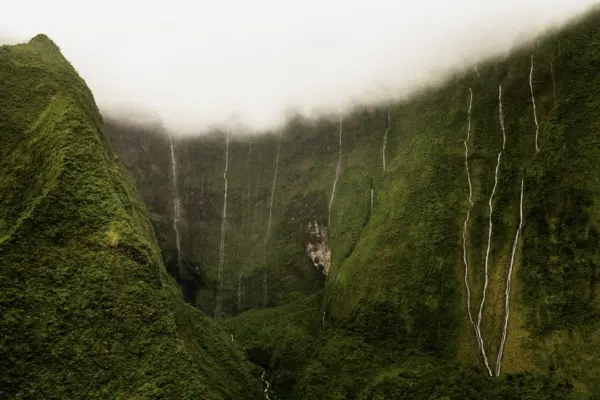
The final group of candidates for the 2023 Pritzker Emerging Environmental Genius Award includes a green architect, a conservationist, a clean energy leader and an ocean conservation advocate.
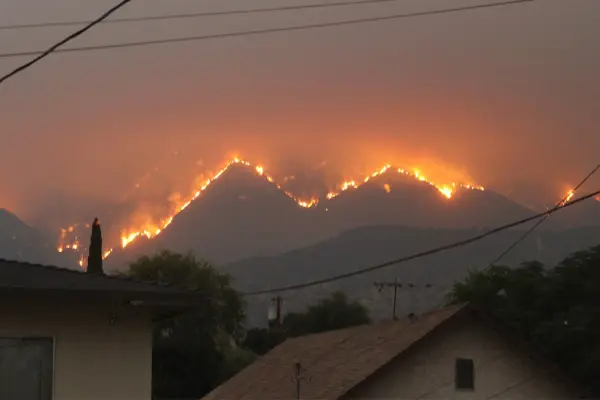
With lives, communities, natural resources and billions of dollars’ worth of property hanging in the balance, why this is happening and the most important causes to address have become a…

Our newest faculty member member seeks to improve integrated water, energy, food and environmental resources management

Oscar Neyra-Nazarrett on EVs and his company's approach to reduce the environmental impact of lithium mining.

Emma Akmakdjian is a student in Dr. Pincetl’s ENV297 class. She’s an installation artist who collaborates with scientists to translate processes of complex ecosystems, climate data, and object personifications in…
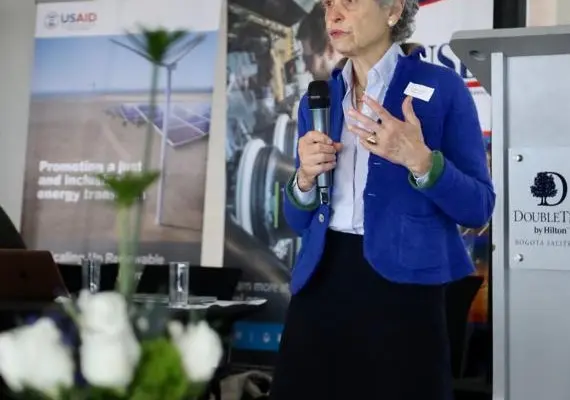
Dr. Stephanie Pincetl, director of the CCSC, and Sebastián Solarte-Caicedo, Ph.D. student in the Institute of the Environment and Sustainability, participated in the Energy Communities Workshop Series, an event organized…
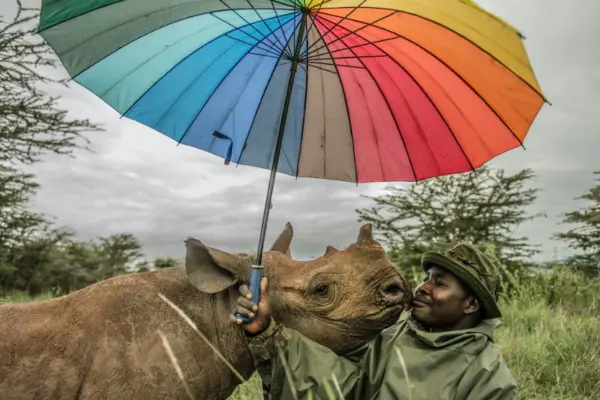
Vital Impacts presents the Environmental Photography Grants. Application’s are now open for two $20,000 grants that will support and encourage visual storytellers to create a long-term documentary photography project with…
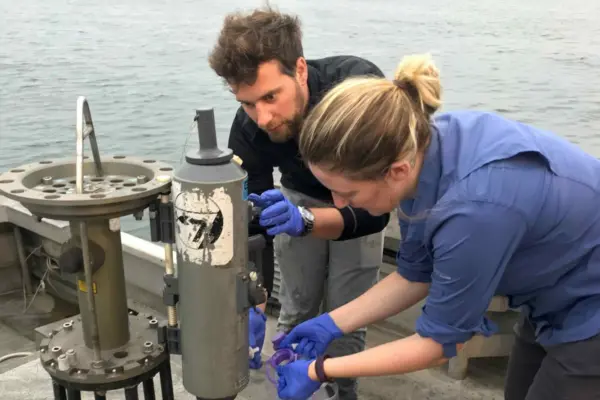
Demonstration in L.A. ports show that non-academics can use the fast, inexpensive genetic test

Dr. Mikhail Chester hosts Dr. Stephanie Pincetl, whose work engages a multitude of disciplines (from engineers to urban planners to economists) to advance urban sustainability science and decision-making for water, energy, transportation, and land use systems. She explores how understanding and synthesizing these diverse systems surrounding our complex urban systems opens opportunities for future alternatives.
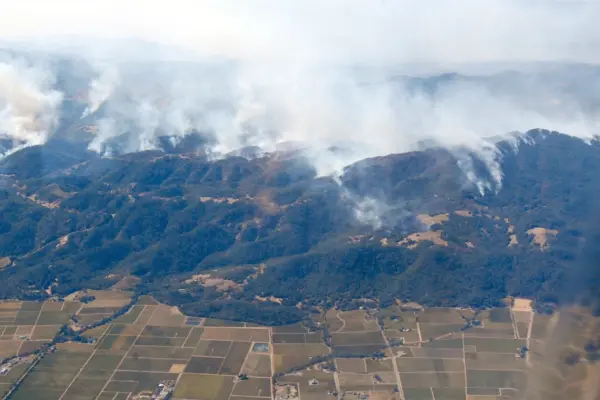
Hunter Connell co-founded Terrafuse AI to help insurance companies and first responders prevent climate change-driven harms