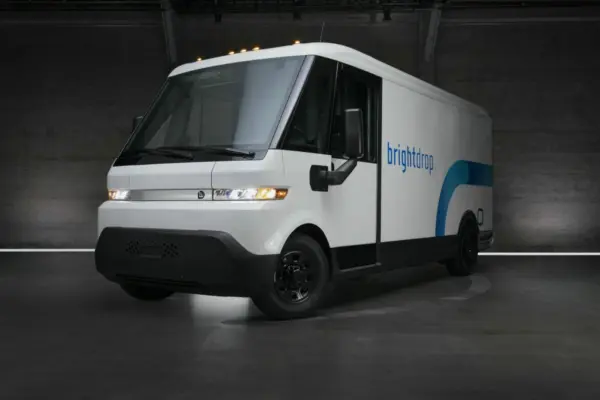
Electrifying trucks would significantly reduce tailpipe emissions in India
With battery advances, it’s time to transition trucks from diesel to electric, researchers say

With battery advances, it’s time to transition trucks from diesel to electric, researchers say
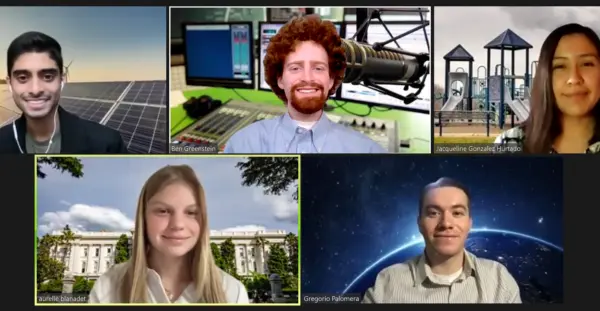
Final Project for Environment 155 at UCLA for Fall 2022. A webinar involving 1 host and 4 guests discussing the implications of and recommendations for a "just" energy transition. Benjamin Greenstein, Jacqueline Gonzalez Hurtado, Achinthya Poduval, Gredorio Palomera, Aurelie Blanadet
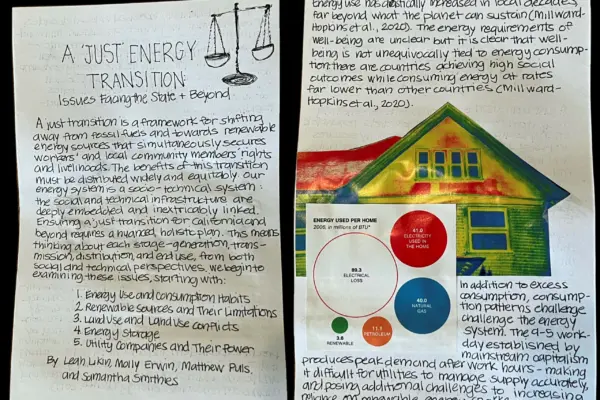
A Just Energy Transition 2022 155 final project zine by Sam Smithies, Molly Erwin, Leah Likin and Matthew Puls
A zine exploring an equitable energy future by students in ES155. Created in December 2022. By Angel More, Ava McCandless, Jack Sendell, Jose Robles, and Robert Smith

Kenyan entrepreneur and his company, Solar Freeze, receive $100,000 prize for reducing food waste

Even when they’re located near each other, not all rainforests are the same, UCLA-led research finds

Non-Fungible Tokens, or NFTs, can lead to large amounts of carbon dioxide emissions

UCLA contingent joins international discussions in London, Paris
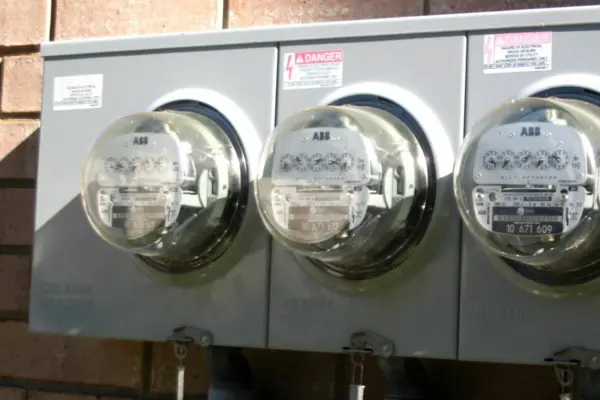
UCLA’s Stephanie Pincetl, another co-author, said part of the problem may be due to the Jevons paradox, a phenomenon that occurs when a technological advance or government policy improves the efficiency of how a resource is used but leads to an increase in consumption as a direct result of that efficiency gain. “People think they can increase consumption without increasing their bills, so they use more,” said Pincetl, who is director of the California Center for Sustainable Communities at UCLA.
UCLA-led study finds products’ energy savings estimates are often inaccurate
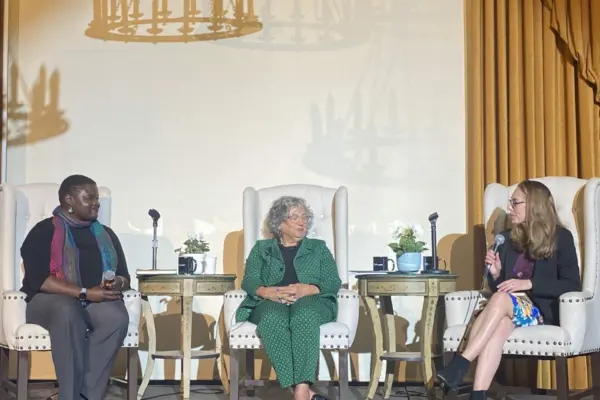
California has passed numerous laws stimulating green transportation. According to environmentalist Mary Nichols, making these laws work will take better enforcement. “Regulations are really only as good as the enforcement…

LandCART uses machine learning to assess changes in vegetation and ground cover across the American West
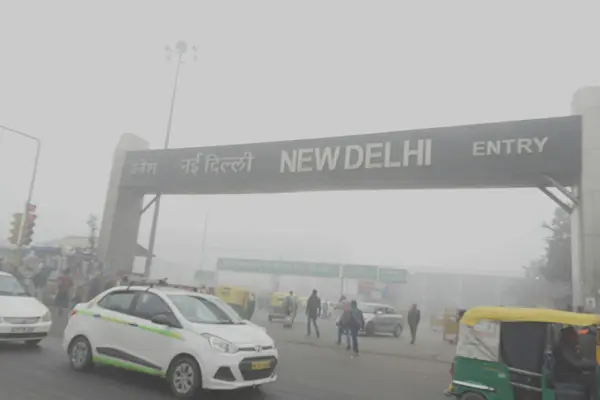
UCLA-led research shows how the transition could improve public health and save money

Pratte moved solar energy projects forward with Navajo Power, the company she co-founded to benefit local communities on tribal lands. She also expanded Strongbow Strategies, the professional services and consulting…

Virtual fundraising gala featured celebrity performances and science from UCLA graduate students

For LA residents climate change is no longer a distant or abstract concept because its effects are already being felt throughout the region. During just the past three years, for example, several new record high maximum daily temperatures have been recorded in numerous LA neighborhoods, with Van Nuys experiencing 118 °F in 2018 and more recently, in 2020, parts of Woodland Hills enduring temperatures of 120 °F. These developments are clearly illustrated in the figure below which shows the percentage of sampled maximum daily temperatures within the LA-Basin that were above different high heat thresholds for each year from 2005 to 2020.

This webinar by Physicians for Social Responsibility raises some of the fundamental issues that face the energy transition and highlights dangerous course we are on today. Highly recommended for an in-depth analysis of what needs to change -- Stephanie Pincetl, director of CCSC

‘Earth Focus’ episode explores environmental and human costs of coal mining in South Africa

While there are many benefits to electrifying your gas appliances, there are also costs. The costs and benefits are different for each type of appliance. We wrote this Guidebook as a starting point, to help you begin thinking about these decisions. Many people can’t afford to replace all their gas appliances, so this Guidebook can help you prioritize your choices, to make the best decision for you and your family. Your decision to electrify will depend on what is most important to you, such as improving your indoor air quality, keeping your utility costs low, or helping to slow climate change and improving outdoor air quality.

Getting Beyond Tropes: Cities for the 21st Century Dr. Pincetl spoke to the Environmental Science without Borders (ESWB), a subsidiary of UCLA's Center for Diverse Leadership in Science (CDLS), which connects students and early-career scientists from around the globe, regarding her research on urban metabolism water and energy policy, habitat conservation efforts, and the impact of land use in conjunction with climate change and climate policies.

ESE student Oscar Neyra-Nazarrett’s mining startup listed as a 2020-2021 Spark Grant Recipient in Harvard Innovation Labs’ article.
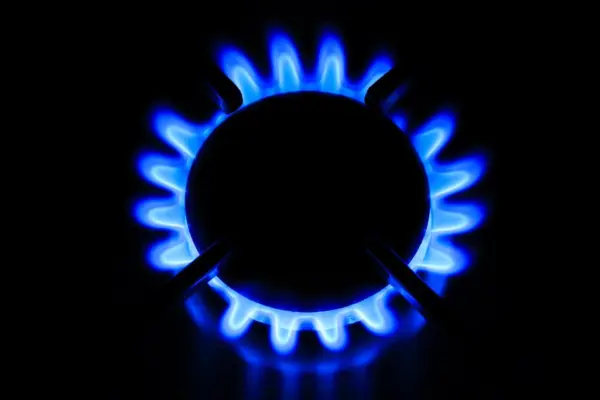
“Natural gas bans” refer to a diversity of municipal building code changes that disallow certain uses of natural gas in new residential buildings. Gas bans vary in terms of their provisions, but all are intended, along with complementary building electrification programs, to limit the amount of fossil fuels that must be extracted, transported, and burned to meet residential energy needs, thus reducing carbon emissions from buildings, which currently account for approximately 30 percent of the US’s total greenhouse gas (GHG) emissions.

As billions of dollars become available, UCLA-Liberty Hill Foundation report recommends actions for community-informed, integrated infrastructure to improve quality of life for Angelenos Affordable housing adjacent to a public transit…
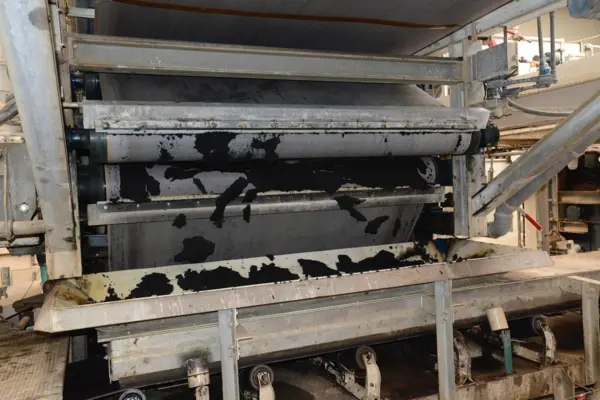
The UCLA research suggests that fertilizer could contain far more plastic particles — as much as 25 times more — than was previously suspected. How tiny particles of plastic called…