
Alison Hamilton
Diana Garcia
Diana Garcia joined the IoES in July 2016 as an administrative and finance coordinator. In this role, she provides administrative and operational support for IoES centers, faculty, researchers, and staff. In February 2018, Diana began managing the IoES youth initiative program, GreenSparks. The program aims to ignite high school student’s curiosity and awareness in environmental science. In this role she oversees and engages in youth outreach and creating accessible environmental education. Currently, GreenSparks is developing free educational videos on climate and water topics for high school students.
Diana is a fellow Bruins and graduated in 2016 with a BA in Anthropology and minor in Education. Previously, she assisted high school students and families from California’s Central Valley purse higher education and career development. Her overall goals are to connect K-12 schools with other institutions and provide students with engaging opportunities for personal growth.
Adriana Garmendia
Research Interests
In general my research line is focus in working with wildlife that habits in modified landscapes. I’m really interested in knowing how wildlife (in particular
mammals) responds to different processes like habitat loss, fragmentation, or the spatial landscape configuration of these new systems.
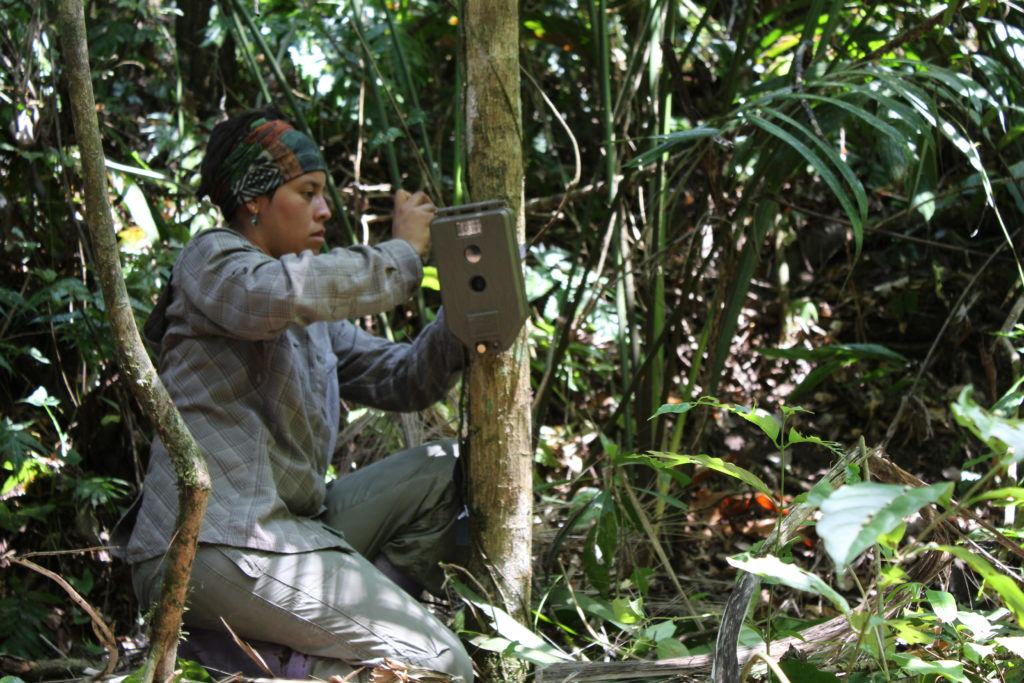
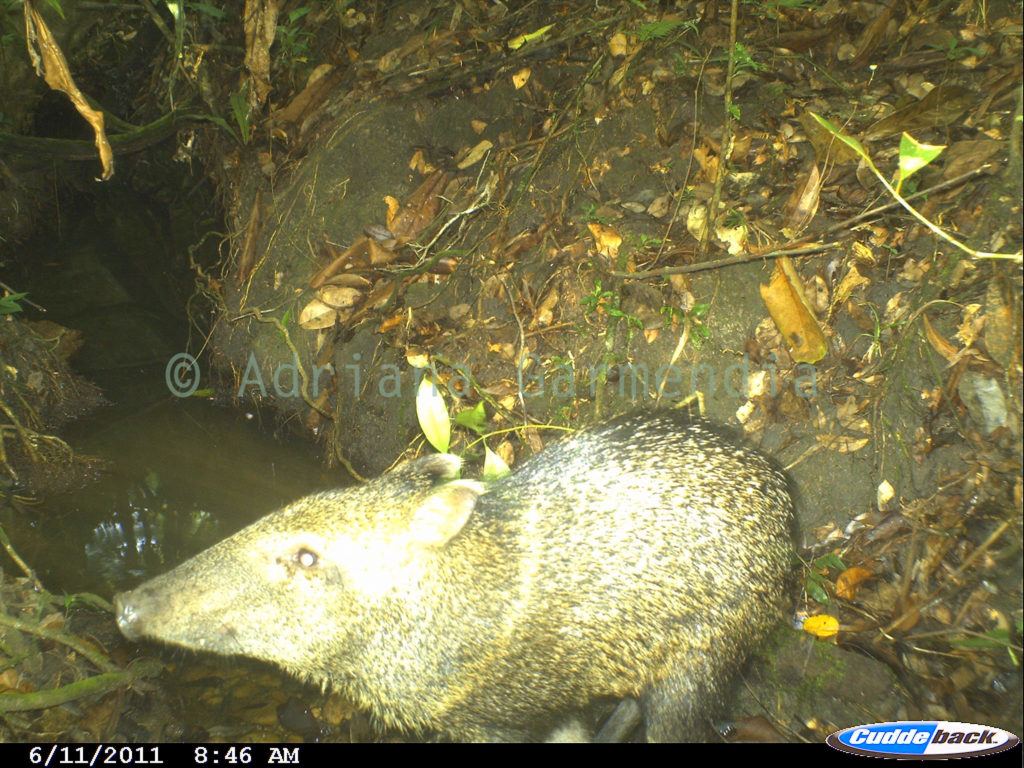
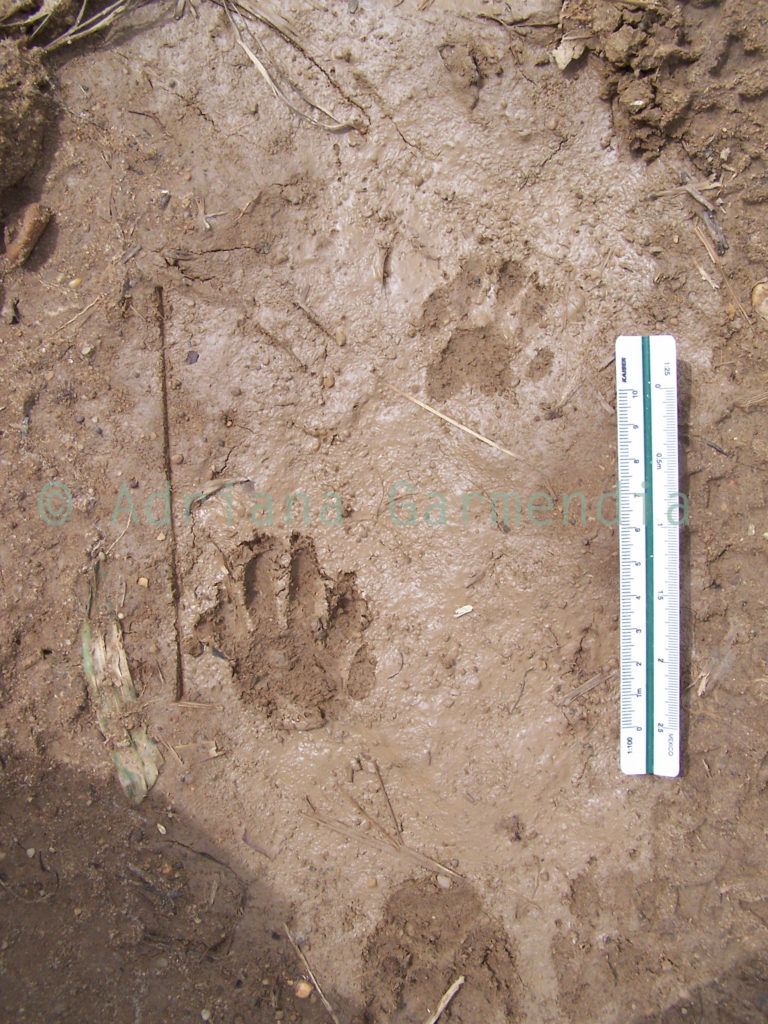
B.S. (Biology). National Autonomous University of Mexico. Honor Thesis: Distribution and abundance of rodents in the campus of University City, Mexico city; with emphasis in Peromyscus gratus (Muridae). 2009
M.Sc. (Environmental Biology). Center of Ecosystems Research, National Autonomous University of Mexico. Thesis: Habitat fragmentation effects under medium and large mammals diversity in the Selva Lacandona, Chiapas: a landscape approximation.
Internship, Center for Tropical Research, Institute of the Environment and Sustainability, University of California, Los Angeles. Research to estimate the “Changes in phylogenetic structure and diversity of mammal assemblages related to differences in landscape spatial patterns”. 2012.
Field Instructor. At the NGO “Ecology Project International (Mexico)”. 2012.
Field Assistant, in the project “Effects of fragmentation per se on populations of Allouata pigra in the rainforest Lacandona, Chiapas, Mexico ” Ecology of Fragmented Landscapes, Center of Ecosystems Research, National Autonomous University of Mexico. 2011.
Field Assistant, in the project “Population estimation and habitat characterization on Tapirus bairdii in the Biosphere Reserve El Triunfo, Chiapas, Mexico ”. Tropical population and community ecology laboratory, Center of Ecosystems Research, National Autonomous University of Mexico. 2010.
Research and Field assistant, Interactions and Ecological Processes Laboratory, School of Sciences, National Autonomous University of Mexico. Research within the project “Vertebrate activities monitoring in two zones under ecological restoration in the Ecological Reserve of Pedregal de San Ángel”. 2009-2010.
Noah Garrison
Noah Garrison is the Environmental Science Practicum Director at the UCLA Institute of the Environment and Sustainability. He oversees the three-quarter, client-based capstone program for all senior-year students in the Environmental Science B.S. degree program. Noah also teaches courses at IoES — including Introduction to Environmental Science, Environmental Politics and Governance, and Leadership in Water Management. His research focuses on water use and supply issues in the Colorado River Basin and Western United States, including on sustainable solutions for addressing the impacts of climate change, drought, and overallocation of resources, and has been covered by the Los Angeles Times, Arizona Republic, ABC News, Politco, and the Associated Press, among other media outlets.
He previously worked as a staff attorney in the Water Program at the Natural Resources Defense Council (NRDC), where he focused on legal, policy, and technical issues related to: urban runoff and stormwater; green infrastructure and its relationship to water supply, energy use, and climate change; regulation and enforcement under the federal Clean Water Act; groundwater supply and management; and impacts of dams and other flow diversion projects on river systems.
Noah is a graduate of Wesleyan University and the University of California at Los Angeles School of Law, with a specialization in Public Interest Law and Policy, and also holds a M.S. in Geological Sciences from the University of California at Santa Barbara.
Olivier Gergaud
- Professor of Economics, BEM – Bordeaux Management School
- Associate Researcher – University of Reims
- Adjunct Professor – Sciences-Po Paris (Eur-Am campus)
Maryam Ghajar
Maryam Ghajar, graduate student in Civil and Environmental Engineering Department at University of California, Los Angeles (UCLA) received her B.S. degree in Civil Engineering in 2007 and her M.S. degree in Health, Safety and Environment from Tehran University (Tehran) in 2013. From 2007 to 20011, she worked in consulting firm and municipalities as civil engineer and environmental supervisor. Since 2014, she has been working with Prof. Stenstrom. She is currently teacher assistant at CEE Department and membership officer for grad chapter of SWE (Society of Women Engineer).
She is interested in environmental engineering that is integration of applied science and engineering principals to improve our natural environment and protect water, land and air for next generations.
Arthur Gibson
Princess Gilbert
Thomas Gillespie
Research Interests
My past research interests have focused on using geographic information systems (GIS) and remote sensing data for predicting patterns of species richness and rarity for plants and birds at a regional spatial scale.
Subfields
Biogeography, Forest Ecosystems, Remote Sensing
Biodiversity Research
My botanical research will continue to focus on surveying tropical dry forests in biodiversity hotspots. I have collected floristic data from Wallacea, Sundaland, Indo-Burma, Mesoamerica, New Caledonia, and Caribbean hotspots and within four years, I will collect data from a number of other tropical dry forests in biodiversity hotspots. This research is field intensive and taxonomically challenging but provides comparative floristic and structural data for regions where relatively little information exists. This research will result in a number of publications on global conservation priorities, natural resource management, and tropical ecology and will be used as ground truth data for remote sensing studies of anthropogenic disturbance and estimates of forest biomass.
My faunal research has focused predominately on tropical bird communities, but I have published papers on mammal and herpetofauna diversity. My long-term research agenda for fauna will focus primarily on combining detailed natural history and field data with remote sensing data to model species distributions and probability of extinction in fragmented landscapes. Models of species distributions will also be examined for a number of environmental change scenarios to predict the future distribution of species.
Remote Sensing Research
My remote sensing research is divided into airborne and spaceborne sensors that can be used to measure and monitor terrestrial vegetation. My spaceborne sensor research focuses specifically on high-resolution data from Landsat and IKONOS satellites to test hypotheses on the utility of these sensors for predicting floristic composition and structure in fragmented landscapes and to develop new algorithms that predict the distribution and abundance of endangered species. Advances in geographic information systems and remote sensing techniques have resulted in a number of landscape metrics and indices that may be used to predict the distribution of species richness in habitat fragments. I am currently testing the utility and accuracy of landscape metrics and remote sensing indices for predicting patterns of woody plant species richness and rarity in tropical dry forests of south Florida and Oceania. In particular, I focus on testing the accuracy of landscape metrics within three fragmented systems: anthropogenic fragments, natural habitat fragments, and true islands. The long-term goal is to develop algorithms that predict the distribution of plants and endangered species in other tropical dry forest regions and California ecosystems.
Dr. Gillespie’s interests focus on using geographic information systems (GIS) and remote sensing data for predicting patterns of species richness and rarity for plants and birds at a regional spatial scale.
Education
Ph.D. University of California, Los Angeles, 1998
Department of Geography
M.A. California State University, Chico, 1994
Department of Geography and Planning
B.A. University of Colorado, Boulder, 1990
Department of International Affairs
Selected Publications
Ibanez, T., Keppel, G., Menkes, C. Gillespie, T., Lengaigne, M. Mangeas, M. Rivas, G. and Birnbaum, P. 2018. Globally consistent impact of tropical cyclones on the structure of tropical and subtropical forests. Journal of Ecology(In Press)
Yao, T., Xue, Y., Chen, D., Chen, F., Thompson, L., Cui, P., Koike, T., Lau, W., Lettenmaier, D., Mosbrugger, V., Zhang, R., Xu, B., Dozier, J., Gillespie, T., Gu, Y., Kang, S., Piao, S., Sugimoto, S., Ueno, K., Wang, L., Zhang, F., Sheng, Y., Guo, W., Wang, W., Ailikun, Yang, X., Ma, Y., Shen, S., Su, Z., Chen, F., Liang, S., Liu, Y., Singh, V., K., Yang, Yang, D., Zhao, X., Zhang, Y., and Li, Q. 2018. Recent Third Pole’s rapid warming accompanies cryospheric melt and water cycle intensification and interactions between monsoon and environment: multi-disciplinary approach with observation, modeling and analysis. Bulletin of the American Meteorological Society(In Press)
Okin, G.S., Chunyu, D., Willis, K.S., Gillespie, T.W., and MacDonald, G.M. 2018
The impact of drought on native southern California vegetation: remote sensing analysis using MODIS-derived time series. Journal of Geophysical Research – Biogeosciences(In Press)
Pouteau, R., Gillespie, T.W., and Birnbaum, P. 2018. Predicting biodiversity patterns from NDVI time series: the devil is perhaps not in the detail. Remote Sensing10, 5.
Robinson, C., Saatchi, S., Clark, D., Hurtado Astaiza, J., Hubel, A.F., and Gillespie, T.W. 2018. Topography and three-dimensional structure can estimate tree diversity along a tropical elevational gradient in Costa Rica. Remote Sensing10, 629.
Franklin, J., Andrade, R., Daniels, M.L., Fairbairn, P., Fandino, M.C., Gillespie, T.W., González, G., Gonzalez, O., Imbert, D., Kapos, V., Kelly, D.L., Marcano-Vega, H., Meléndez-Ackerman, E.J., McLaren, K.P., McDonald, M.A., Ripplinger, J., Rojas-Sandoval, J., Ross, M.S., Ruiz, J., Steadman, D.W., Tanner, E.V.J, Terrill, I., and Vennetier, M. 2018. Geographical ecology of dry forest tree communities in the West Indies. Journal of Biogeography 45, 1168-1181.
Gillespie, T.W., Ostermann-Kelm, S., Dong, C., Willis, K.S., Okin, G.S. and MacDonald, G.M. 2018.Monitoring changes of NDVI in protected areas of southern California. Ecological Indicators88, 485-494.
Ibanez, T., Keppel, G., Baider, C., Culmsee, H., Florens, V., Franklin, J., Gillespie, T.W., Laidlaw, M., Martin, T., Ostertag, B., Parthasathy, N., Ratovoson, F., Shinichiro, A., Webb, E., Whistler, A., Whitfeld, T., Zang, R., and Birnbaum, P. 2018. Regional forcing drives plot-level species diversity and composition on islands in the Indo-Pacific. Global Ecology and Biogeography27, 474-486.
Silk, J.W.F. et al. 2018. A phylogenetic classification of the world’s tropical forests. Proceedings of the National Academy of Sciences of the United States of America115, 1837-1842.
Rocchini, D., Bacaro, G., Chirici, G., Re, D.D. ,Feilhauer, H., Foody, G.M., Galluzzi, M., Garzon-Lopez, C. X., Gillespie, T.W., He, K.S., Lenoir, J., Marcantonio, M., Nagendra, H., Ricotta, C., Rommel, E., Schmidtlein, S., Skidmore, A.K., Van De Kerchove, R., Wegmann, M., and Rugani, B. 2018. Remotely sensed spatial heterogeneity as an exploratory tool for taxonomic and functional diversity study. Ecological Indicators85, 983-990.
Rovzar, C., Gillespie, T.W., Shirman, M.K., Hubel, A.F., and Kawelo, K. 2018. Management implications for the reintroduction of the endangered Hawaiian state flower Hibiscus brackenridgei.Restoration Ecology26(3), 516-524.