Brad Shaffer

H. Bradley Shaffer

Director, UCLA La Kretz Center for California Conservation Science

Distinguished Professor, Department of Ecology and Evolutionary Biology; Institute of the Environment and Sustainability

Personal Website

Education

1982 – PhD – University of Chicago – Evolutionary Biology
1976 – BS – University of California, Berkeley – Zoology

Research Interests

Brad is a Distinguished Professor in the Institute of the Environment and Sustainability and the Department of Ecology and Evolutionary Biology at UCLA, where he has been on the faculty since 2011. Before that, he was briefly on the faculty at UC Irvine (1985-87) followed by over two decades as a faculty member in the Department of Evolution and Ecology at UC Davis (1987-2011). 

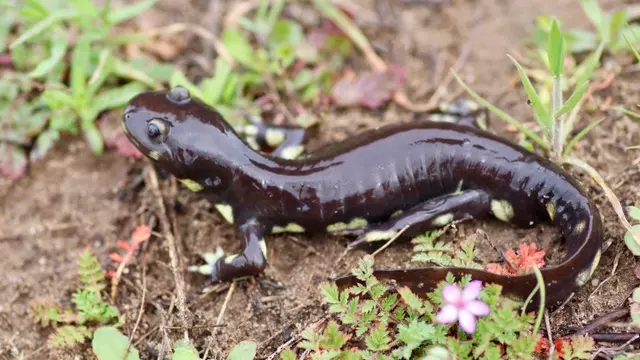
The Shaffer lab is a group of conservation biologists applying evolutionary and ecological theory to the solution of real-world problems at the interface of basic and applied science. Research in the lab tends to focus on amphibians and reptiles, and a fondness for these animals—combined with a fundamental respect for natural history and field biology—are among the strongest themes unifying the group. Shaffer and his lab members have worked for decades on the federally and state listed California tiger salamander, Ambystoma californiense, including genomic analyses of a unique case of hybridization between introduced and native tiger salamanders that has as much to say about mechanisms of speciation as it does conservation biology. They are also one of the primary labs in the world using genomic techniques to better understand the evolutionary history and conservation status of the world’s turtles and tortoises. These animals are among the most endangered on earth, and the lab works with both government and non-governmental organizations to identify at-risk species and prevent further extinctions of wild populations.  

Building strong collaborative research networks with local, state, and federal resource agencies is a key component of work in the lab. The California Conservation Genomics Project (CCGP) is a massive, multi-species effort to add genetic health assessments to California’s conservation mission, while the Atlas of Turtle Genomes for Conservation (ATGC) is an equally ambitious effort to use the power of genomics to determine where poached turtles should be re-released while simultaneously identifying hotspots of poaching for law enforcement. Brad is the Founding Director of the UCLA/La Kretz Center for California Conservation Science, the Director of the UCLA Stunt Ranch Reserve, and the faculty liaison to the cross-campus UC Nature system.
Projects

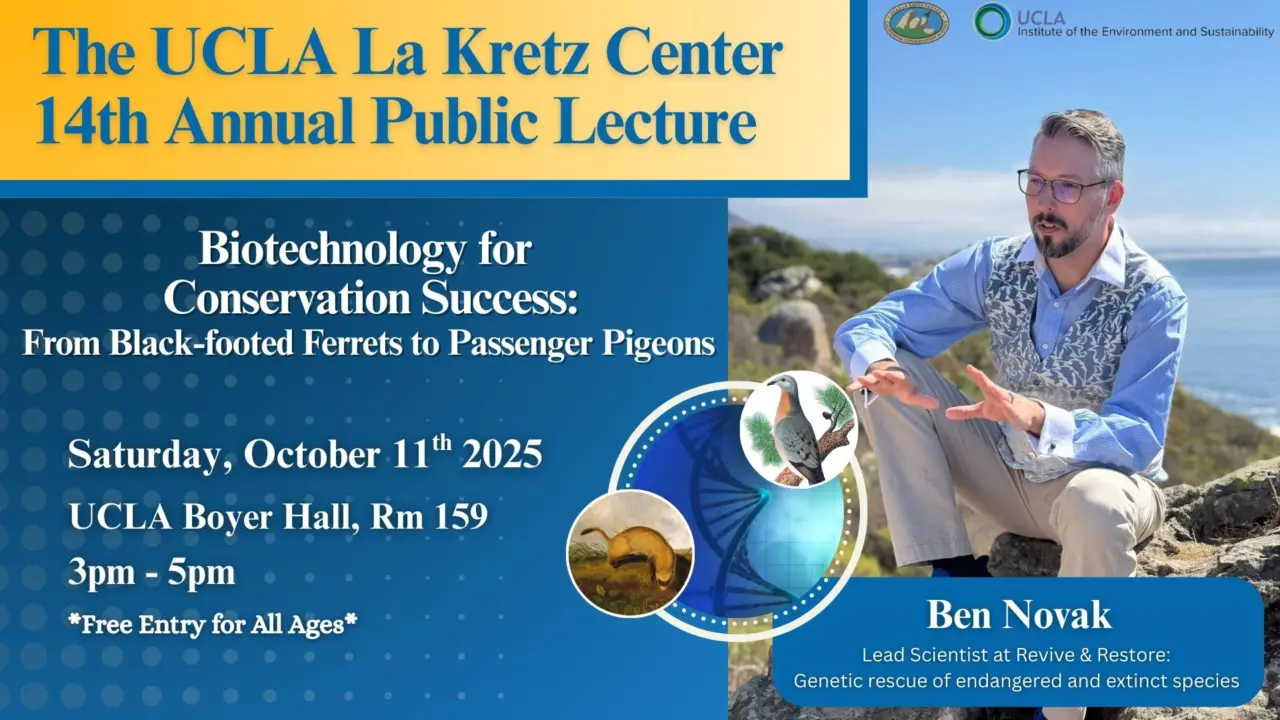
2025 Public Lecture announcement w/ speaker Ben Novak.

Biotechnology for Conservation Success

In 2025, the UCLA La Kretz Center for California Conservation Science hosted its 14th Annual Public Lecture, marking fourteen years of connecting the public with the scientific research that shapes…

The Endangered Species Act at 50

The Endangered Species Act at 50

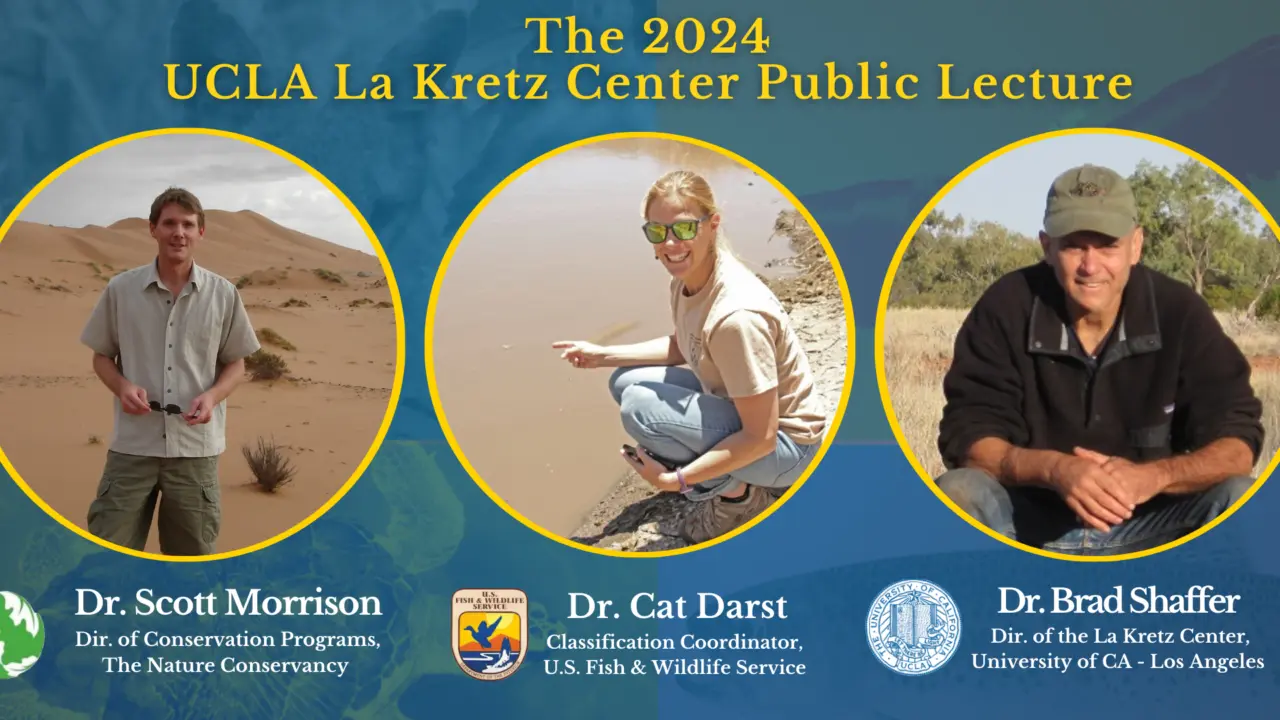
At the 13th annual Public Lecture hosted by the La Kretz Center, Drs. Cat Darst, Scott Morrison, and Brad Shaffer marked the 50th anniversary of the 1973 Endangered Species Act…

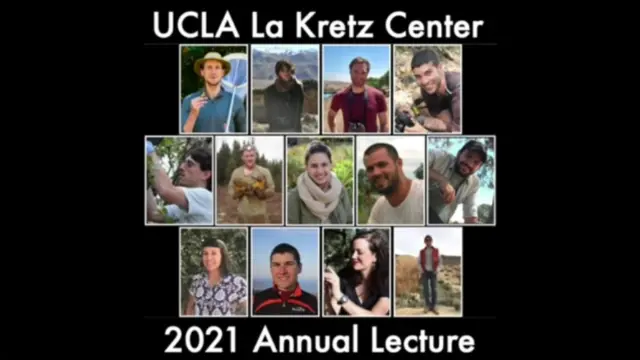
ucla la kretz 2021 annual lecture

UCLA La Kretz 2021 Annual Lecture

This event celebrates ten years of conservation research, featuring 3 minute lightning talks by each of our 13 past, current, and future La Kretz postdoctoral fellows. The presentations are followed…

western pond turtle at-risk species assessment

Western Pond Turtle at-risk species assessment

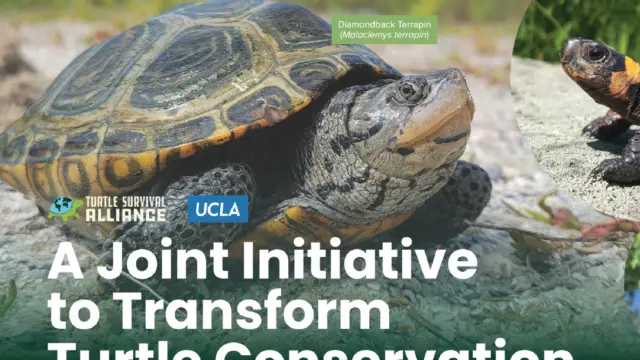
The western pond turtle is California’s only native freshwater turtle. The turtle’s numbers have been declining due to urbanization, limited water availability, and competition or predation from invasive species —…

See all projects

Recent Publications

Efficient screening for ‘genetic pollution’ in an anthropogenic crested newt hybrid zone

B. Wielstra, T. Burke, R.K. Butlin, O. Schaap, H.B. Shaffer, K. Vrieling, and J. W. Arntzen

Conservation Genetics Resources 8:553-560, 2016.

Published Work, Permalink

Phylogeny and temporal diversification of the New World pond turtles (Emydidae)

P.Q. Spinks, R.C. Thomson, E. McCartney-Melstad, and H. B. Shaffer

Molecular Phylogenetics and Evolution 103:85-97, 2016.

Published Work, Permalink

Do ecological niche models accurately identify climatic determinants of species ranges?

C.A. Searcy and H. B. Shaffer

American Naturalist 187:423-435, 2016.

Published Work, Permalink

Exon capture optimization in amphibians with large genomes

E. McCartney-Melstad, G. G. Mount, and H. B. Shaffer

Molecular Ecology Resources 16:1084-1094, 2016.

Published Work, Permalink

Hybridization and endangered species protection in the molecular era

R.K. Wayne and H. B. Shaffer

Molecular Ecology 25:280-289, 2016.

Published Work, Permalink

Advances in climate models from CMIP3 to CMIP5 do not change predictions of future habitat suitability for California reptiles and amphibians

A. N. Wright, M. W. Schwartz, R. J. Hijmans, and H. Bradley Shaffer

Climatic Change 134:579-591, 2016.

Published Work, Permalink

Ecological equivalency as a tool for endangered species management

C. A. Searcy, H. B. Rollins and H. B. Shaffer

Ecological Applications 26:94-103, 2016.

Published Work, Permalink

Amphibian molecular ecology and how it has informed conservation

E. McCartney-Melstad and H. B. Shaffer

Molecular Ecology 24:5084-5109, 2015.

Published Work, Permalink