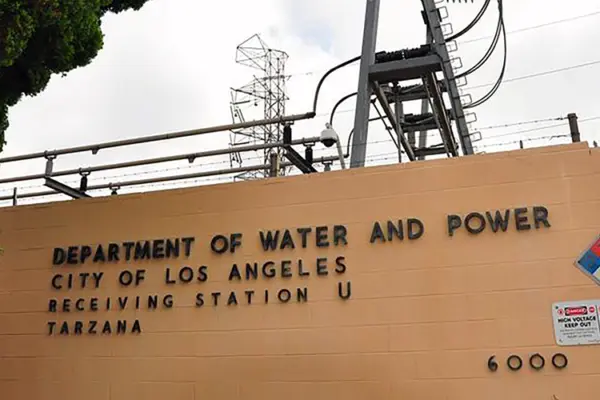
The public utility asked, and more than 20 UCLA faculty and researchers with expertise in engineering, environmental science, law, labor studies, public health, and public policy answer in a new report, LA100 Equity Strategies. Researchers, in partnership with Rachel Sheinberg, wrote Chapter 13: Energy Affordability and Policy Solutions, providing specific recommendations for robust, long-term, structural solutions to LADWP’s customers’ ability to pay their bills.
It has been interesting talking to prospective PhD students. Clearly motivated to engage with the issues of environment and increasingly that of environmental justice, it seems most wish to be able to measure impacts in order to better describe their effects on environmental justice communities. Few, if any, ask the why questions, questions about how these situations arise, about the structuring forces that created inequalities and profoundly unequal environmental impacts involving the poisoning of communities.
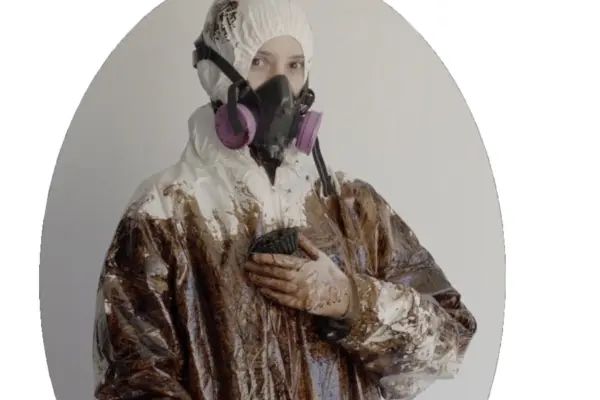
Emma Akmakdjian is a student in Dr. Pincetl’s ENV297 class. She’s an installation artist who collaborates with scientists to translate processes of complex ecosystems, climate data, and object personifications in…
A new report details how Quemetco — the last remaining secondary lead smelter in California — has exploited a failed regulatory structure that does little to protect people and the environment.…
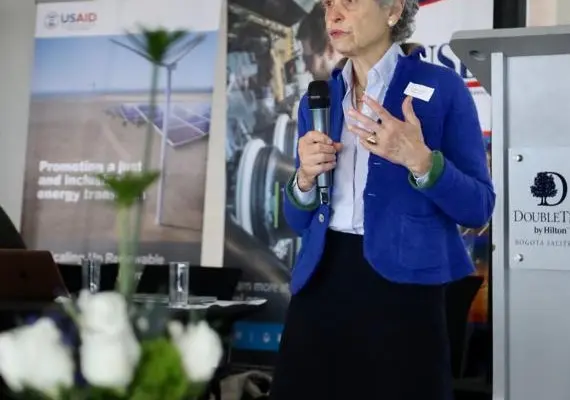
Dr. Stephanie Pincetl, director of the CCSC, and Sebastián Solarte-Caicedo, Ph.D. student in the Institute of the Environment and Sustainability, participated in the Energy Communities Workshop Series, an event organized…
Dr. Mikhail Chester hosts Dr. Stephanie Pincetl, whose work engages a multitude of disciplines (from engineers to urban planners to economists) to advance urban sustainability science and decision-making for water, energy, transportation, and land use systems. She explores how understanding and synthesizing these diverse systems surrounding our complex urban systems opens opportunities for future alternatives.
Final Project for Environment 155 at UCLA for Fall 2022.
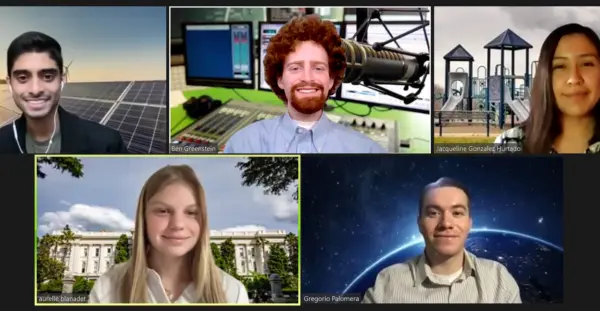
A webinar involving 1 host and 4 guests discussing the implications of and recommendations for a "just" energy transition. Benjamin Greenstein, Jacqueline Gonzalez Hurtado, Achinthya Poduval, Gredorio Palomera, Aurelie Blanadet
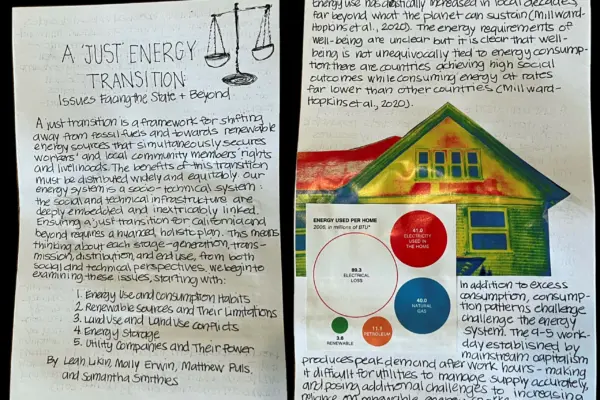
A zine exploring an equitable energy future by students in ES155. Created in December 2022.
By Angel More, Ava McCandless, Jack Sendell, Jose Robles, and Robert Smith
Panel discussion by the California Association of Realtors:Panel discussion by the California Association of Realtors: featuring CCSC's Director Stephanie Pincetl, Karen Collins, Assistant Vice President, The American Property Casualty Insurance Association and Chief Jim McDougald, Division Chief, State of California Department of Forestry and Fire Protection.
California’s commitment to advancing ambitious climate goals cannot ignore the impact of wildfires on communities across the state and the need for protection, policies, and resiliency measures to mitigate the most damaging effects of climate change. As wildfires and heat waves become commonplace concerns in the state, it’s clear that California needs a comprehensive action plan to reduce wildfire risk, improve environmental conditions, adapt insurance needs, and accelerate action to combat climate change. Additionally, it’s important to consider how we can empower property owners, homeowners, local governments, and pertinent stakeholders to proactively reduce wildfire hazards to minimize the loss of property and life and be active participants in advancing effective solutions. Among the key approaches to wildfire resiliency and preparation is collaboration with the insurance industry to ensure protective policies are available and affordable for all Californians who are at risk of climate change-intensified wildfires. Join us for a wide-ranging discussion that will cover such topics, including climate change trends, efforts to build resiliency to protect communities, and the future of housing development in a wildfire-prone state.
UCLA’s Stephanie Pincetl, another co-author, said part of the problem may be due to the Jevons paradox, a phenomenon that occurs when a technological advance or government policy improves the efficiency of how a resource is used but leads to an increase in consumption as a direct result of that efficiency gain.
“People think they can increase consumption without increasing their bills, so they use more,” said Pincetl, who is director of the California Center for Sustainable Communities at UCLA.
For LA residents climate change is no longer a distant or abstract concept because its effects are
already being felt throughout the region. During just the past three years, for example, several new
record high maximum daily temperatures have been recorded in numerous LA neighborhoods,
with Van Nuys experiencing 118 °F in 2018 and more recently, in 2020, parts of Woodland Hills
enduring temperatures of 120 °F. These developments are clearly illustrated in the figure below
which shows the percentage of sampled maximum daily temperatures within the LA-Basin that
were above different high heat thresholds for each year from 2005 to 2020.