The Nature of Cities: Nature based solutions, urban ecosystem services, however they are called, have emerged to try to remediate this historical modernist hubris which conceived of cities as technical…
Stephanie Pincetl, Professor in Residence and Director of the California Center for Sustainable Communities at UCLA, is currently the Fulbright Distinguished Chair at the University of Manchester in Geography. She…
Los Angeles County imports most of its water from distant sources, which is energy-intensive and leaves the region’s water supply vulnerable to disasters like earthquakes. As Los Angeles County moves…
UCLA graduates Anne Youngdahl and Sagarika Subramanian were key players on the research team responsible for publishing the 2019 Sustainable LA Grand Challenge (SLA GC) Environmental Report Card for Los Angeles…
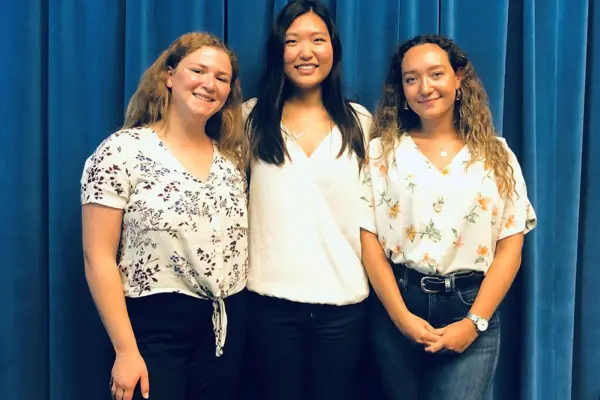
The Los Angeles Regional Collaborative for Climate Action and Sustainability sponsored three student interns to research transportation demand management (TDM) ordinances for implementation of the first ever County Sustainability plan. The…
Erik Porse and Stephanie Pincetl of UCLA Institute of the Environment and Sustainability work with Diane Pataki, professor in the School of Biological Sciences at the University of Utah and…
In a recent paper, Stephanie Pincetl, director of the California Center for Sustainable Communities at UCLA, and co-authors argue that investments made over the years to fortify the city’s supply with additional…
The capitalist paradigm as a world economic system that works for people and the planet is failing. For cities and nature, shifting graciously and well into the Anthropocene requires a fundamentally different political-economy that reflects new ethics and priorities.
Stephanie Pincetl, Director California Center for Sustainable Cities Institute of the Environment and Sustainability November 13, 2017 The City of Los Angeles has a modest yet persistent program, supported by…
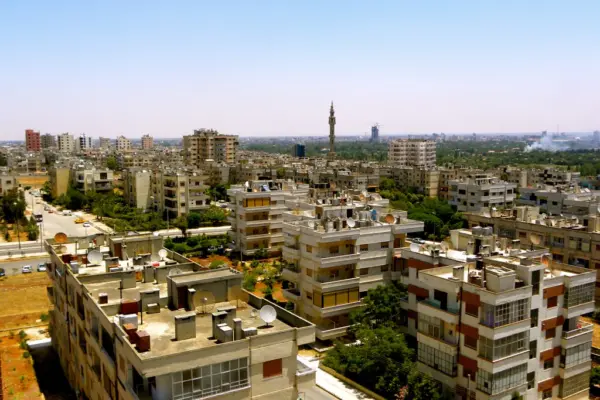
Dr. Pincetl’s latest post in the Nature of Cities. I have been reading an extraordinary book by Marwa Al-Sabouni: The Battle for Home: the Vision of a Young Architect in…
Post carbon cities are post-waste cities that confront the reality of our limited resources and overtaxed planet. Compost will be a way of life, as will sophisticated recycling and supply chain management. We no longer assume unlimited energy and planetary resources. We understand that our margin for resource extravagance is now razor-thin and that we can’t just override the constraints of natural systems by applying more brute carbon based energy. Earth resources are finite; its atmosphere sensitive. Instead, we recycle and repurpose as much as possible. Post carbon is about doing more — and better — with less.
PI: Stephanie Pincetl, Director CCSC Co-PI Madelyn Glickfeld, Director WRG In 2012, the Haynes Foundation awarded the California Center for Sustainable Communities (CCSC) at UCLA a multi-year grant to research…