California Center for Sustainable Communities

Blog

Blog

THE ABC’S OF ELECTRIFYING YOUR GAS APPLIANCES: A Guidebook for Households

While there are many benefits to electrifying your gas appliances, there are also costs. The costs and benefits are different for each type of appliance. We wrote this Guidebook as a starting point, to help you begin thinking about these decisions. Many people can’t afford to replace all their gas appliances, so this Guidebook can help you prioritize your choices, to make the best decision for you and your family. Your decision to electrify will depend on what is most important to you, such as improving your indoor air quality, keeping your utility costs low, or helping to slow climate change and improving outdoor air quality.


Blog

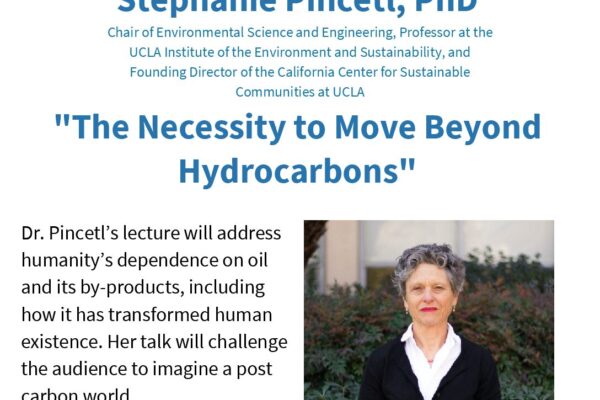
Dr. Pincetl spoke with the Environmental Science without Borders UCLA Chapter

Getting Beyond Tropes: Cities for the 21st Century Dr. Pincetl spoke to the Environmental Science without Borders (ESWB), a subsidiary of UCLA's Center for Diverse Leadership in Science (CDLS), which connects students and early-career scientists from around the globe, regarding her research on urban metabolism water and energy policy, habitat conservation efforts, and the impact of land use in conjunction with climate change and climate policies. 


Blog

The Case for Gas Bans and Residential Building Electrification: Equity Perspectives on an Emerging Socio-Technical Energy Transition

“Natural gas bans” refer to a diversity of municipal building code changes that disallow certain uses of natural gas in new residential buildings. Gas bans vary in terms of their provisions, but all are intended, along with complementary building electrification programs, to limit the amount of fossil fuels that must be extracted, transported, and burned to meet residential energy needs, thus reducing carbon emissions from buildings, which currently account for approximately 30 percent of the US’s total greenhouse gas (GHG) emissions.


Blog

A Strategic Framework for a Just Transition

Just Transition is a framework for a fair shift to an economy that is ecologically sustainable, equitable and just for all its members. After centuries of global plunder, the profit-driven, growth-dependent, industrial economy is severely undermining the life support systems of the planet. An economy based on extracting from a finite system faster than the capacity of the system to regenerate will eventually come to an end—either through collapse or through our intentional re-organization.


Blog

Wildfire expert videos: Stephanie Pincetl

Stephanie Pincetl is professor-in-residence at the UCLA Institute of the Environment and Sustainability and founding director of the institute’s California Center for Sustainable Communities. She has studied how various factors contribute to wildfires…