
Meet the 2026 Pritzker Environmental Genius Award candidates #1–5
The first five nominees for this year’s Pritzker Emerging Environmental Genius Award display an impressive scope of vision, everything from protecting pangolins and sloths to reimagining a more sustainable fashion industry. While…
The first five nominees for this year’s Pritzker Emerging Environmental Genius Award display an impressive scope of vision, everything from protecting pangolins and sloths to reimagining a more sustainable fashion industry. While their projects may differ, their commitment to a better future unites them all.

Callie Broaddus
Conservationist, filmmaker and photographer working to empower youth to conserve threatened species and habitats around the world.
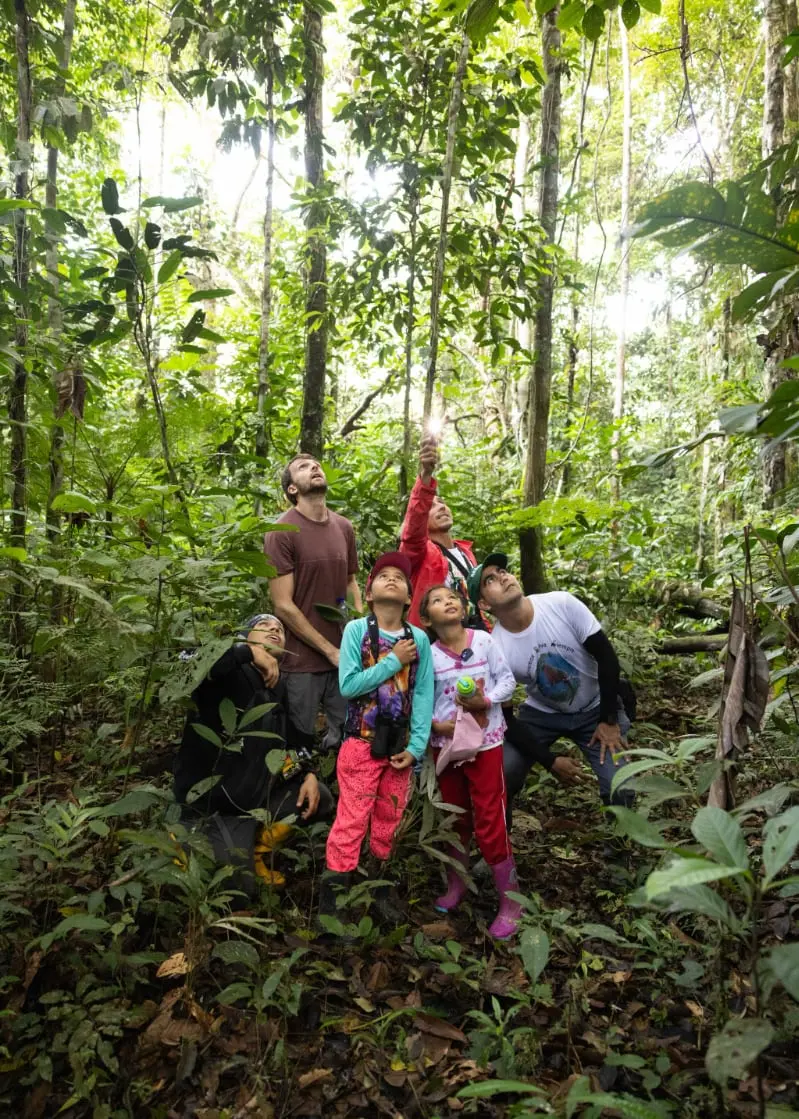
As founder and executive director of Reserva: The Youth Land Trust, Callie Broaddus is redefining youth leadership in conservation by giving young people the power to drive environmental action. She created Reserva to fill a critical gap, ensuring youth are not only advocates and volunteers but also leaders and decision-makers.
Under her leadership, Reserva established the Dracula Youth Reserve in Ecuador’s Chocó cloud forest, the world’s first entirely youth-funded nature reserve, and has grown to more than 100 members from over 30 countries.
By empowering young people to lead conservation efforts and influence global policy, Broaddus is helping shape a future where the next generation inherits a thriving, biodiverse planet because they played a central role in protecting it.

Zuzana Buřivalová
Tropical forest conservation scientist dedicated to giving biodiversity a voice in the decisions that shape its future.
Zuzana Buřivalová is transforming conservation by combining bioacoustics, artificial intelligence and field ecology to make biodiversity easier to measure in forests around the world. Her research provides practical tools to assess forest recovery, evaluate conservation projects and guide sustainable forest management.
Beyond academia, her work has shaped forestry certification, conservation investment and protected-area management. In Gabon, her bioacoustic research helped demonstrate the ecological value of a community forest, contributing to its removal from a logging concession. Through the Soundscape Baselines Project, she is building a global reference library of intact forest soundscapes to help monitor biodiversity over time.
Buřivalová also invests in local researchers, Indigenous partners and communities, helping build technical expertise and support conservation that is both locally led and scientifically robust.

Maya and Mica Caine
Strategists whose fashion company reimagines clothing as a shared civic resource and advances regenerative, place-based systems of stewardship and circularity.
Through their company Helix, sisters Maya and Mica Caine are reimagining the fashion industry by creating a more sustainable, community-centered model. Their approach challenges the cycle of overproduction and waste that drives environmental harm, including pollution, carbon emissions and poor labor conditions. Instead, Helix extends the life of garments already in circulation while strengthening local connections and creating shared value for communities.
By designing a system built on circularity, trust and long-term sustainability, the Caine sisters are demonstrating how fashion can reduce its environmental impact while supporting people and local economies. Their innovative, systems-based approach offers a compelling vision for transforming one of the world’s most resource-intensive industries.

Rebecca Cliffe
Zoologist dedicated to protecting sloths and their tropical forest habitat.
Rebecca Cliffe has dedicated her career to protecting sloths through a combination of rigorous scientific research, conservation action and public engagement. Her work is rooted in long-term ecological study, while her commitment to advocacy and partnership-building ensures that research leads to meaningful conservation outcomes. By working closely with local communities, scientists and policymakers, she has helped advance the protection of sloths and their rainforest habitats. Cliffe is also a compelling science communicator, translating complex conservation challenges into accessible, inspiring messages that encourage action. Through her research, leadership and advocacy, she is deepening public understanding of biodiversity and helping build a stronger, more effective movement to protect the natural world.

Charles Agbor Emogor
Zoologist who integrates ecology, artificial intelligence and technology to address pertinent conservation challenges in Africa.
Charles Agbor Emogor is advancing conservation through research that bridges wildlife protection with the needs of local communities. His interdisciplinary work has reshaped understanding of illegal hunting by revealing that most pangolins in Nigeria are hunted for local consumption rather than international trafficking, prompting new approaches to conservation policy.
Alongside his research, he founded the Pangolin Protection Network (Pangolino) to strengthen education and public support for pangolin conservation. His current work uses GPS tracking and artificial intelligence to predict and prevent illegal hunting across Africa. B
By addressing the links between biodiversity loss, poverty and food security, Emogor is developing conservation solutions that are evidence-based, inclusive and designed to deliver lasting benefits for both people and wildlife.