What the mountain taught me
2026 Pritzker Award finalist Doris Njagi reflects on her work
I grew up on the slopes of Mount Kenya. When I was small, the mountain wore snow like a crown, the rains came when they were supposed to, and the forest that ringed its base was so thick and loud with life that walking into it felt like stepping into another country. I remember the sound most of all. Birds, insects, the wind moving through old trees. A forest that is healthy is never silent.
The people I grew up around were farmers. They worked harder than anyone I have ever met, bent over the same soil their parents had worked, and their mothers before them. And over the years I watched two things happen at once. The mountain began to lose its snow, the seasons grew confused, and the forest started to pull back, cut tree by tree. And the farmers, despite all that work, did not get less poor. They got more tired.
For a long time I did not understand how those two things were connected. It took me years, and a career I did not expect, to see it.
I went into finance. I spent more than a decade in climate finance, in rooms where enormous sums of money were discussed, all of it meant, in one way or another, to fix the very crisis I had watched arrive on my own mountain. It should have been the most hopeful work in the world. Instead it slowly broke my heart. Because I could see, from the inside, that almost none of that money ever reached the people I had grown up with. The farmers closest to the land, the ones best placed to heal it, were the ones the whole system was built to skip over.
And then I understood the thing I had missed as a child. It was never that the farmers did not care about the forest. It was that we had built a world where caring for it made no sense for them. A tree costs money to plant and years to grow. Clearing land pays you this season. If you are feeding your children today, you cannot afford to wait a decade for a tree to pay you back. So the forest fell, not out of greed, but out of an impossible choice we had handed to the poorest people and then blamed them for making.
Once I saw it that way, I could not unsee it. I left finance to build the thing I had spent years failing to find inside it.
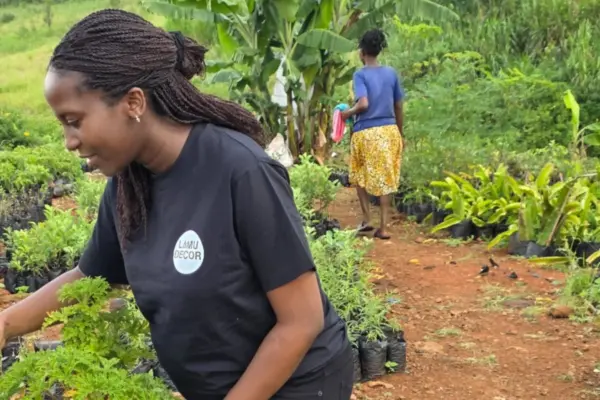
Forest Restored is simple to say and hard to do. We pay farmers to grow native trees. We use money from carbon to cover the cost, so a farmer earns from the very first year instead of waiting ten. We help them sell the fruit and the honey and the timber those trees eventually give. And we use simple tools, cameras in the sky and sensors on the ground that listen to the land, to prove every tree is real, so the money keeps flowing and most of it stays in the farmer’s hands. We are not asking anyone to choose between their family and the forest anymore. We made those the same choice.
I could give you the numbers. Tens of thousands of farmers, tens of thousands of hectares. But the number that undoes me is not on any spreadsheet. It is the sound. On land we have helped bring back, the birds have returned. After years of quiet, the forest is loud with life once more, and it is loud because the people who live there finally had a reason to let it grow.
This is why I do this work. Not because I believe nature must be saved from people, but because I believe the people closest to the land have always been its best keepers, and we simply never paid them to be. I want the mountain my children see to carry more snow than the one I see now. I want to prove, past any argument, that restoring an ecosystem and lifting a family out of poverty were never two separate goals.
They were always the same one.
Meet the Author