Professor Stephanie Pincetl discusses her new book with Professor of Anthropology Monica L. Smith
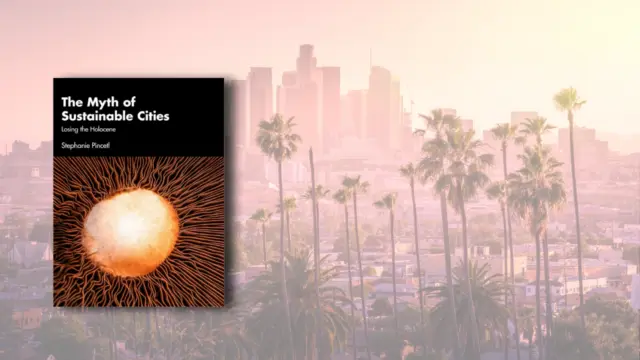
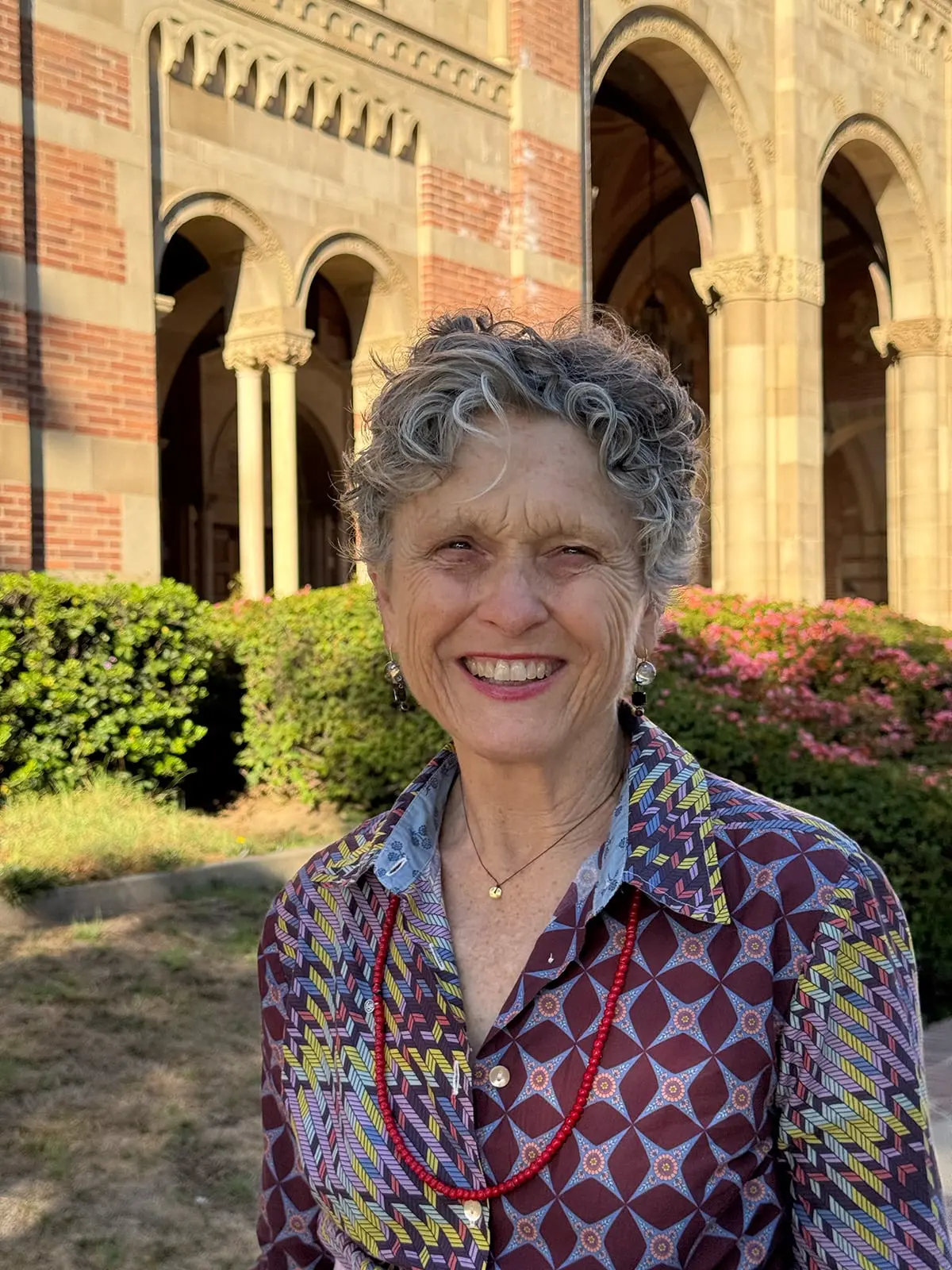
Join us for a conversation with IoES Professor and Founding Director of the California Center for Sustainable Communities at UCLA Stephanie Pincetl about her new book, "The Myth of Sustainable Cities: Losing the Holocene"
UCLA researchers find that if the state applies existing valuation tools consistently, residents could reap the savings already enjoyed by other states.
Rachel Sheinberg, a Ph.D. candidate at the UCLA Institute of the Environment and Sustainability (IoES) graduating this year, studies a critical challenge in the clean energy transition: who benefits, and who could be left behind.
A closer look at the decisions, data and trade-offs behind LA’s plan to reach 100% renewable energy by 2035 — without leaving vulnerable communities behind
UCLA IoES Professor Stephanie Pincetl discusses Los Angeles’ rebuilding efforts after the devastating wildfires for The Economist, asserting that the city should use this moment to address its housing crisis…
As Greece recovers from devastating wildfires near Athens, Southern Californians should recognize the same risks at home. Development in wildfire-prone areas, changes to native vegetation, drought, extreme heat and wind, intensified by climate change, create dangerous conditions. The factors behind Greece’s destructive fires are also present in Los Angeles.
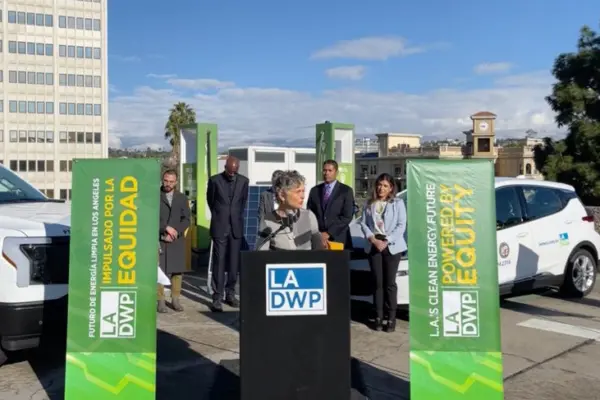
Last year, as part of the study, the UCLA Luskin Center for Innovation (LCI) and colleagues provided LADWP with recommendations for robust, long-term solutions to low-income customers’ ability to pay their bills through the clean energy transition. Now, in partnership with the UCLA California Center for Sustainable Communities, our researchers are digging deeper into energy equity issues to guide the agency’s development, implementation, and evaluation of these recommendations.
“LADWP has the opportunity to lead the nation in how to achieve a more just energy transition,” said Stephanie Pincetl, director of the UCLA California Center for Sustainable Communities, “and we are honored to help facilitate that possibility.”
UCLA’s Stephanie Pincetl says expanding the San Gabriel Mountains National Monument should go hand in hand with better local access to green space — so LA’s residents can enjoy nature without overcrowding the mountains.
The California Center for Sustainable Communities, along with UCLA research teams and departments, has been selected as a finalist for the Smart Electric Power Alliance (SEPA) 2024 Power Player Awards in the Equity category.
Founding Director of the California Center for Sustainable Communities and Chair of UCLA’s Environment and Sustainability Ph.D. program Dr. Stephanie Pincetl co-authored a study, “Advancing a Net Zero Urban Water Future in the United States Southwest.” Published in ACS ES&T Water, the research examines the feasibility of Net Zero Urban Water (NZUW) — cities becoming self-sufficient with local water sources. This is crucial for the water-stressed US Southwest, where the Colorado River can’t meet the demands of 40 million residents.
Building experts say it’s no surprise that empty offices are burning so much energy. Electrical infrastructure like elevators consumes energy even when not in use, as do the pumps that maintain water pressure for faucets and toilets, said Eric Fournier, research director at UCLA’s California Center for Sustainable Communities. Turning these off would make it hard for buildings to “maintain a posture of openness.”
A building is “kind of a living thing,” he said. “You can’t just cut the cord on it and expect it to carry on in good health for a long period of time.”
Air conditioning systems are also kept on in empty buildings to avoid structural problems, mold and water-borne illnesses.
The design of these large offices, many of which were built over a century ago, typically assumes a certain range of temperatures, Fournier explained. “If you deviate from that for a prolonged period, weird things happen that could be very expensive to fix.”
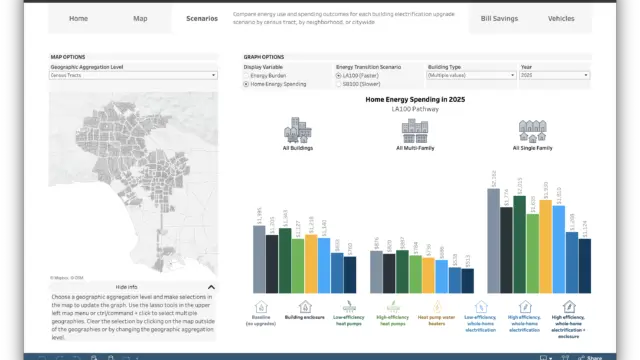
Authored by the team at CCSC about the UCLA Energy Atlas. "This book covers a remarkable breadth of topics across a compact seven chapters. The breadth is necessitated by the subject matter and authors’ ambition to construct an 'energy atlas' for the state of California from the most granular data available.
The content covered will be of interest to a wide readership, particularly policymakers and researchers in the energy, built environment and policy domains. It is accessible enough to be read by non-specialists and would be of interest to anyone working or interested in the built environment or planning and the role of individuals and individual buildings in the wider transition to net zero."
Researchers analyzed an archive of energy consumption data and hosted listening sessions to come up with “LA100 Equity Strategies.” The study is a detailed analysis of L.A.’s clean energy investment inequities. It also outlines more than 50 ways officials can address those inequities, including housing, local solar, and truck electrification.
Stephanie Pincetl was one of those researchers. She’s a professor at the UCLA Institute of the Environment and Sustainability and founding director of the California Center for Sustainable Communities.
Pincetl told LAist the city needs to really communicate the benefits of going 100% renewable with the residents and ratepayers of Los Angeles. That’s not an easy message to get across, she added, and the LADWP can’t do it alone.