‘The most regenerative thing I know’: Q&A with Denica Riadini-Flesch
Wisdom, perspective and inspiration from UCLA’s 2025 Pritzker Award winner
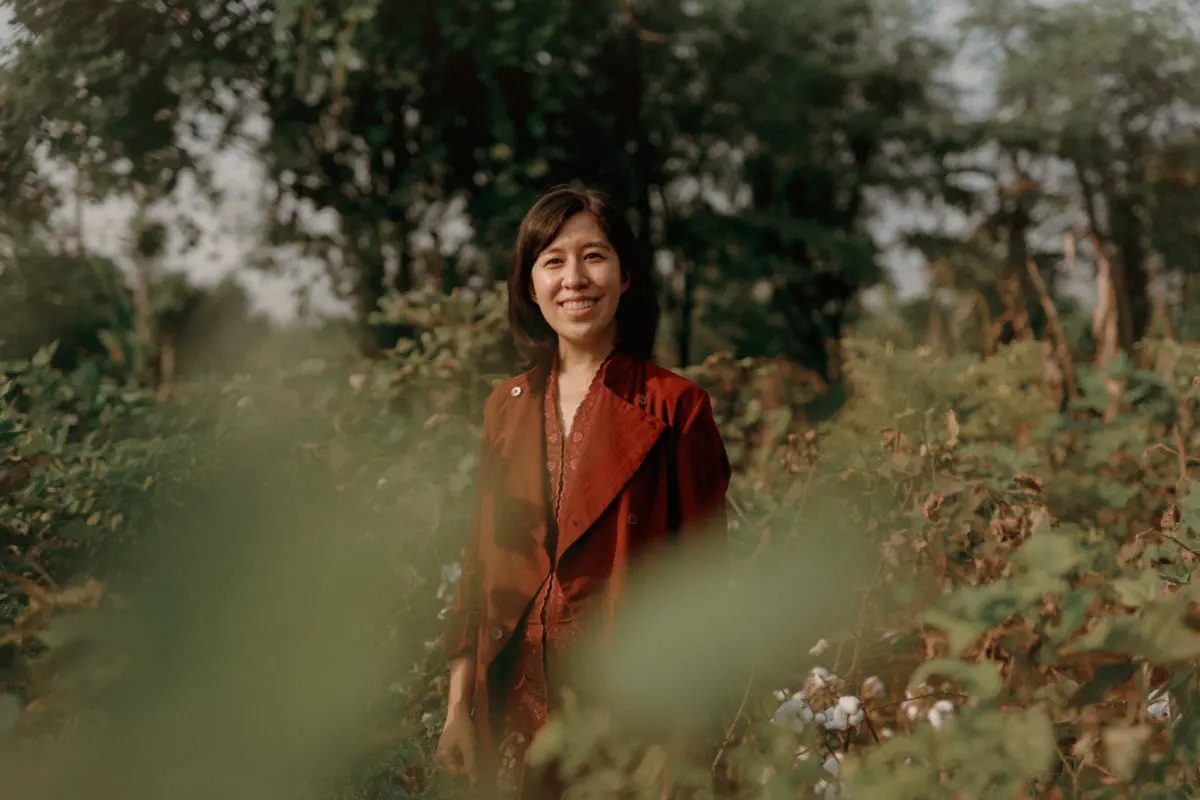
The impact of Denica Riadini-Flesch’s visionary work reimagining the fashion industry to empower the smallholder farmers and women artisans who make it possible has been both sweeping in scale and deeply personal.
“My work shows that when rural artisans lead — when Indigenous wisdom, regenerative farming and economic dignity are placed at the heart of our solutions — we don’t just reduce harm, we lay the blueprint for a regenerative future,” she shared last autumn when she won the 2025 UCLA Pritzker Emerging Environmental Genius Award.
To hear more about the evolution of her work over the past year and how she is crafting an even more transformative future, we spoke with Riadini-Flesch, the founder and CEO of SukkhaCitta.
What have you been up to since you won the Pritzker Award last October?
I had a daughter in December, and I have spent this year building for depth rather than width.
An award changes the questions people ask you. Everyone wants to know how much bigger you are going to get. I found myself interested in a different one. What is already working, and how do we do far more of exactly that.
So we went looking for our bright spots. The village where young women started coming back to learn batik because the craft finally pays. The pieces our customers keep for years and hand on. Those are not accidents. They are patterns, and patterns can be repeated.
Which meant most of this year went into systems. We restructured so SukkhaCitta runs on shared leadership rather than on me. The team ran the whole thing beautifully while I was away, and watching that happen was one of the great joys of the decade.
How has becoming a parent impacted your vision for your work?
It made everything personal.
I used to analyze systems from a distance. I trained as an economist, and I was good at reading supply chains as diagrams. Then my daughter arrived and every one of those diagrams became a place she will one day have to stand in. I am not building a social enterprise anymore. I am building the world she will grow up in.
When I picture her walking into systems that were never designed with her in mind, the work feels more alive than it has ever felt. More urgent. And sacred at the same time.
What steadies me is that I learned this from women who have been doing it far longer. The Ibus mother well beyond their own children. Caring for their family, their village and Ibu Pertiwi is not a task they get through. It is how they refuse the world that was handed to them.
That is the inheritance I want for my daughter. And it is the same thing I want for every woman we work with, whose worth was decided for her long before she had any say in it.
Your work is actively transforming the fashion industry. What should everyone think about the next time they get dressed?
That a piece of clothing is a portal, and most of us have never been shown what is on the other side of it.
Pick up something you own and ask where the cotton grew. Almost none of us can answer. I find that thrilling rather than shameful, because it means there is an entire world sitting behind an ordinary morning, waiting.
Here is what is on the other side. The cotton in one of our pieces was grown by a woman named Kasmini, on land that used to be dead and now holds water through the dry season. The indigo ferments for three weeks and cannot be hurried. In Java, the word for making batik is menulis. To write. A woman sits with hot wax and a copper canting and draws line after line for 40 days, and what she makes is closer to a sentence than a pattern.
So a piece of cloth is a library. Of hands, of a particular hillside, of a year with its own rainfall. It connects a woman getting dressed in Los Angeles to a woman in a village in Java and to the soil under her feet. That connection was always there. We simply stopped being told about it.
Fashion touches nearly every human being on earth, every single day. That is usually described as the scale of the problem. I see the scale of the invitation. Ten years in, I can tell you it works.
What has it meant to become part of the Pritzker Award community?
It has meant that the Ibus’ wisdom has a seat at the table.
Our Ibus read soil the way a scientist reads a dataset. They know what the land needs from the smell of it after rain, which plants belong beside which, how long to let a field rest. No paper anywhere says so. That knowledge lives in villages and in Indigenous communities, in hands that have worked the same ground for generations, and it is almost never counted as expertise.
When the world gathers to talk about climate solutions, the farmers and the makers are rarely in the room. They are the ones with their hands in the actual ground.
Being carried into those rooms has changed my life. I arrived expecting to defend the idea and found a community already leaning toward it.
What I hope for most is reach. Not for us, for the idea. That someone hears how a village in Java grows cotton and goes looking for the version of it in their own country, their own craft, their own soil. A great deal of the knowledge we need is already held by people we forgot to ask.
This year marks the tenth anniversary of both the Pritzker Emerging Environmental Genius Award and SukkhaCitta. What lessons have you learned from the past decade?
There is a Javanese saying I keep close. Urip iku urup. Life is flame. A life is meant to give light, and the beautiful part is that a flame loses nothing by lighting another one.
That is the first lesson, and it took ten years to understand properly. I used to think the work required burning myself down. It does not. It asks you to burn well, and to keep passing the light on, which is the only way any of this outlasts a single person.
The second is that the opposite of poverty is not wealth. It is dignity. The day Ibu Lilik understood her hands held something valuable and raised her own price, she began standing differently. That changed more than the money did.
Everything we treat as fixed, the price of a craft, the cost of a garment, what a village can expect from the world, was decided by somebody. Anything decided can be decided again. Ten years on, young women are choosing to stay in their villages because the craft is finally worth something. What is possible is far more generous than we were told.
What do you want to achieve in the next 10 years and beyond?
I want the next ten years to make us unnecessary.
The concrete goal is 2.5 million acres regenerated and livelihoods for 10,000 women. What I really want is for our way of working to become ordinary. Right now, people write about us because it is unusual for a company to know the woman who grew its cotton. I would like to live long enough for that to feel obvious. For a young designer somewhere to hear that a garment could carry a name, a village, a river, and think “of course it can,” how else would you do it.
That feels right, because none of this began with me either. The Ibus were farming this way for 400 years before anyone called it regenerative. Everything I know was put into my hands by someone else.
My grandmother planted the trees I sit under. I will never sit under the ones I am planting now, and I have stopped experiencing that as a loss. It is the whole point.
What’s your best advice to whomever wins this year’s Pritzker Award?
Stop for a moment and take in how far you have come.
I know that sounds soft for advice. It is the thing I most wish someone had made me do. All of us started somewhere small, and usually somewhere painful. SukkhaCitta began with heartbreak. I was an economist who thought she understood poverty from her data, until I sat on a floor in a village with a woman whose hands and lungs were burned by the dyes she worked with every day. She told me it hurt. Then she asked me what choice she had. I had no answer for her, and I have been building one ever since.
If you win this award, you built an answer to your own version of that moment. You made something exist that did not exist before. Sit with that for a day, because the work will not pause to let you.
Then keep going, and take everyone with you. Say their names in every room you are invited into. The prize is a door, and the most useful thing you can do is hold it open behind you.
Is there anything else you’d like to say?
Only this. It can feel naive to talk about joy in a year like the one we are living through. I have come to believe it is the opposite of naive. Joy is what allows you to stay long enough to change anything.
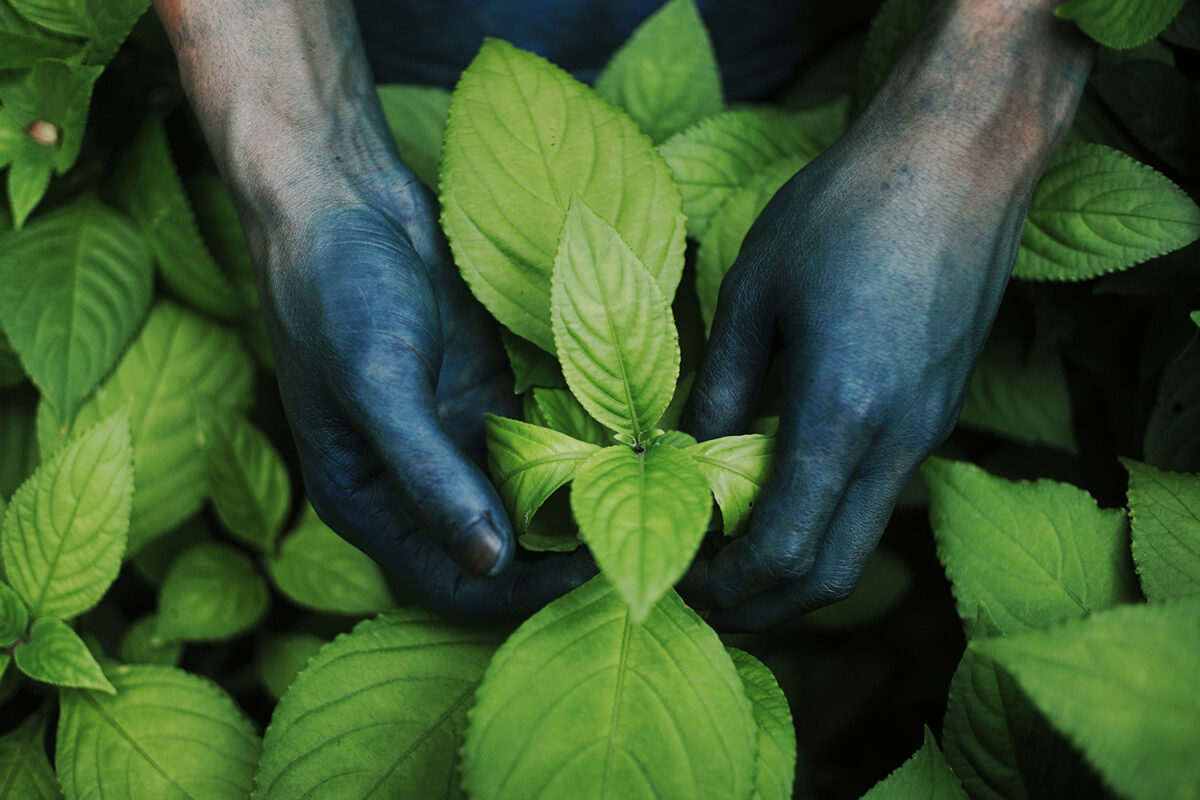
Something I love about our work. Indigo looks like nothing in the vat. The dye is dark, it smells terrible and the cloth comes out of it green. It turns blue only when it meets the air. The color is made in the dark and revealed in the open, and there is no way to hurry it, and the Ibus have known this for generations.
Caring is a choice made on ordinary days, mostly when nobody is watching. For your community, for the earth and for yourself, which is the one most of us skip. It compounds quietly. I have watched it compound for ten years on land everyone told me was finished, and the land came back.
Urip iku urup. Life is flame. Let yours give light, and pass it on.
So follow your joy. Especially now. It is the most regenerative thing I know.
Meet the Author