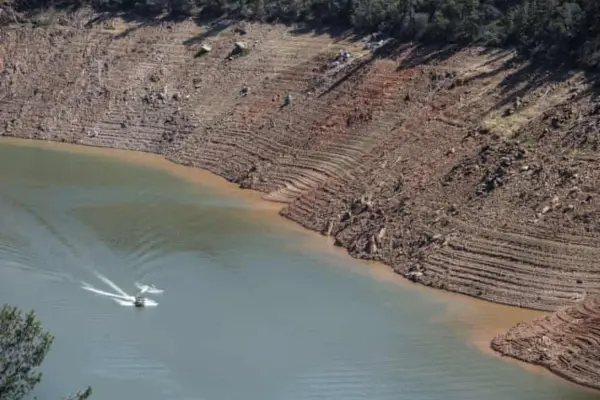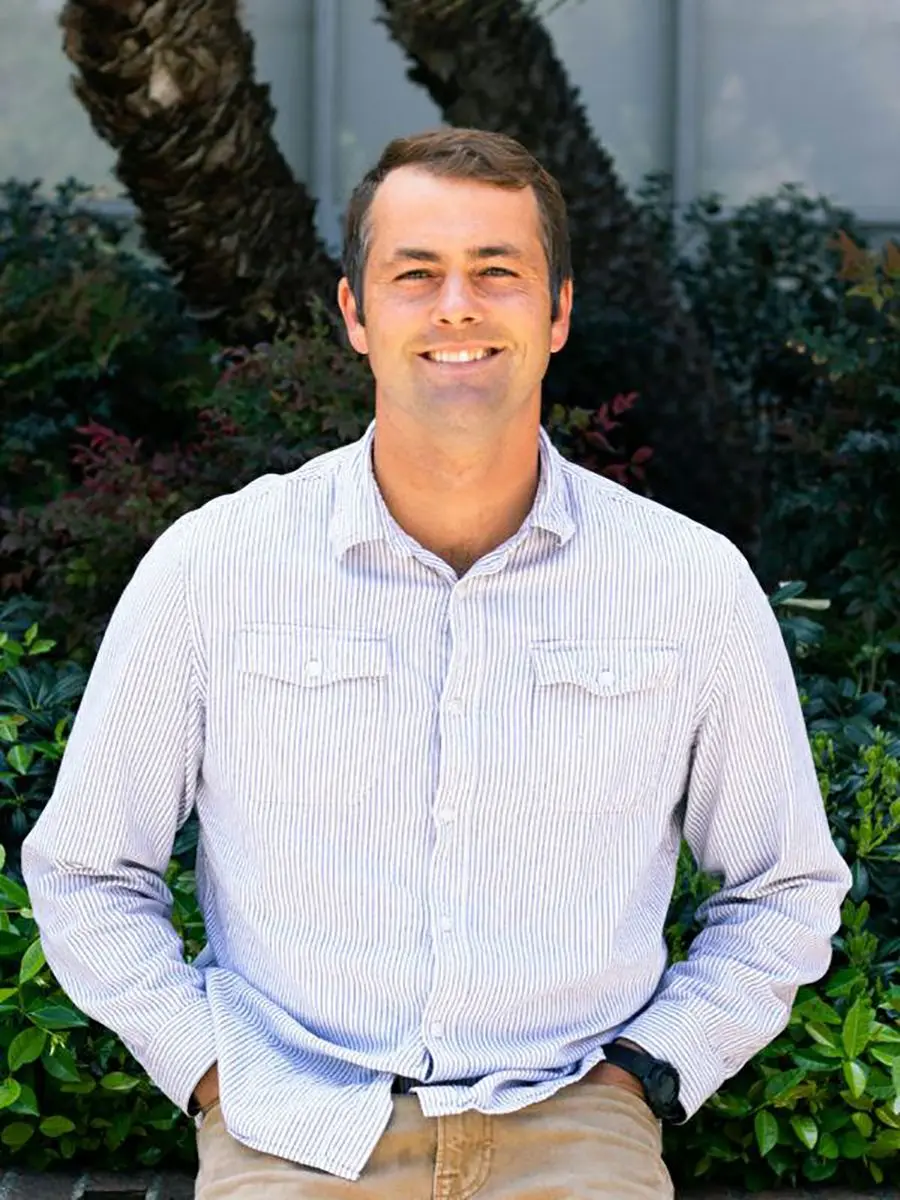
In the new documentary Without Water, Stephanie Pincetl, director of the California Center for Sustainable Communities at UCLA, argues that Long Valley is a test case for big cities seeking smarter ways…
Dr. Mikhail Chester hosts Dr. Stephanie Pincetl, whose work engages a multitude of disciplines (from engineers to urban planners to economists) to advance urban sustainability science and decision-making for water, energy, transportation, and land use systems. She explores how understanding and synthesizing these diverse systems surrounding our complex urban systems opens opportunities for future alternatives.
Final Project for Environment 155 at UCLA for Fall 2022.
A webinar involving 1 host and 4 guests discussing the implications of and recommendations for a "just" energy transition. Benjamin Greenstein, Jacqueline Gonzalez Hurtado, Achinthya Poduval, Gredorio Palomera, Aurelie Blanadet
A zine exploring an equitable energy future by students in ES155. Created in December 2022.
By Angel More, Ava McCandless, Jack Sendell, Jose Robles, and Robert Smith
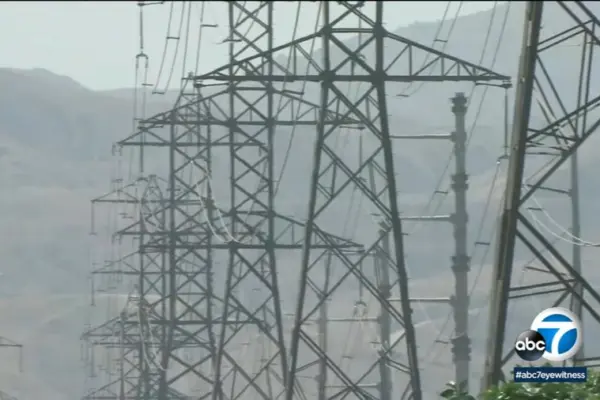
But many blackouts can also be blamed on how the electric system works. Namely: The goal of the power grid is to deliver electricity to your home as soon as it’s been generated at a power plant. There isn’t a great pool of electricity waiting in reserve for when demand spikes. Experts say that needs to change.
“Electricity systems are real-time systems,” said Eric Fournier, research director at UCLA’s Institute of the Environment and Sustainability. There’s little room for error.
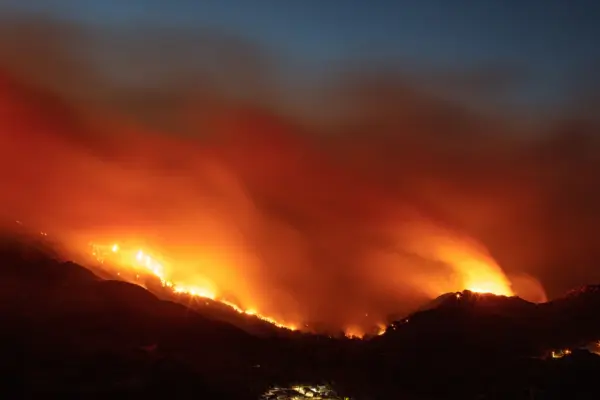
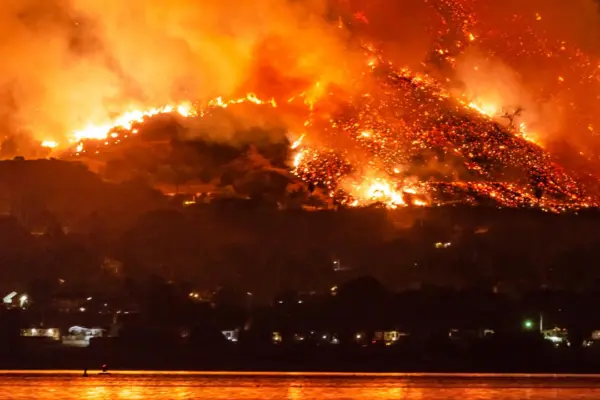
How do we survive in the age of climate change driven megafires? The Big Burn podcast from LAist Studios tries to answer that complex question by exploring how we got here, how we keep screwing things up, and what we can do to survive and even thrive while the world around us burns. -- Stephanie Pincetl, guest panelist
The area encompassing both Southern California and Baja in Mexico have what’s known as chaparral ecosystems: dry soil, hot weather, and short shrubs. But these two regions’ fire lives have played out very differently. “Right across the border, there are very similar chaparral ecosystems,” Pincetl said, but “that chaparral has not had the benefit of fire suppression, because the Mexicans simply can't afford it. And it continues to exhibit this low intensity fire pattern, which does not kill the chaparral, but there are unsuppressed fires that occur on a relatively regular basis. And people don't die. The houses aren't burned. There's not huge conflagrations. So how do we get back to that kind of chaparral, is the question.”
Heat’s impact on the grid is twofold, explained Eric Fournier, research director at UCLA’s Institute of the Environment and Sustainability. First, more people turn on their air conditioners and run them for longer on hot days, which means electricity demand is higher.
Second, heat has a physical impact on the infrastructure of the grid, making wires less efficient at moving electricity and pushing transformers and thermal power plants to their temperature limits. As the temperature rises, those air conditioners have to work harder to cool the air — which means they draw more power, straining the grid even more. “So you get this feedback loop,” said Fournier.
“I think that incentives are a way to reward the rich for doing the right thing and don't do a whole lot for the poor," said Stephanie Pincetl, director of the California Center for Sustainable Communities at UCLA.
More detailed data collection and analysis will be important in this effort and others, and it will be led by the California Center for Sustainable Communities — specifically leveraging its Energy Atlas, which can show city officials where resources are being consumed and at what level, down to the individual building or unit.
“Anything that has a spatial characteristic, we can examine and provide an analysis for it,” said Stephanie Pincetl, founding director of the center. “Our motivation is to work at consumption through the lens of equity. How much are they using? Where? And to do what, and under what conditions?”
An overall issue with the current approach to lawn replacement is that it's very individualised, says Dr Pincetl. There is an element of personal responsibility when it comes to lawns and water use, according to Dr Pincetl, where "the water you use on your lawn is the water I'm not going to be drinking next week".
At the same time, more sweeping community-level changes are needed.
Dr Pincetl calls for "a more robust infrastructure of transformation to really help people who want to make that transformation and don't have that kind of capacity". For instance, youth training organisations could work neighbourhood by neighbourhood to support residents in reimagining their lawns.