
Penguins as Marine Sentinels
Watch Professor Dee Boersma give a short introduction to her Oppenheim Lecture, Penguins as Marine Sentinels, held April 15, 2009. Professor Boersma discussed why the penguin populations in the world’s…

Watch Professor Dee Boersma give a short introduction to her Oppenheim Lecture, Penguins as Marine Sentinels, held April 15, 2009. Professor Boersma discussed why the penguin populations in the world’s…
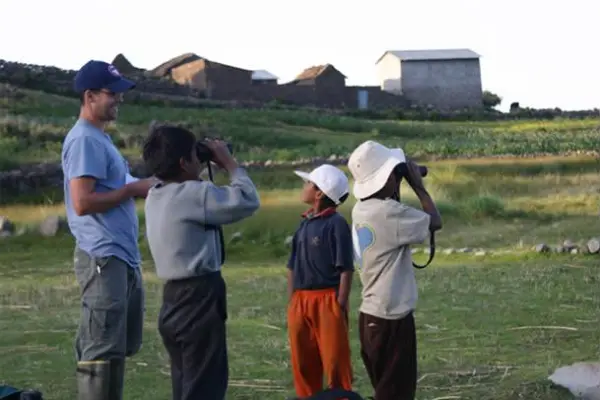
Dear Friends of CTR, During the current global economic crisis that is affecting the livelihoods of so many people, we need to continue to serve as guardians of our planet’s…

https://youtu.be/-Cp5y6bSKCs An Oppenheim lecture held February 11, 2008 with Dr. Mark Gold, environmental scientist and President of Heal the Bay. Dr. Mark Gold has devoted over twenty years to improving…

https://youtu.be/2RqaonfSzQ4 Watch this five-minute video where Professor Hoffman gives you the highlights of his Oppenheim Lecture.In his lecture on the Business of Climate Change, Professor Hoffman discussed the market implications…

https://youtu.be/2fRPiNcikOU Dr. Jackson, a famed marine ecologist from the Scripps Institute of Oceanography, describes how marine ecosystems are being transformed by human impacts, including habitat destruction, overfishing, introduced species, warming,…
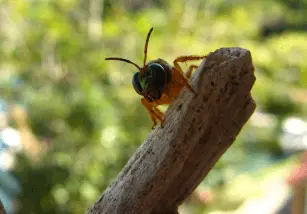
Dear Friends of CTR, We face tremendous environmental challenges during this presidential election year. Human activities are altering every ecosystem on our planet and the threat of climate change to…

A five-minute streaming video of CTR’s projects in Ecuador. To request a DVD of a longer 20 minute version of the video, please email Jordan Karubian at jordank@ucla.edu.

Investigación, conservación y educación en el noreste del Ecuador. To request a DVD of the video, please email Jordan Karubian at jordank@ucla.edu.

An Oppenheim lecture held April 14, 2008 by Dr. Richard Jackson, M.D., M.P.H. Professor and Chairman, Professor and Chair of the Department of Environmental Health Sciences, UCLA. For many of…
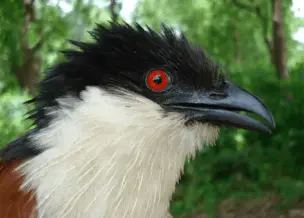
Integrating Wildlife Conservation into the Management of Cameroon's Cacao Agricultural Landscapeby Thomas Dietsch, Ph.D., Postdoctoral Scholar, Center for Tropical Research, Institute of the Environment, UCLA Restoration of Lowland Tropical Rainforests…
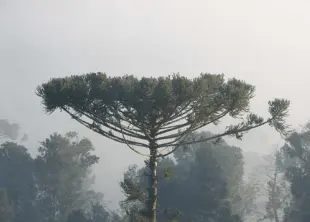
Alternative Mating Tactics in a Tropical Damselflyby Brenda Larison, Senior Research Fellow, Center for Tropical Research, Institute of the Environment, UCLA Preserving Biodiversity in the Atlantic Forest of Brazil and…
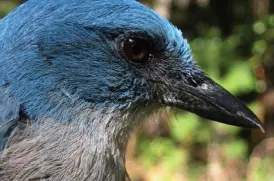
Conserving Evolutionary Process in the Sky Islands of Northern Mexico by John McCormack, Graduate Student, Ecology and Evolutionary Biology and Center for Tropical Research, Institute of the Environment, UCLA Host-parasite…
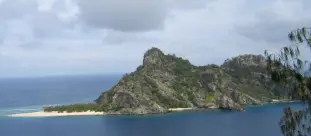
Finding Endangered Tropical Dry Forest in the Pacific: A Case Study from Fiji by Dr. Thomas W. Gillespie, Associate Professor of Geography, UCLA The international summit on “Evolutionary Change in…
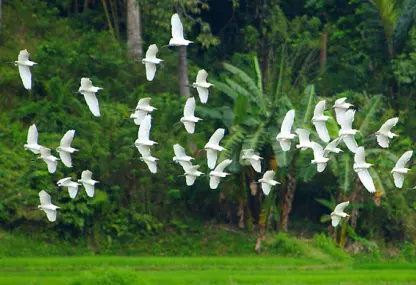
Bird Flu Research at the Center for Tropical Research by Dr. John Pollinger, CTR Associate Director Avian Influenza Virus - An Overview Avian Flu Surveillance Sampling of Migratory Passerines in…
What drives song variation in tropical birds? A study across habitats and populations in Cameroon and Uganda by Alex Kirschel, Graduate Student, Ecology and Evolutionary Biology and Center for Tropical…

On May 14th, the Center for Tropical Research held its first open house to welcome all Affiliated Faculty, Senior Research Fellows, and interested members of the UCLA community to meet…
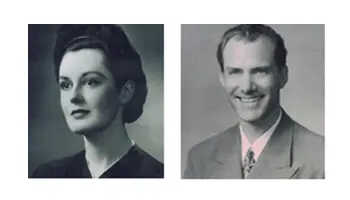
On December 20, 2002, a generous gift was made to the Institute of the Environment for the Center for Tropical Research. The gift eventually will create the E.P. and Betty…
Blaise Kadjo (left) and Bertin Akpatou at work in the CTR molecular genetics laboratory The CTR conservation genetics laboratory hosted a visit from two colleagues from West Africa during…
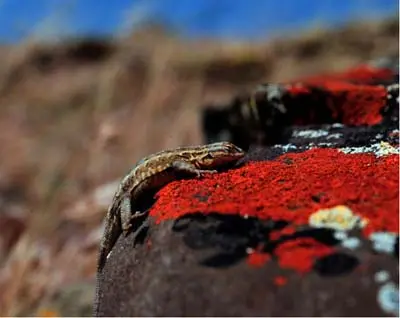
For the past three years, CTR researchers and collaborating scientists have been working on an NSF-funded project to examine the importance of evolutionary processes in the generation and maintenance of…