
Conserving California’s Coastal Waters
A summary of the La Kretz Center’s annual evening devoted to public engagement in California conservation.
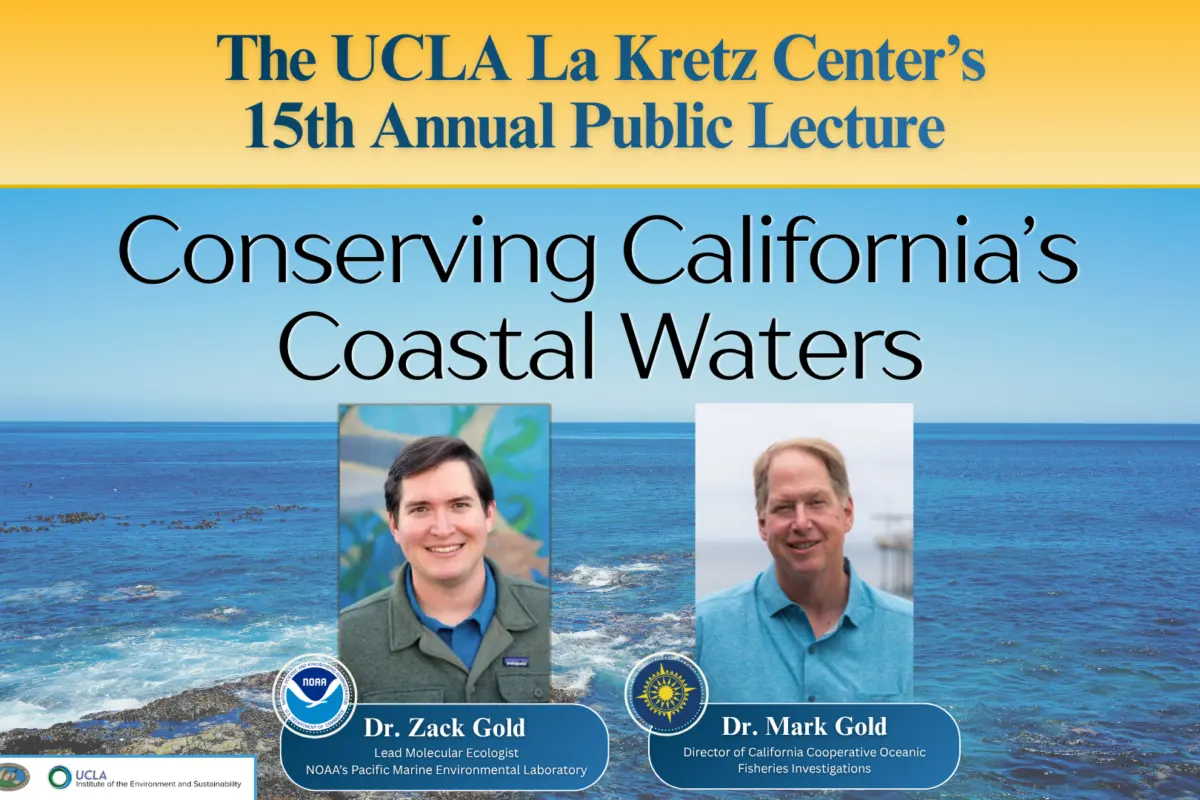
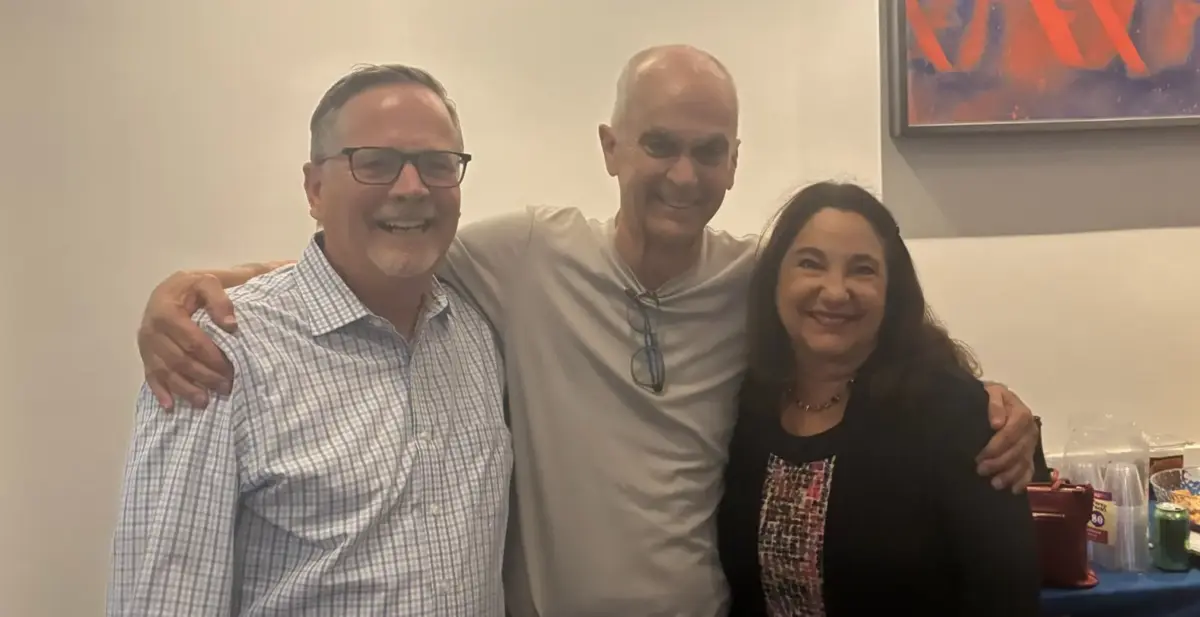
For the 15th anniversary of the Public Lecture Series, the La Kretz Center focused on the current state of marine conservation science by welcoming guest speakers Mark and Zackary Gold. Inviting the Golds was meaningful on several levels. Both are UCLA alumni, and their return drew a diverse crowd of students, staff, and affiliates anxious to learn more about their work, at UCLA and beyond. The evening was also a rare opportunity: a father and son working in related fields delivered back-to-back talks on the different sectors of marine conservation they each focus on. Together, their presentations gave the audience a view across the full range of marine conservation science, from field data analysis to policy management, and a broader sense of the work underway to protect California’s coastal waterways.
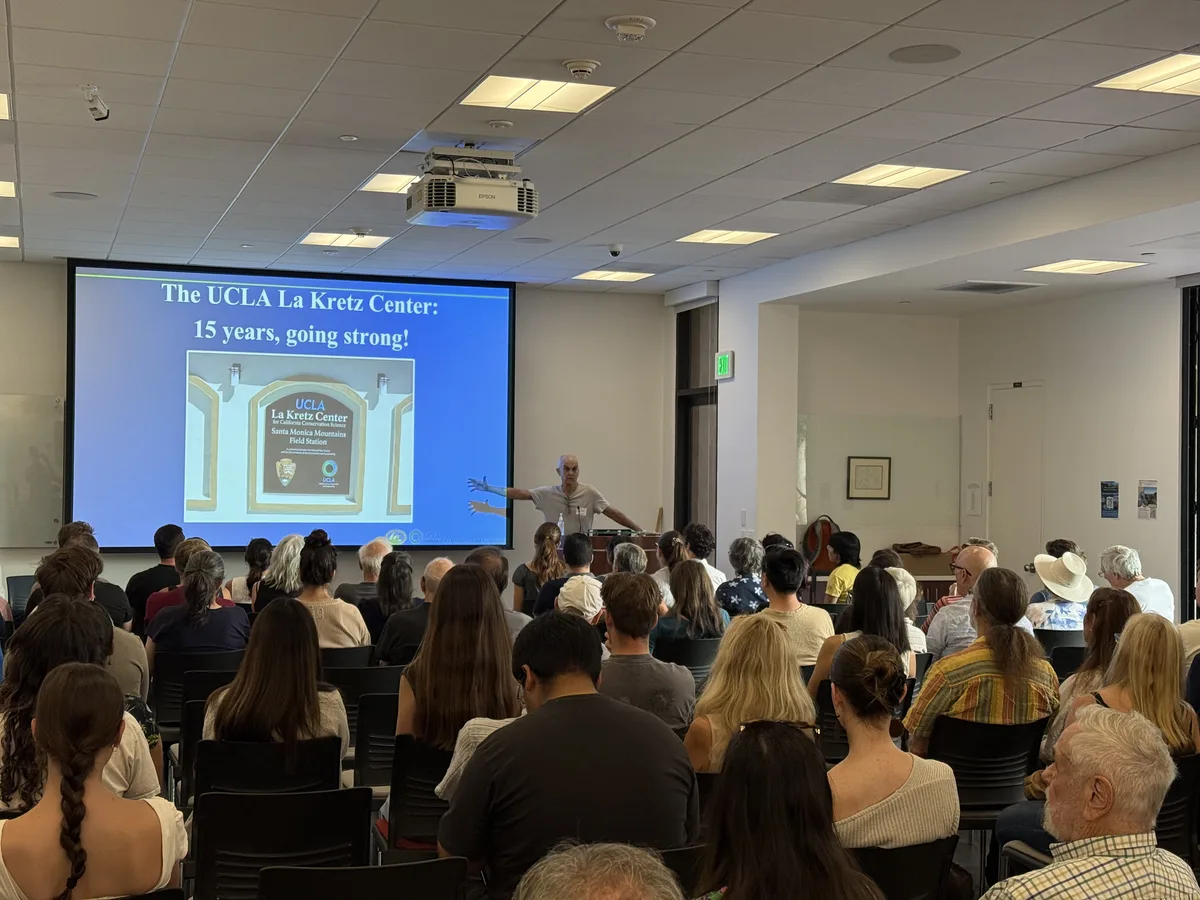
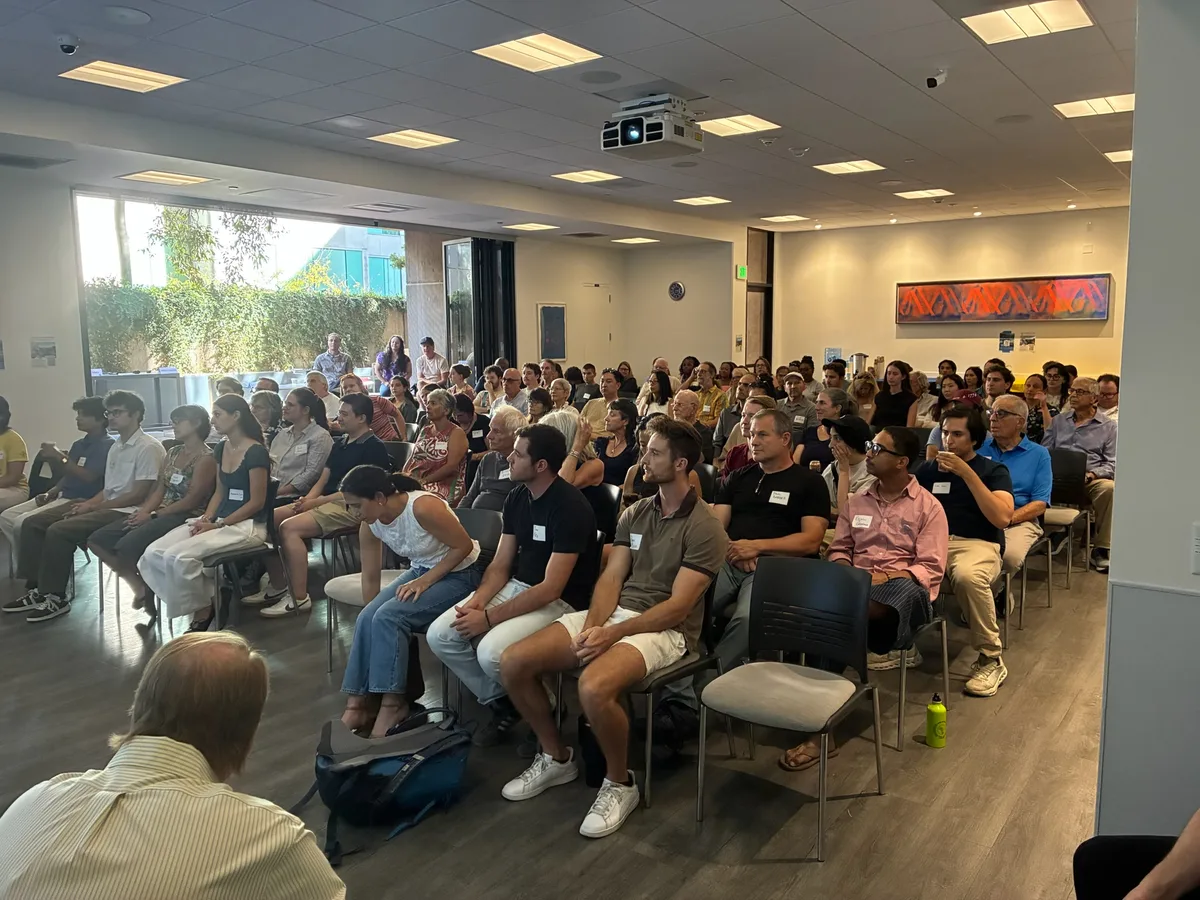
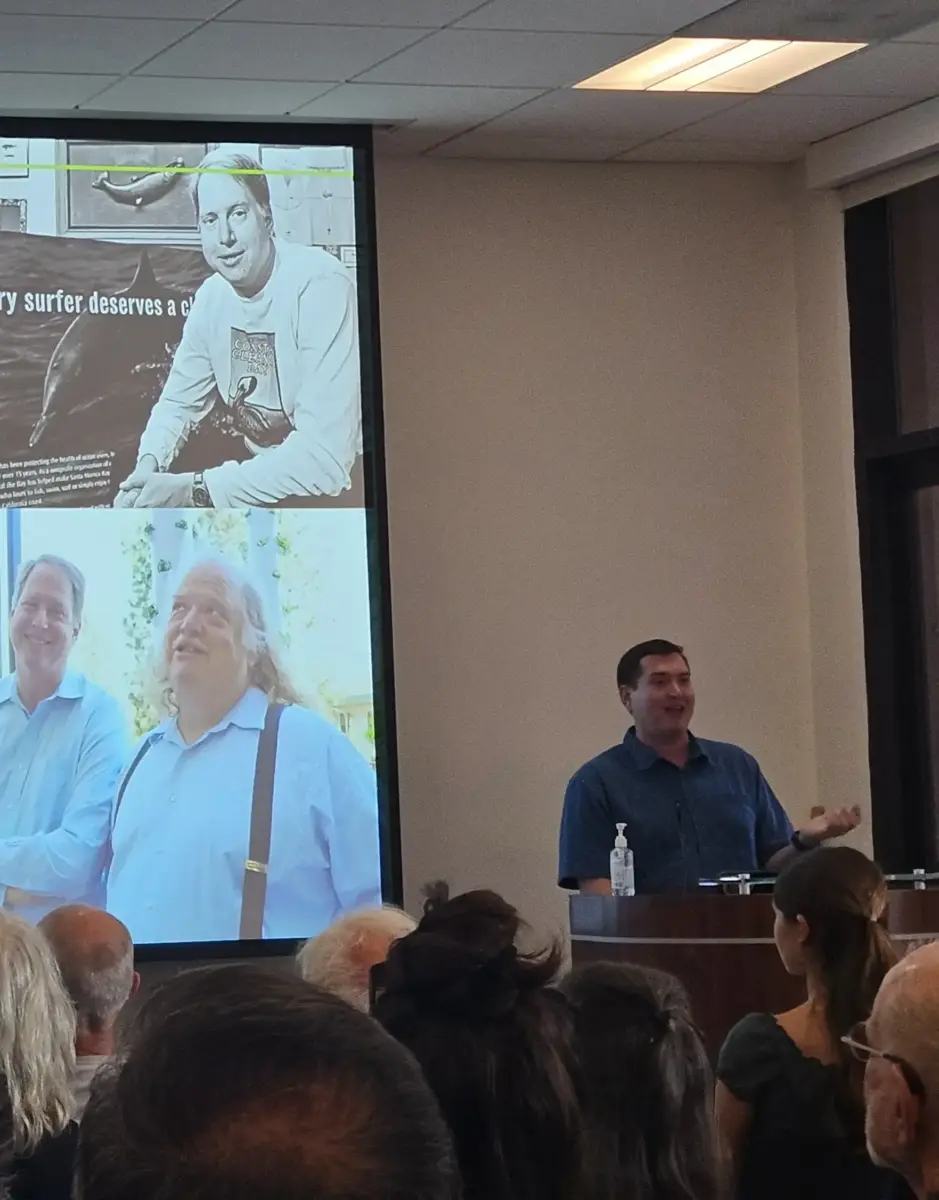
The Public Lecture’s audience of UCLA affiliates, conservation professionals, and the general public was delighted to hear from Mark and Zack Gold about their backgrounds in the conservation world and the exciting marine conservation work they have been a part of. Mark Gold, a Triple Bruin, has multiple ties to the UCLA community and has served in many major roles in the conservation field. “I’ve worked in academia, in the NGO community, and for government, so I have seen the differences in how it works for marine conservation and why it doesn’t work,” Mark said before jumping into a variety of conservation topics, such as action plans for sea level rise and marine protection plans. Mark also presented a series of datasets and maps that exposed the audience to the many environmental issues our oceans are facing, such as ocean acidification.
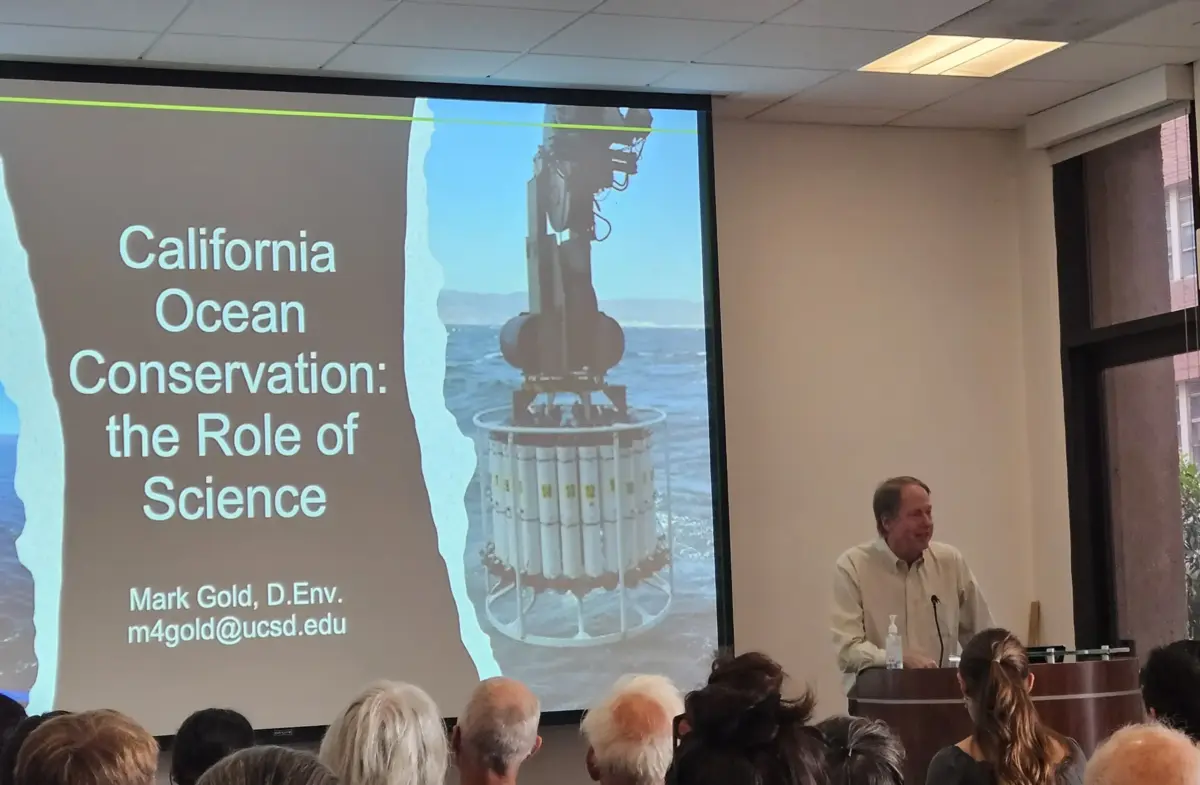
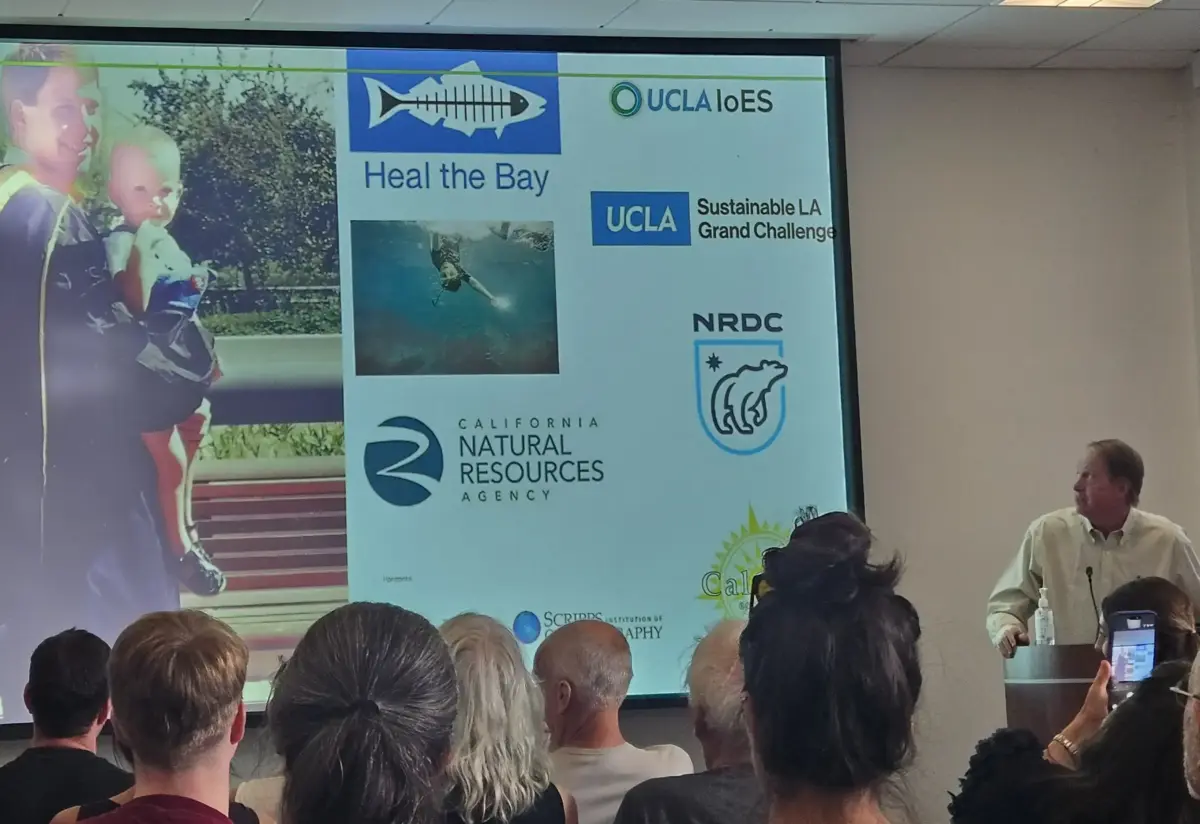
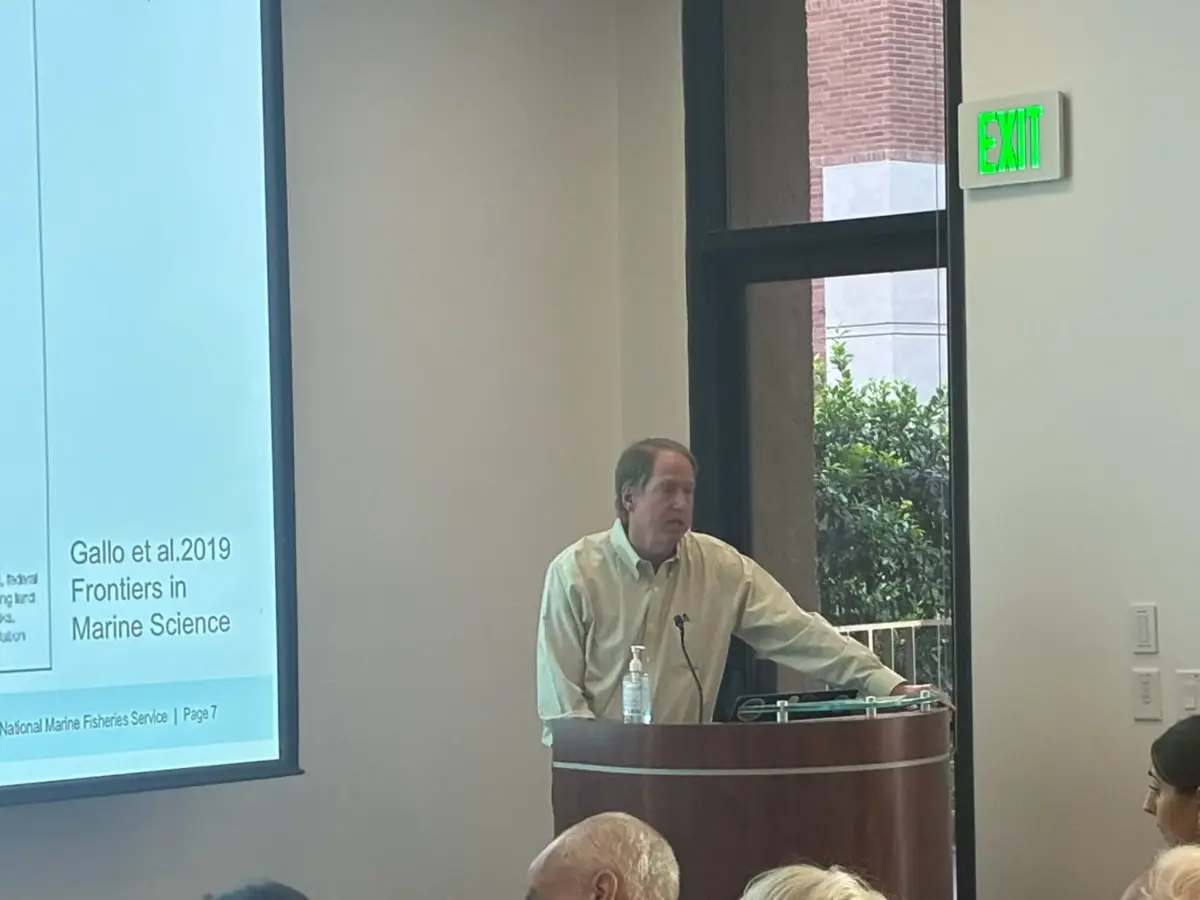
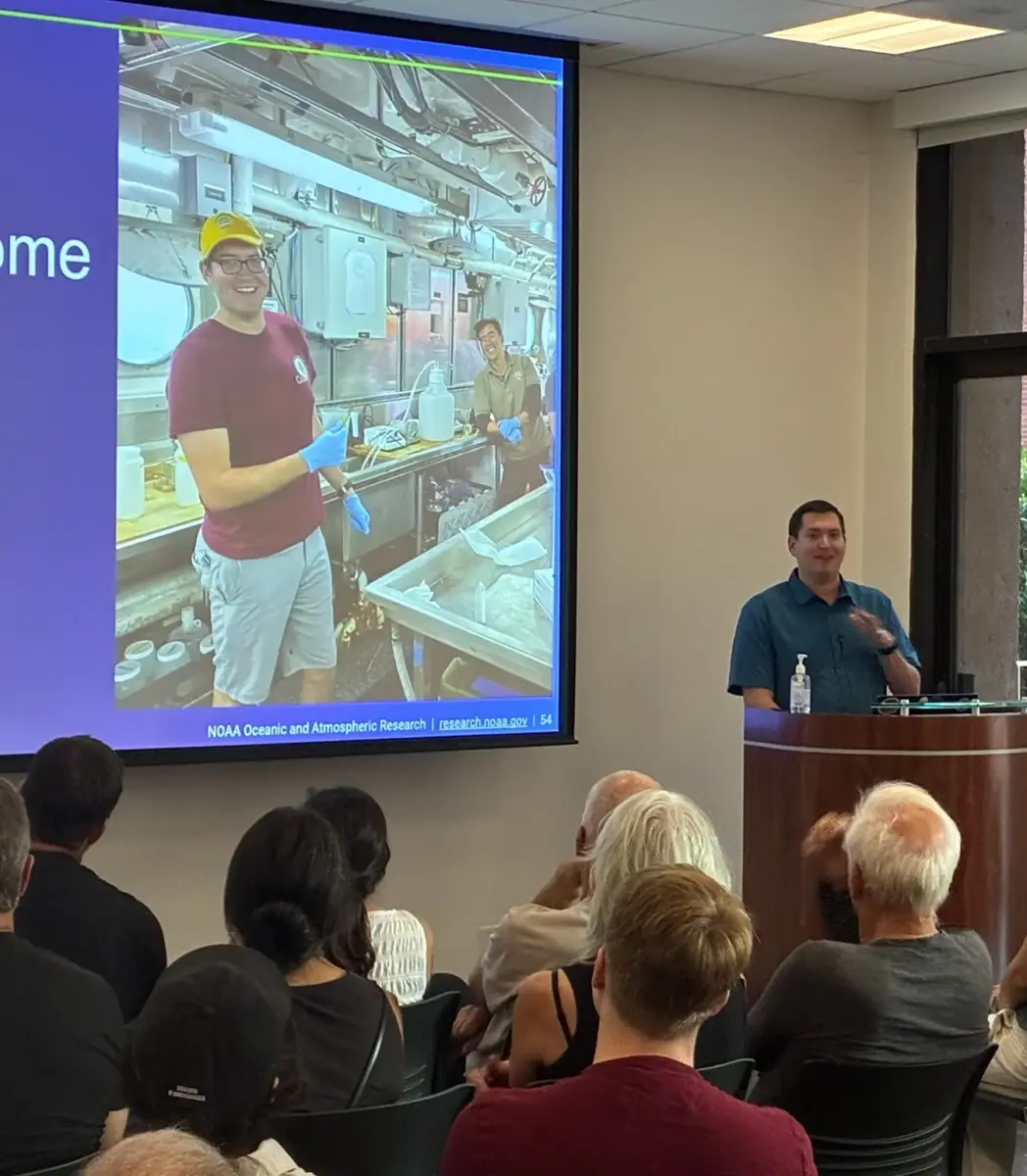
Mark then turned the podium over to his son Zack Gold, a lead marine molecular scientist with NOAA’s Pacific Marine Environmental Laboratory (PMEL). Zack broke down the innovative, complex science of environmental DNA (eDNA) into terms and examples that were accessible to the broad audience. “Just as we take a shower and shed hair, all organisms—animals, invertebrates, and algae—are shedding DNA into the water. We can take a liter of water, capture that DNA, and reconstruct that environment from the DNA we pull.” Zack clearly explained why eDNA is a groundbreaking tool in the marine science community and how it is being used to fill biodiversity monitoring gaps and support conservation initiatives.
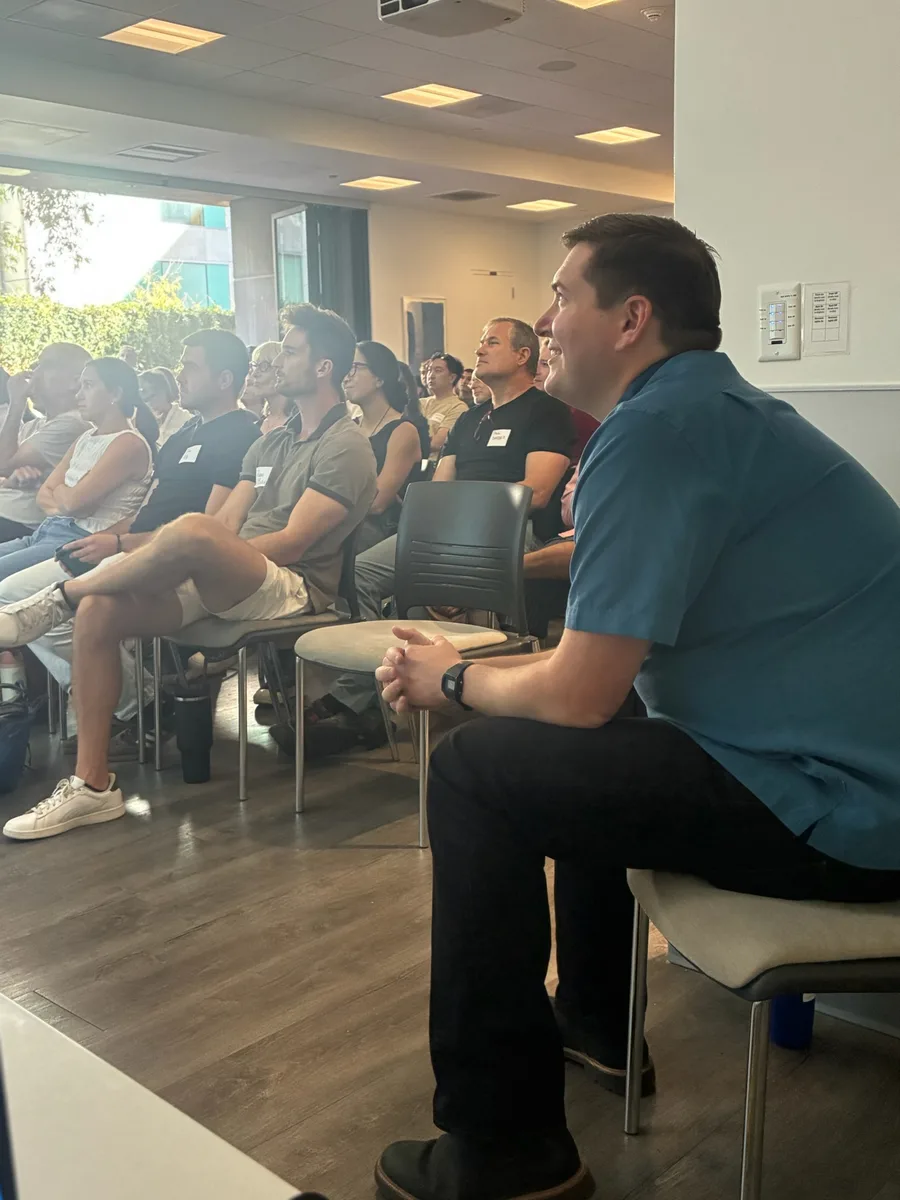
Watch the full presentation at the link below.
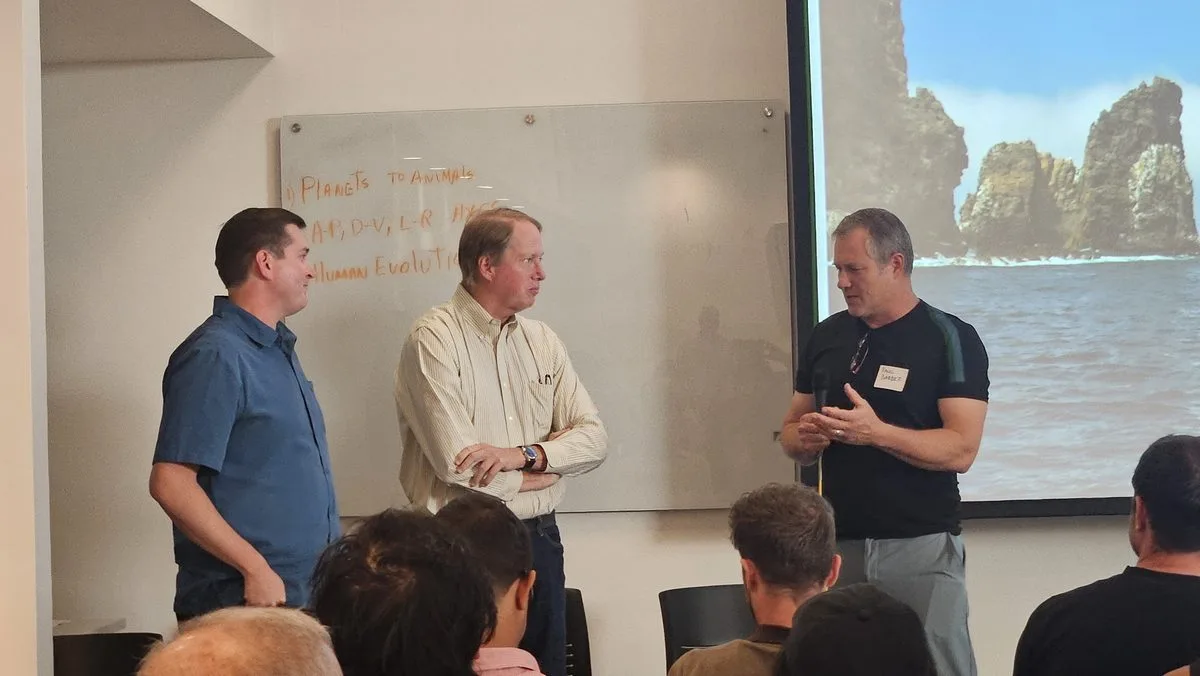
After their talks concluded, the Golds took some time to answer questions during a Q&A moderated by UCLA faculty member Paul Barber. The Q&A is one of the most significant parts of the Public Lecture, giving the public a chance to hear professional perspectives on the conservation questions that interest them and bridging the gap between researchers and the larger community of the interested public.
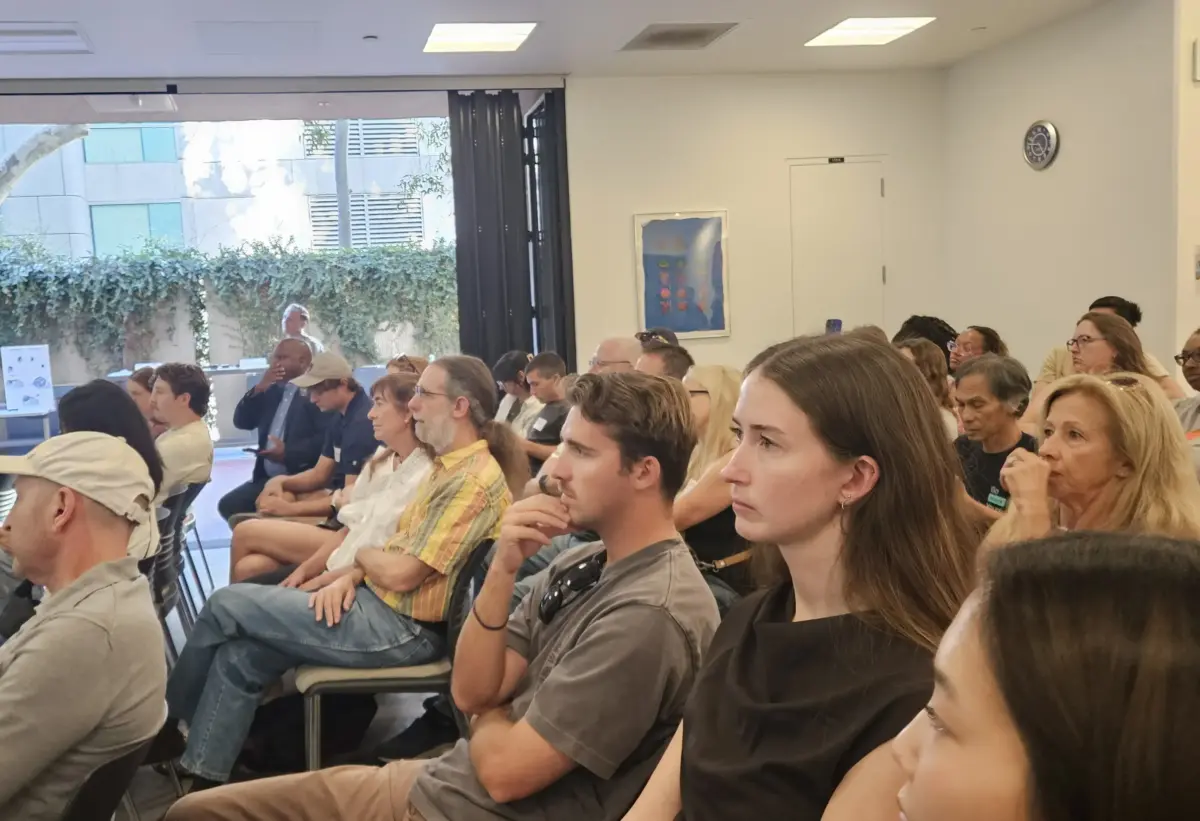
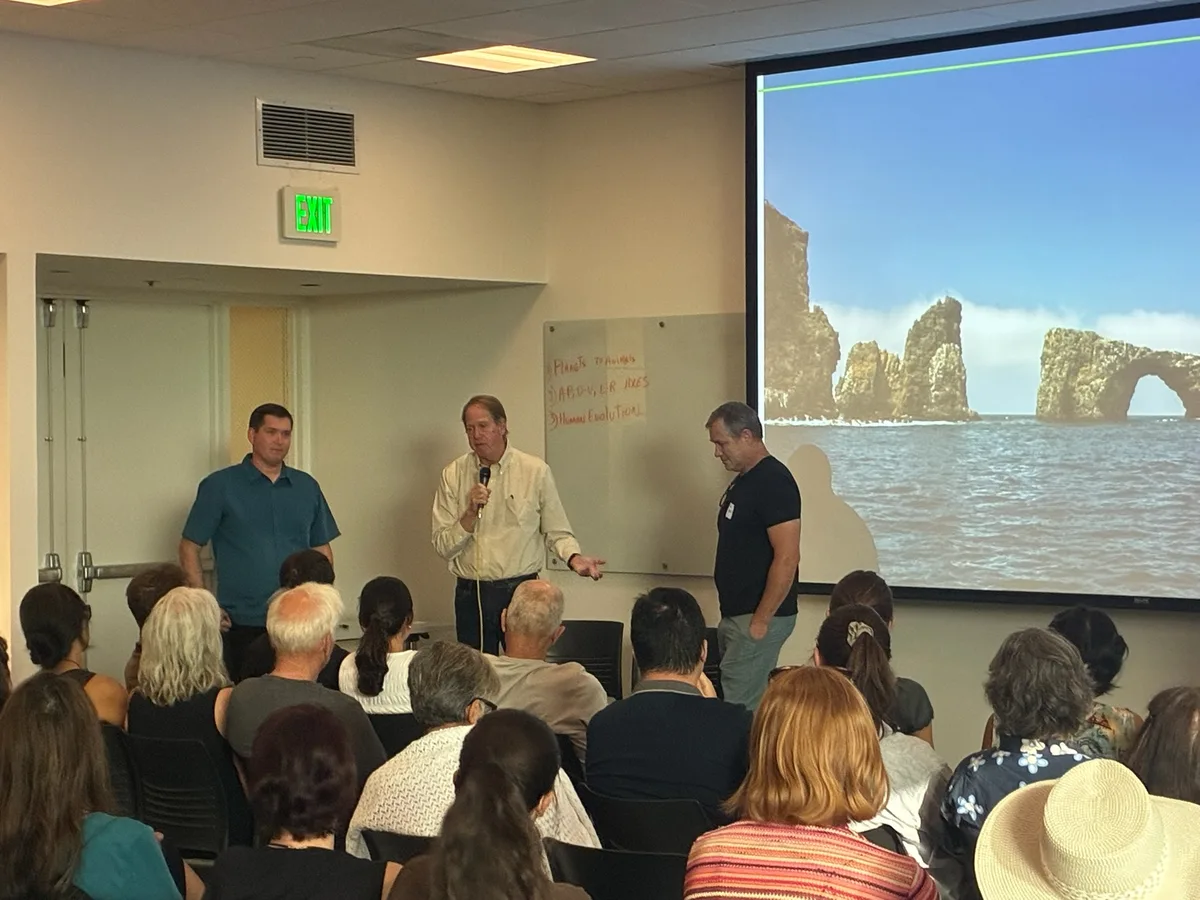
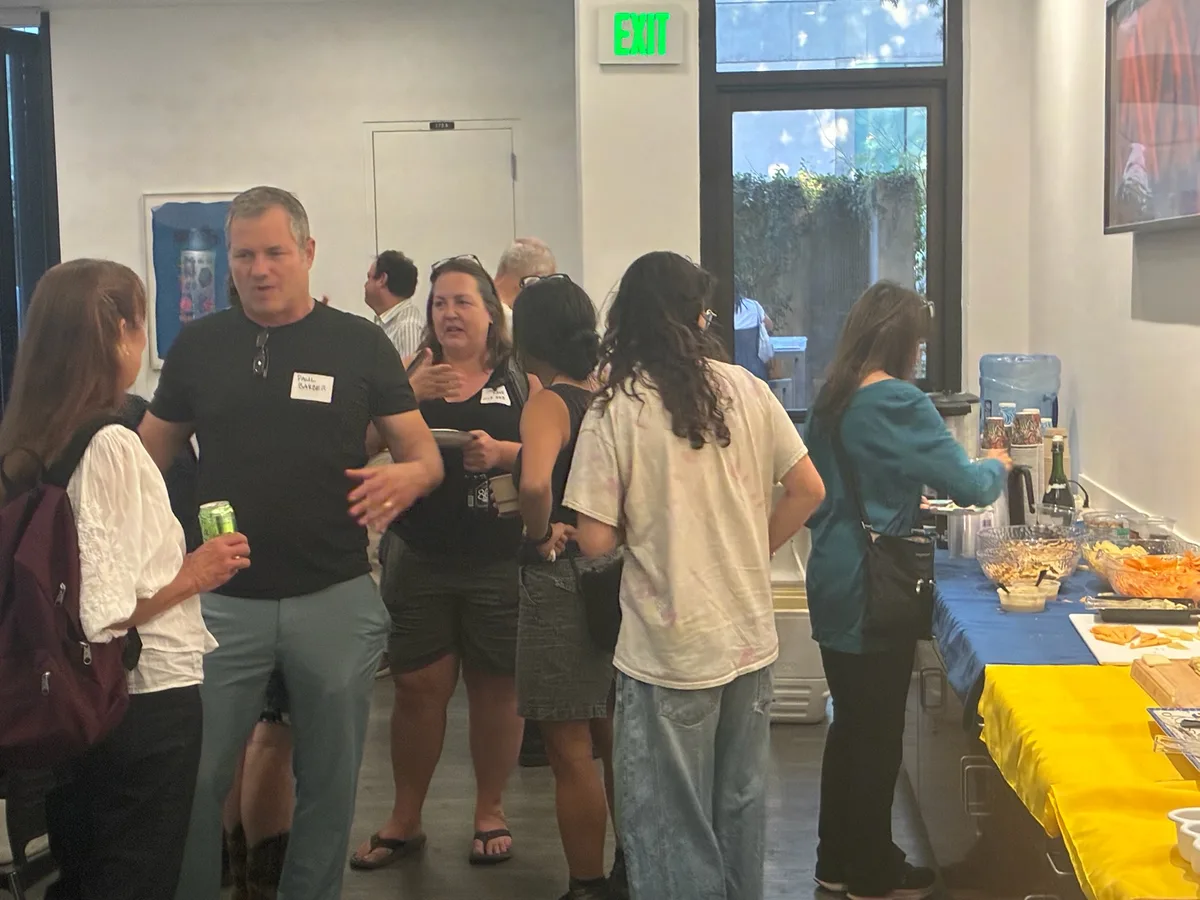
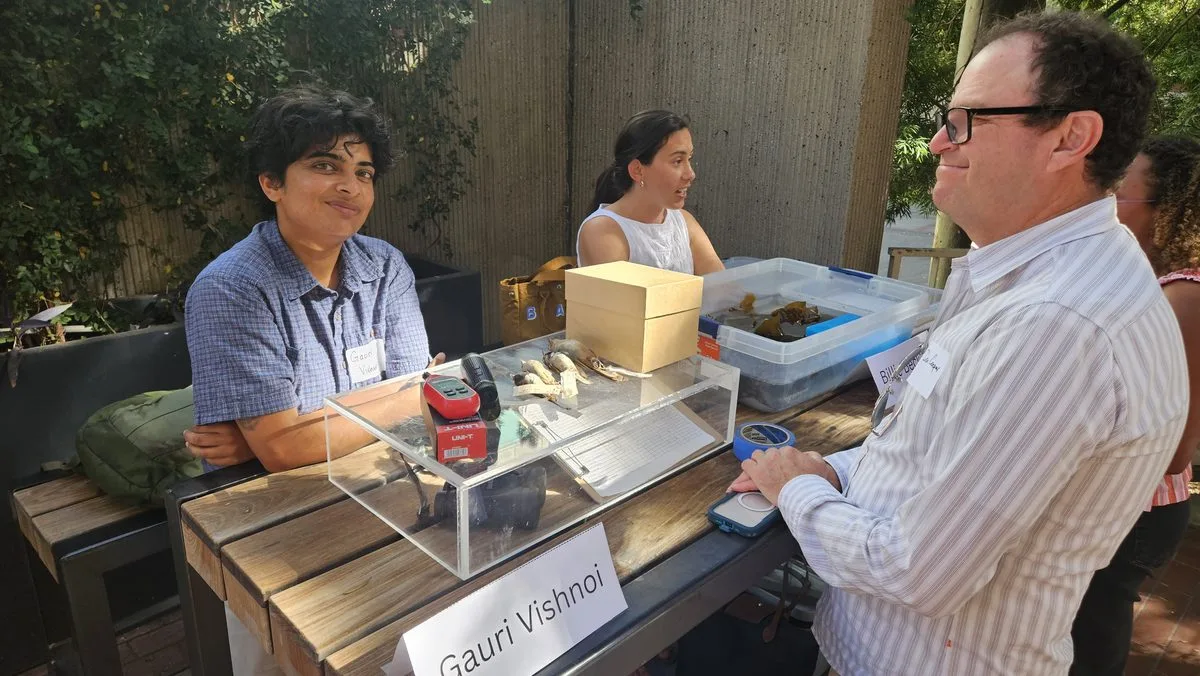
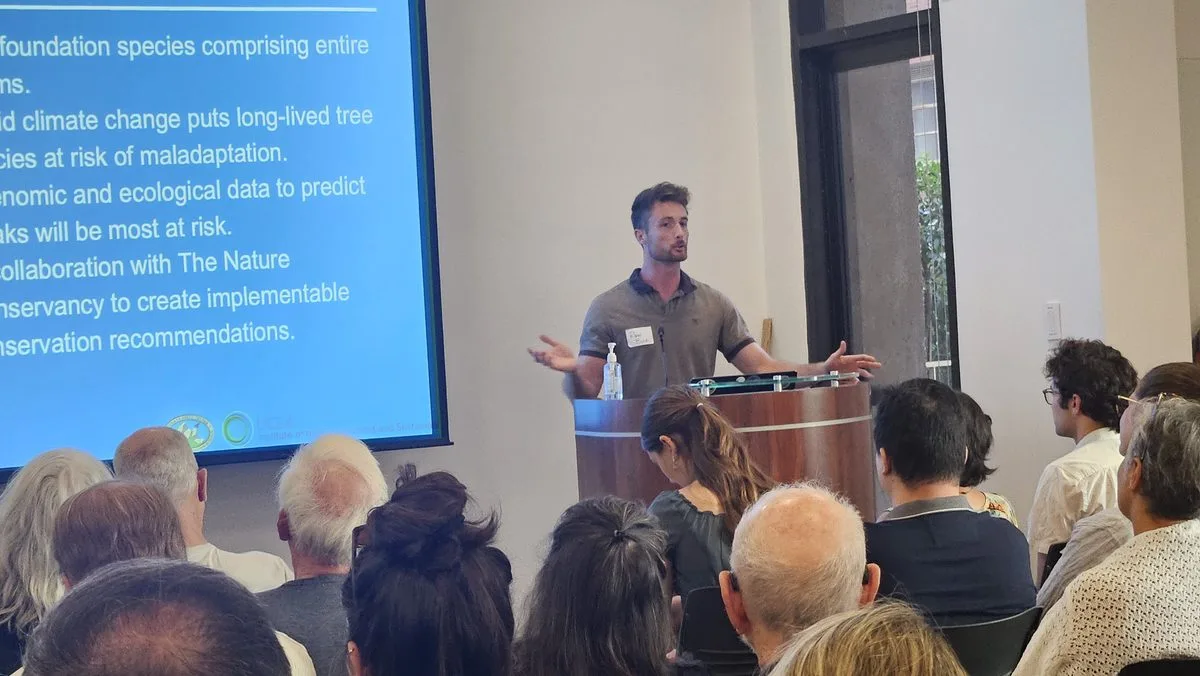
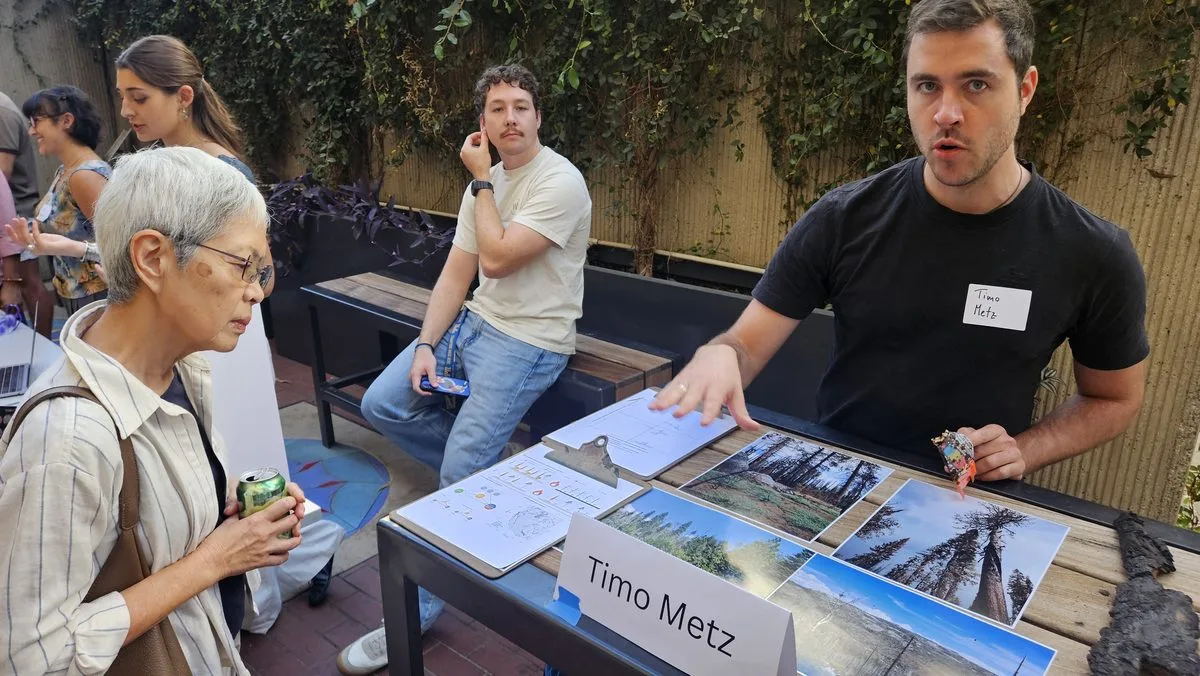
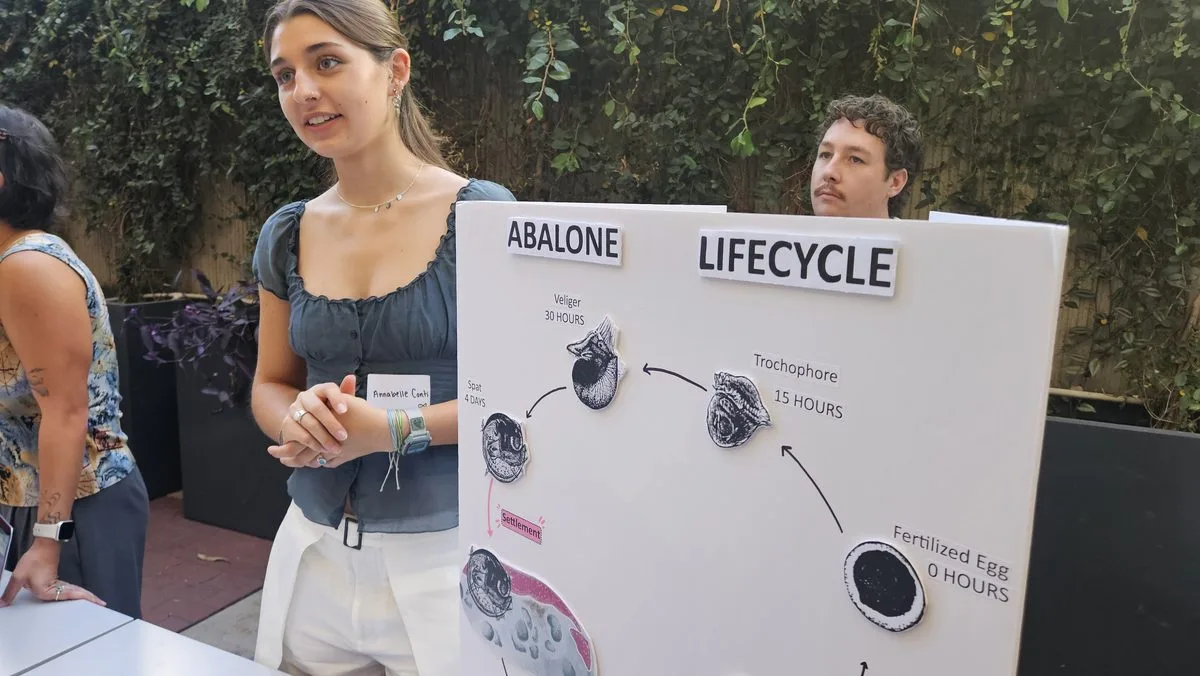
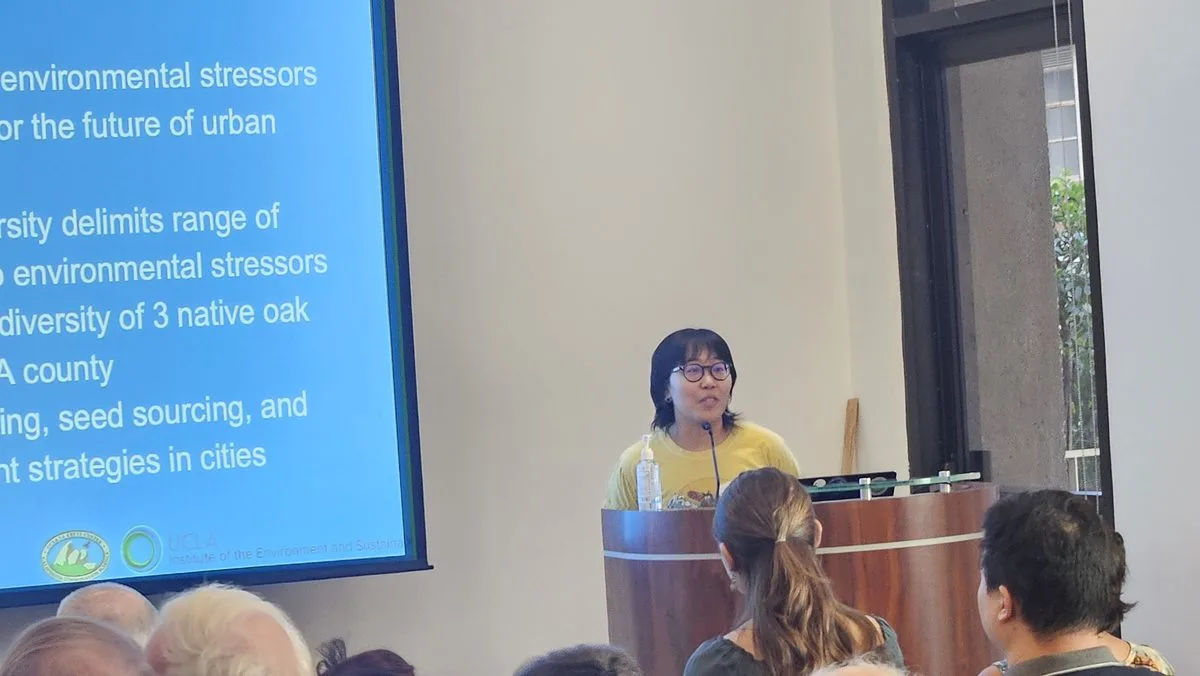
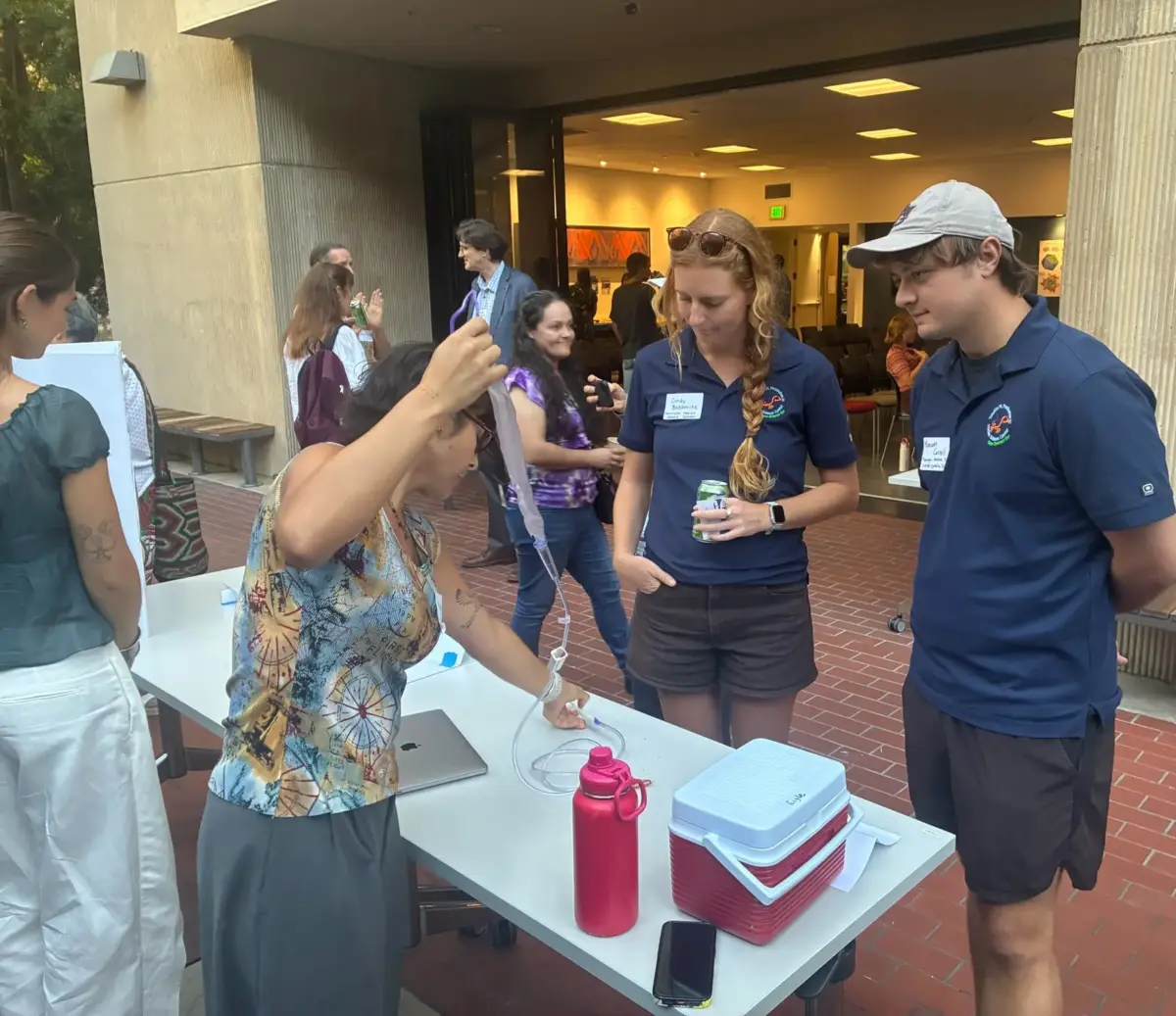
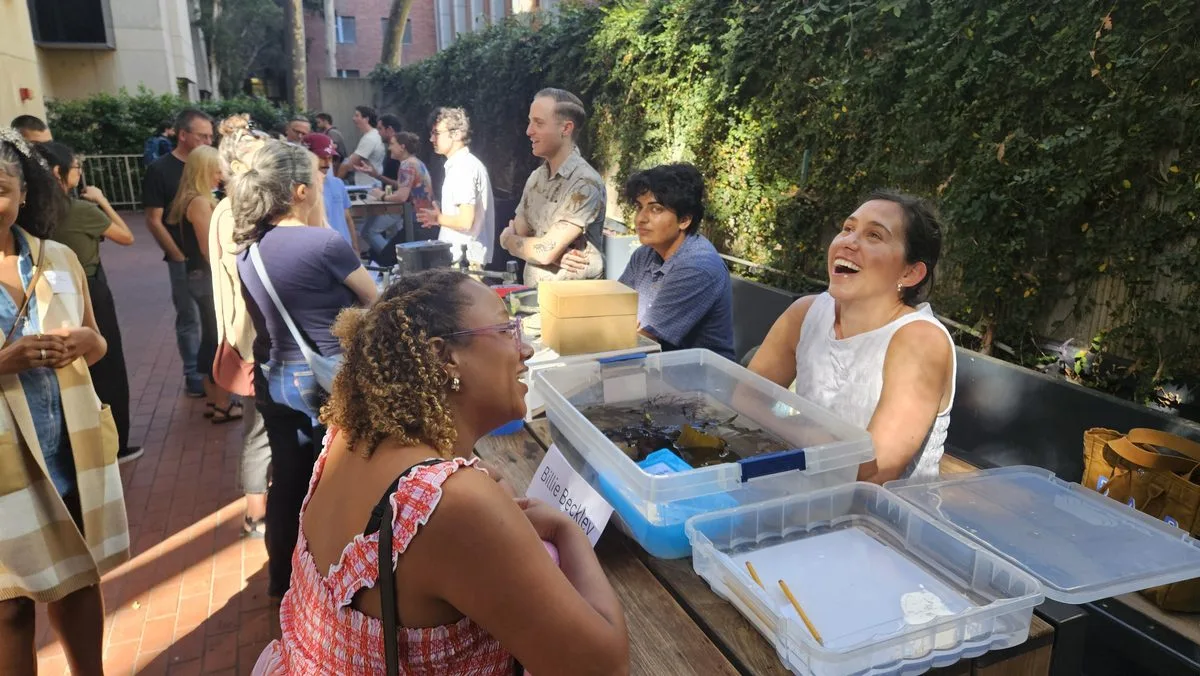
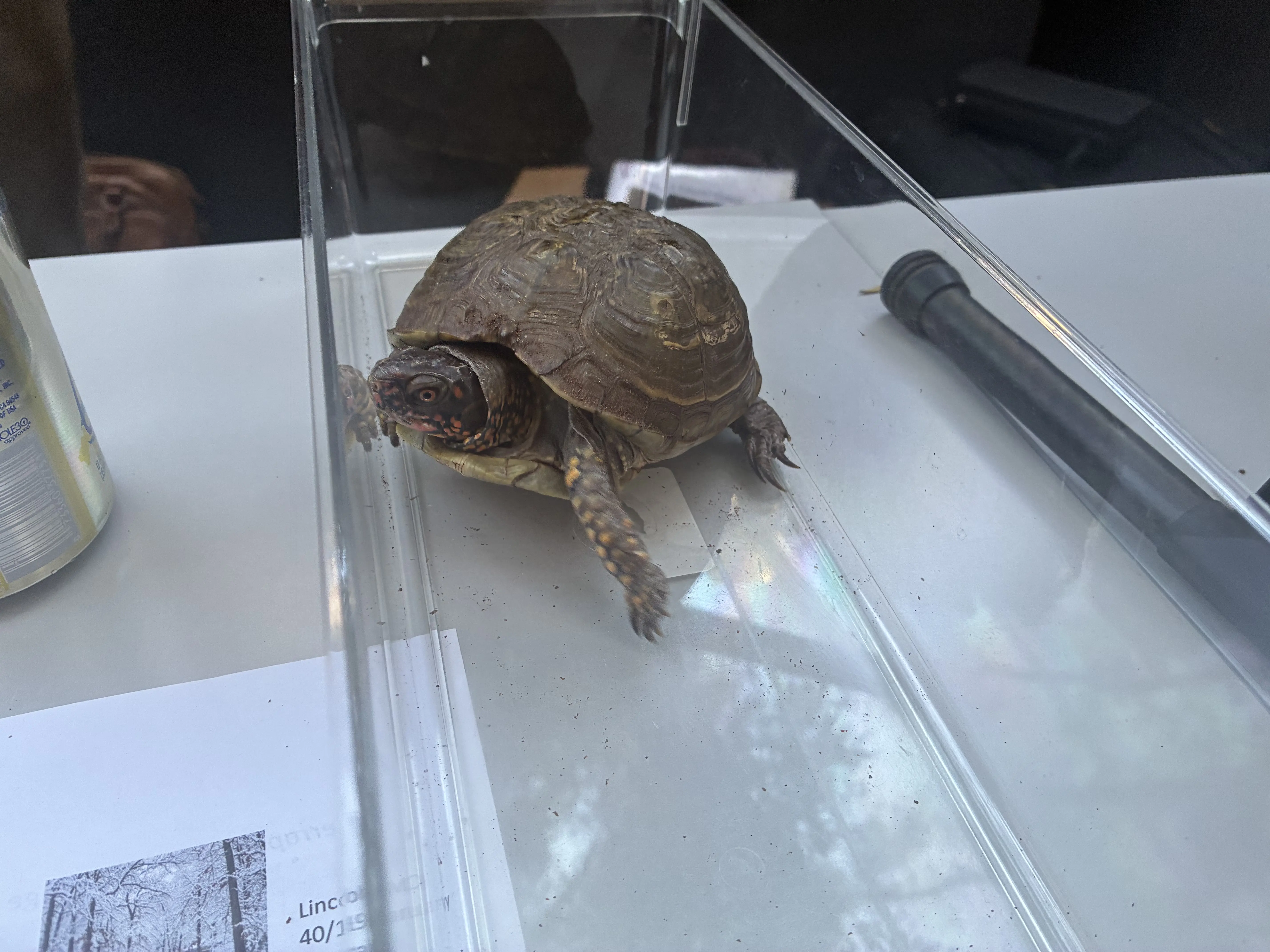
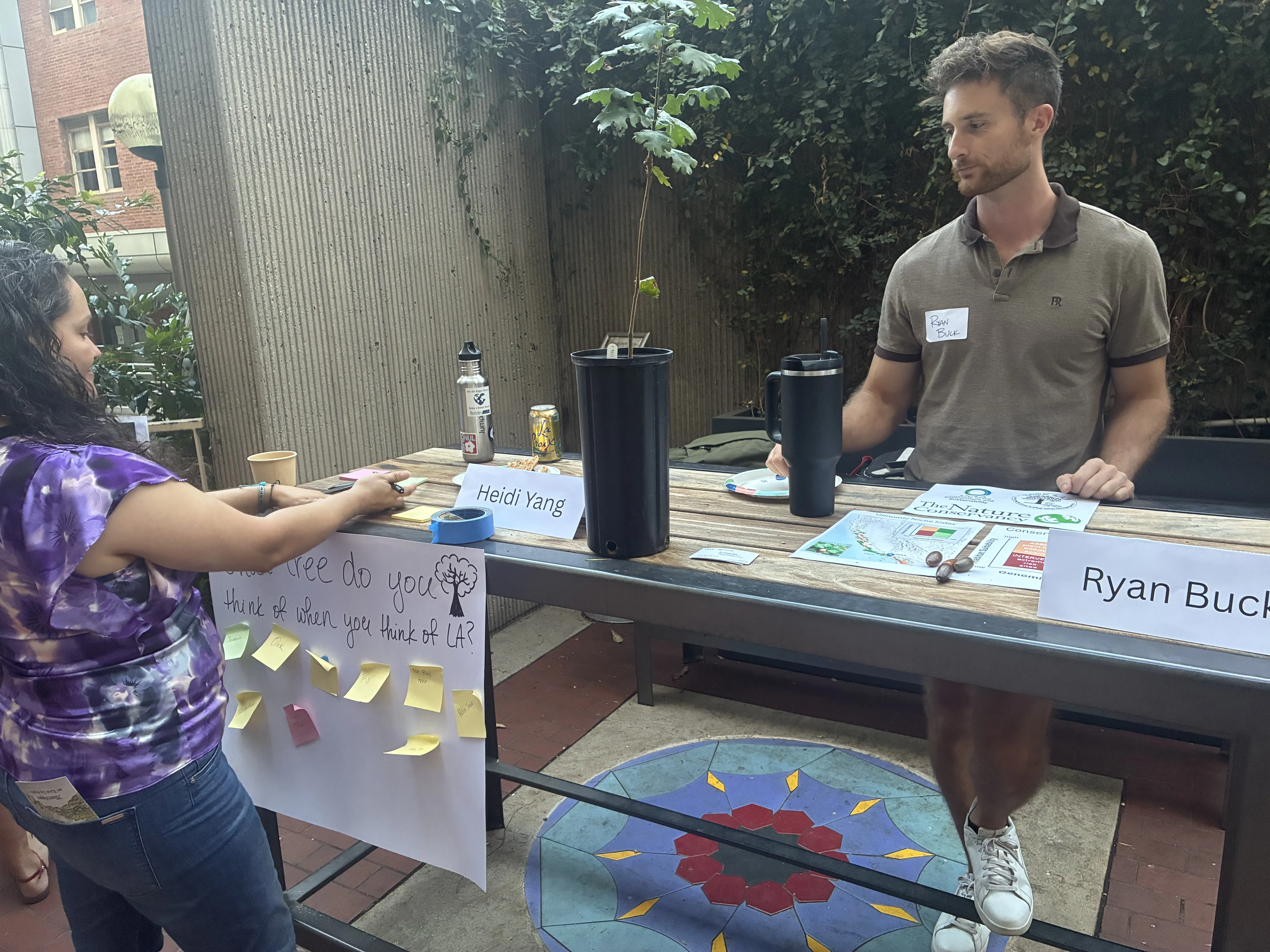
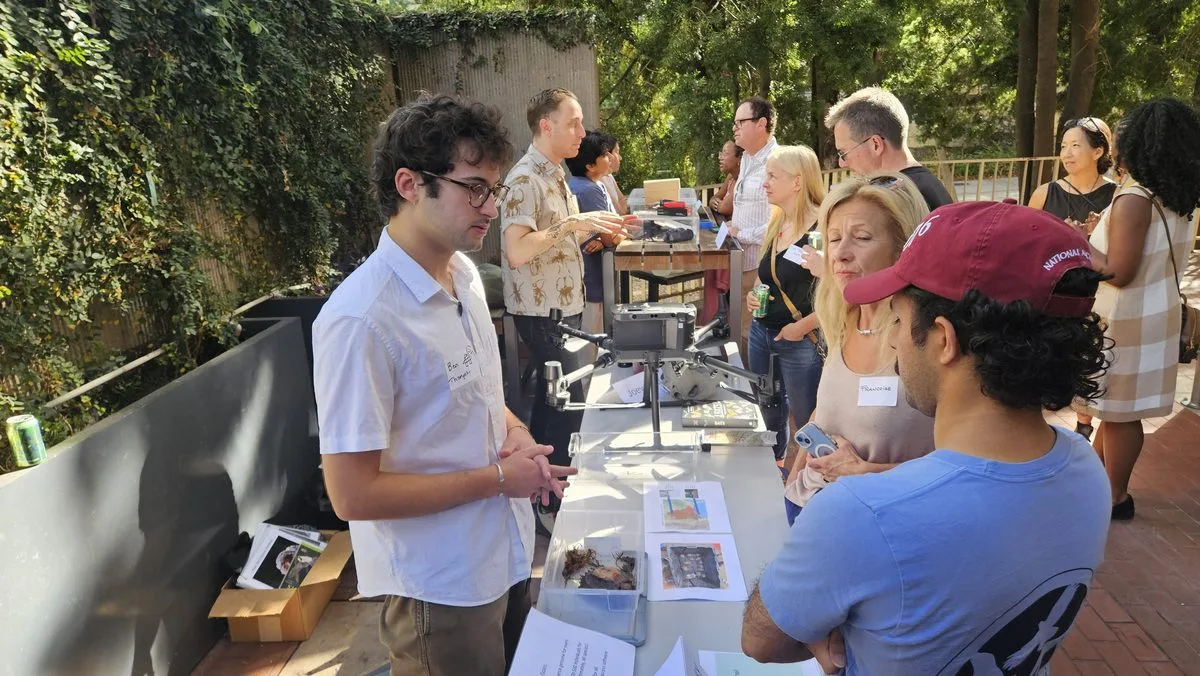
To close out the event, the lecture turned its focus to the up-and-coming researchers that the La Kretz Center supports. Both La Kretz Center Postdoctoral Research Fellows and La Kretz Center Research Awardees took the podium to deliver lightning talks on their research. Participants included Joseph Curti, Billie Beckley, Ryan Buck, Willow Coleman, Annabelle Conti, Timo Metz, Olivia Simon, Ben Thompsky, Gauri Vishnoi, and Heidi Yang. The audience was then invited to meet the researchers at their stations, which featured fieldwork equipment, visual displays, and live specimens.
The 15th annual Public Lecture was one of our most memorable, and we’re excited to continue this annual celebration of outreach and community engagement in the coming years. We hope you’ll join us next year as we explore new conservation topics and spotlight ongoing work supported by the UCLA La Kretz Center.