
IoES Faculty Members Honored By the California Academy of Sciences
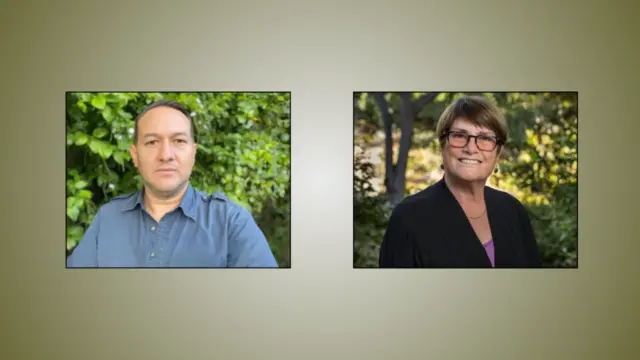
IoES Faculty Members and Professors in the Department of Ecology and Evolutionary Biology, Victoria Sork and Felipe Zapata, have been honored by the California Academy of Sciences as part of the 2026 group of fellows and awardees.
Zapata, Co-Director of the Center for Tropical Research, has been elected a 2026 fellow of the Academy. Fellows are nominated by colleagues and appointed by its Board of Trustees in recognition of outstanding contributions to the natural sciences.
Sork, Distinguished Professor and Director of the UCLA Mathias Botanical Garden, has received the Fellows Medal, the Academy’s highest honor for especially prominent scientists and outstanding contributions to their scientific disciplines.
Sork’s research combines genetics, ecology, and conservation, focusing on California oaks and how treepopulations can adjust to climate change.
Her research helps us understand how California oaks will be able to survive warmer, drier climates. This knowledge supports more effective restoration and conservation methods as a warming climate threatens California forests.
Given her dedication to conserving California, this honor is especially significant. “I think this medal from the California Academy of Sciences means particularly a lot for me because for 25 years, I have developed my research program so that it can give us insight about California, its ecosystems, and eventually how we can save them,” she said. “I am honored to receive recognition for these efforts.”
Sork’s research opened a window to hope for oak forests. “There’s enough genetic variation in oaks that it’s actually good news that with active management, we could plant genotypes that are going to do better under future climate conditions,” Sork explained.
Her groundbreaking work on California oaks will help safeguard these species in a changing climate and, in turn, protect the ecosystems that depend on them. Sork collaborates with scientists with the US Forest Service and the Nature Conservancy, and has received support from the National Science Foundation that has enabled many UCLA graduate and undergraduate students to participate in this pivotal research.
Zapata focuses on plants from tropical regions and California. His career bridges fieldwork, museum science, and genomics, connecting the study of living plants in their natural habitats with preserved specimens in museum collections and the genetic data that reveal how species are related. Through this work, he investigates “how evolutionary and ecological processes generate and sustain biodiversity, a question at the heart of the Academy’s commitment to global exploration and field-based discovery.” As Co-Director of the Center for Tropical Research, he helps lead efforts to understand and protect biodiversity in some of the world’s most ecologically important regions.
For Zapata, the recognition is as much about community as achievement. The honor not only means joining an inspiring community of scientists who have shaped his work, but it also “affirms that, with hard work and dedication, anyone can belong at the highest levels of science, no matter where they come from,” he said.
Looking ahead, Zapata looks forward to contributing to the Academy’s collections-based research, public engagement, and conservation efforts. He hopes to foster connections between scientific discovery, education, and biodiversity stewardship, helping ensure that what scientists learn about the natural world informs both public understanding and conservation action.