Raymond Archuleta: Personal growth, self-discovery, and community-building as a veteran student
Ever since he was a child, Raymond Archuleta knew he wanted to work in medicine.
Ever since he was a child, Raymond Archuleta knew he wanted to work in medicine. His mother was often in and out of the hospital as a patient, with Raymond and his family spending much of their time there. On the day of his high school graduation, she suffered a major stroke, a scary culmination of years of health issues. Thanks to an incredible medical team, she was able to make a full recovery.
“[They’re] the reason she’s still here,” Raymond shares.
Through those tough times, Raymond had the opportunity to observe the intricacies of internal medicine. He became certain that being a physician was his dream.
“It really had a major impact on me…and inspired me to be in that position and help others too,” he adds.
Since then, Raymond’s path to medicine, while unique and non-traditional, has led to personal growth, self-discovery, and a community that values and understands him.
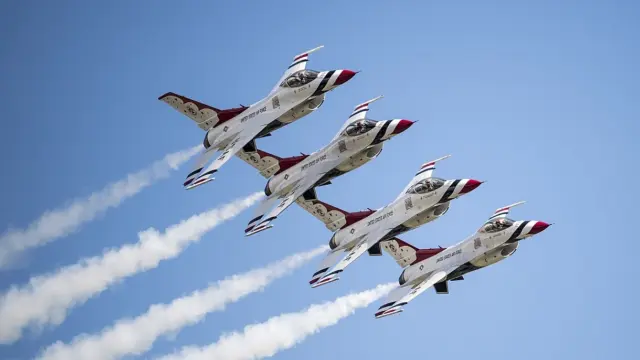
In 2016, Raymond joined the Air Force as a paralegal, needing direction after high school. While the experience involved some lows, Raymond remains grateful for how he was pushed out of his shell. As a shy, introverted person who has trouble speaking up, he learned to be more confident and to trust that he’s capable of achieving his goals. His time in the Air Force also helped him recognize his love of structure. From waking up to exercising to going to work—everything in the military is so timed and precise. This structure gave Raymond time-management skills that prepared him to take on academic rigors.
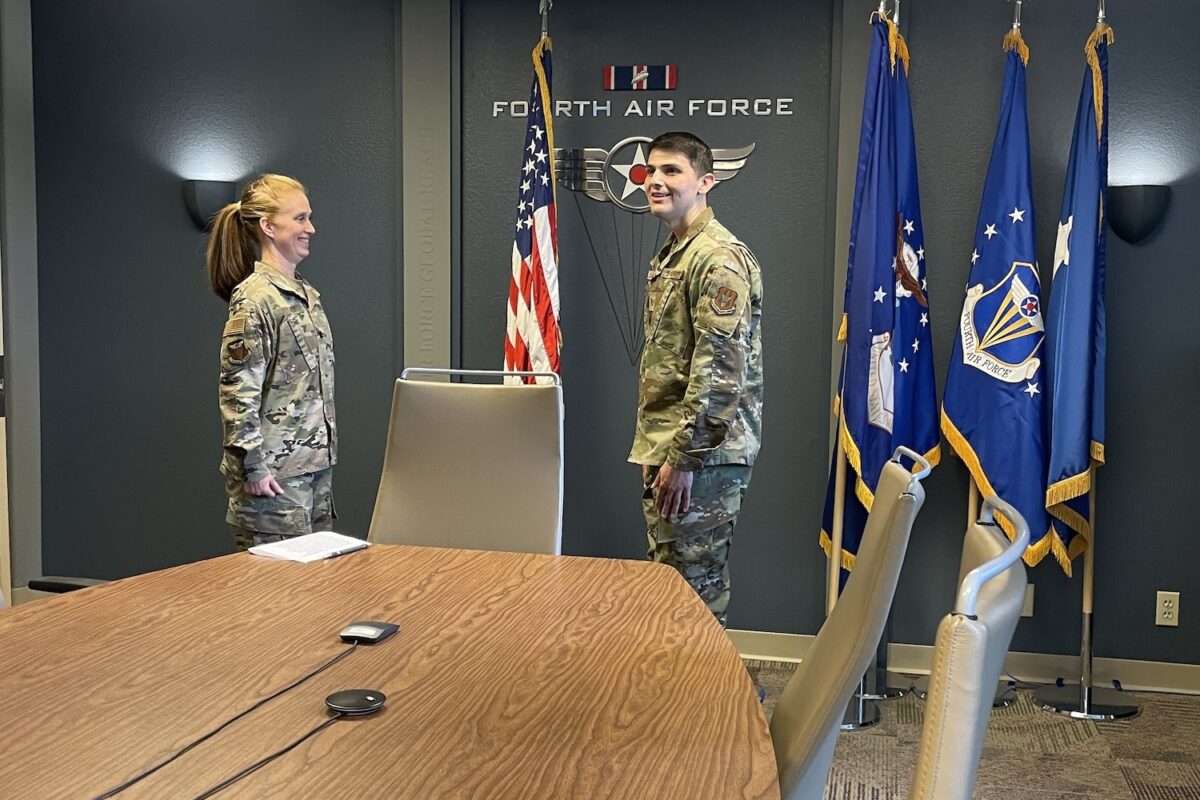
When his contract officially came to an end six years later, Raymond had a choice to make.
The thought of going back to school was daunting, but his work as a paralegal had just reinforced what he already knew: medicine was the goal.
“I knew that if I stayed in the military, my chances of becoming a physician—just because of me getting older—would be less and less,” Raymond says. “[I decided to] take my chances and actually pursue my career goals.”
Now a student at East Los Angeles College (ELAC), Raymond hopes to transfer to a four-year university in the fall. He initially entered as a biology major, but after an enlightening summer internship with UCLA’s Bioengineering Department, he made the switch to bioengineering. It was through ELAC that Raymond initially got connected to the Center for Developing Leadership in Science (CDLS), the Veterans in STEM (VSTEM) program, and his first job in a research lab.
Though always interested in medicine, Raymond never had any formal experiences with science growing up. Dr. Aradhna Tripati’s climate science laboratory has immersed him in the world of scientific research for the very first time. In the lab, he’s had the opportunity to weigh samples & standards, set up lab instrumentation, and review data under the guidance of Laboratory Assistant Joshua Rubi. While the lab focuses on climate science and not bioengineering, Raymond still feels more motivated than ever to continue on his degree path.
“Being within a [laboratory] setting like this and with people who are interested in science…it really helps keep that flame alive,” he explains.
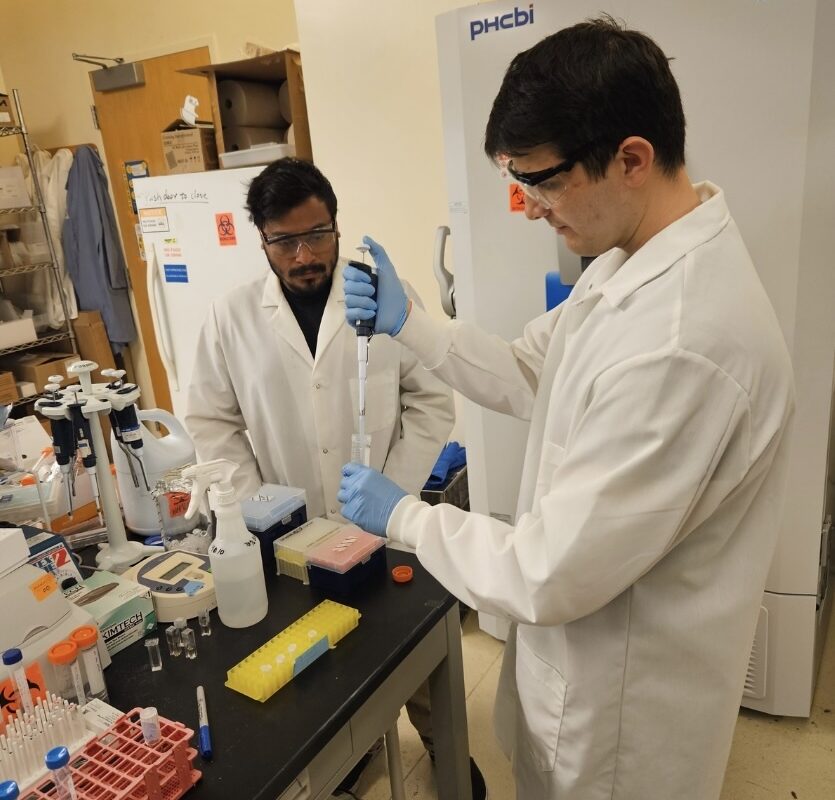
Raymond pipetting a substance during his summer internship with UCLA’s Bioengineering Department.
While Raymond has had the opportunity to work in a research lab, navigating STEM and academia as an underrepresented individual can present many challenges.
“I didn’t think it would be that tough or that big of a deal, but sitting through these STEM courses, I do feel like an outcast…it doesn’t seem like I fit in completely,” Raymond explains, opening up.
That’s why programs like VSTEM are so vital—they create an environment in which veterans feel welcome and supported. This is especially crucial given how jarring it can be to transition out of the military and into civilian life. Joshua Rubi and Jason Williams are among the VSTEM members that have acted as mentor figures to Raymond as he navigates taking bioengineering classes, applying to a four-year university, and preparing for medical school. Raymond and his VSTEM colleagues often share details from their time in the military with one another. Since being a veteran comes with such unique, distinctive experiences, it’s important to be able to find others who can relate and sympathize.
“I really do see that there are other people out there who are like me,” Raymond says. “I do have community within the STEM world.”
On top of mentorship, VSTEM offers informative workshops and lab tours. Through workshops like How to give an effective presentation and Publication strategies in STEM, Raymond has gained important skills he will use at his four-year university, medical school, and beyond. He expressed deep gratitude for the program, noting that without it, he would be in the same position he was in during high school: not knowing what to do or where to go.
Though Raymond’s path has been unorthodox, it’s the path that was meant for him––to gain skills, build friendships, and grow as a person. All of these experiences have brought him closer to medical school, and in no time, he will be working in internal medicine, inspiring others as he was once inspired.
Units
Meet the Author