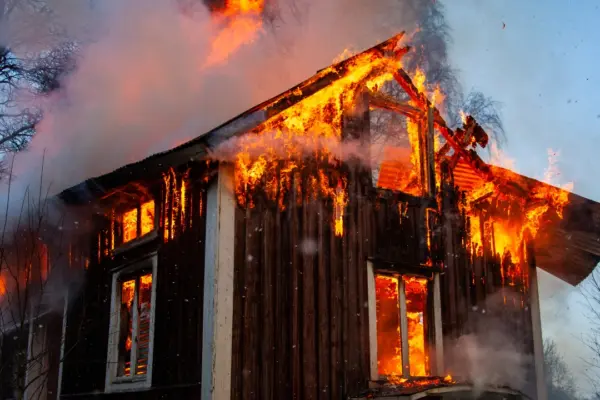
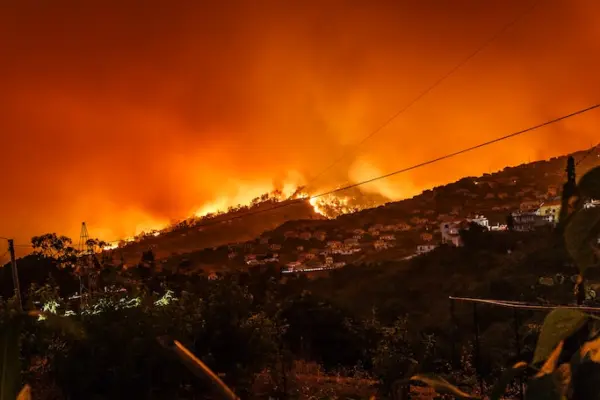
So, rather than putting too much emphasis on hardening homes, should we focus on spacing them farther apart? UCLA professor Stephanie Pincetl, founding director of the California Center for Sustainable Communities, says it’s the wrong question. The real problem is where we build.
UCLA IoES Professor Stephanie Pincetl discusses Los Angeles’ rebuilding efforts after the devastating wildfires for The Economist, asserting that the city should use this moment to address its housing crisis…
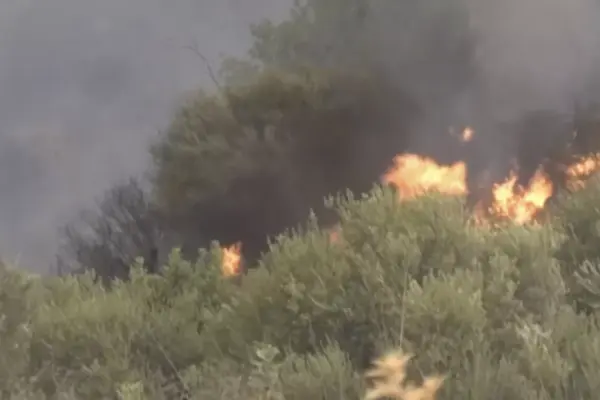
As Greece recovers from devastating wildfires near Athens, Southern Californians should recognize the same risks at home. Development in wildfire-prone areas, changes to native vegetation, drought, extreme heat and wind, intensified by climate change, create dangerous conditions. The factors behind Greece’s destructive fires are also present in Los Angeles.
UCLA’s Stephanie Pincetl says expanding the San Gabriel Mountains National Monument should go hand in hand with better local access to green space — so LA’s residents can enjoy nature without overcrowding the mountains.
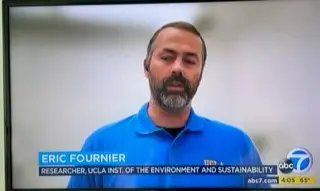
Building experts say it’s no surprise that empty offices are burning so much energy. Electrical infrastructure like elevators consumes energy even when not in use, as do the pumps that maintain water pressure for faucets and toilets, said Eric Fournier, research director at UCLA’s California Center for Sustainable Communities. Turning these off would make it hard for buildings to “maintain a posture of openness.”
A building is “kind of a living thing,” he said. “You can’t just cut the cord on it and expect it to carry on in good health for a long period of time.”
Air conditioning systems are also kept on in empty buildings to avoid structural problems, mold and water-borne illnesses.
The design of these large offices, many of which were built over a century ago, typically assumes a certain range of temperatures, Fournier explained. “If you deviate from that for a prolonged period, weird things happen that could be very expensive to fix.”
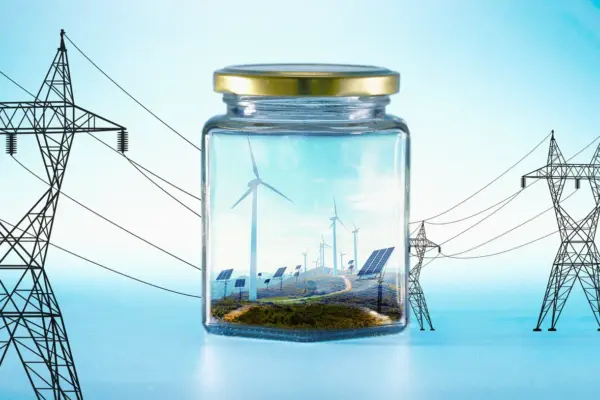
Researchers analyzed an archive of energy consumption data and hosted listening sessions to come up with “LA100 Equity Strategies.” The study is a detailed analysis of L.A.’s clean energy investment inequities. It also outlines more than 50 ways officials can address those inequities, including housing, local solar, and truck electrification.
Stephanie Pincetl was one of those researchers. She’s a professor at the UCLA Institute of the Environment and Sustainability and founding director of the California Center for Sustainable Communities.
Pincetl told LAist the city needs to really communicate the benefits of going 100% renewable with the residents and ratepayers of Los Angeles. That’s not an easy message to get across, she added, and the LADWP can’t do it alone.
Stephanie Pincetl, a lead author and director of the California Center for Sustainable Communities at UCLA, said the assessment is an exceptional example of national and international leadership, but stressed that there is much work yet to be done. “Clearly, inequities are historic and they’re deeply embedded in the city’s bones,” Pincetl said. And while the report outlines a number of strategies, “the challenge today is to figure out which ones are the most urgent, which ones are the medium term and which ones are the longer term.”
UCLA professor and director of the California Center for Sustainable Communities Stephanie Pincetl discusses the LA 100 Equity Strategies — a report that outlines ways to make LA's transition to 100% renewable energy equitable— for New York Times. "This transition is obviously going to be expensive. Somebody is going to have to pay for all of this.”
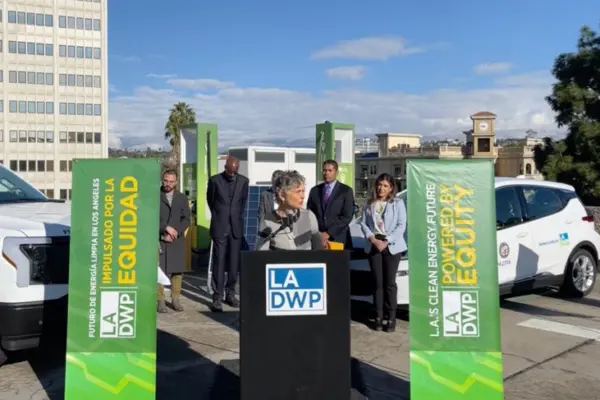
Stephanie Pincetl, a co-author of the report and director of the UCLA California Center for Sustainable Communities, welcomed the the initiative, which will kick off with a LADWP project to build, operate and maintain a network of electric vehicle charging stations in underserved communities.
“No other utility in the United States has made a commitment to not only 100% renewable but making sure it’s implemented equitably,” Pincetl said. “This is the power of a municipal utility, a utility owned by and for its customers.”
In the long term, the transition away from fossil fuels should reduce energy costs, many analysts say. But in the coming years, individuals, businesses and governments will have to spend hundreds of billions of dollars on buying new equipment and upgrading old gear.
“This transition is obviously going to be expensive,” said Stephanie Pincetl, a professor at the U.C.L.A. Institute of the Environment and Sustainability and founding director of the California Center for Sustainable Communities. “Somebody is going to have to pay for all of this.”
Over the past several centuries, Los Angeles has gone from a small farming community to one of the world’s biggest metropolises. In the early days, farming communities were able to reply on surface water from lakes and rivers. But as the population grew, that changed. We needed more water so we began to tap into groundwater resources, which at times were run dry by a lack of regulation. As we began to pave over much the natural land, these underground basins had no way to replenish from rainwater that would otherwise seep into the earth. Today, LA residents rely on a complex and highly managed system of aqueducts, wells, rivers and basins. Joining us today on AirTalk is Greg Pierce, director of UCLA’s Water Resources Group and Stephanie Pincetl, professor at UCLA’s Institute of the Environment and Sustainability.
Video replay: They discussed the challenge of the structural changes needed in order to make LA more sustainable, and the challenge of measuring progress accurately.
California may also have a not-so-secret weapon when the heat is on: its people.
"The folks in California who are the rate payers are doing a damn good job, and should get a lot of credit for managing electricity," said Stephanie Pincetl, director of UCLA’s Center for Sustainable Urban Systems.
It’s time now, though, we recognize that Algerian landscapes, like those of California, are colonial ones. These landscapes were transformed to fit an European idea of Mediterranean-ness. The consequences of this misunderstanding of natural ecosystems as preserved by Indigenous peoples, and of the damage inflicted in these regions are now evident in the wildfires in North Africa.
Stephanie Pincetl, a professor at the Institute of the Environment and Sustainability at UCLA, told me that she also sees positives to this wetter reality.
“We thought we could overpower nature and reengineer it with no consequences. We are seeing that that is not true over time, and I think the resurgence of these lakes is another example of that. Maybe going forward, we should be a little more respectful and find ways to accommodate, to at least some degree, the coming back of these water bodies, and what they mean, not only spiritually and for subsistence for Native peoples, but that they offer extraordinarily valuable habitat and offer ways to recharge groundwater — a lot of important reasons why they should be allowed to persist.”
In the coming years, tens of millions of homes will require retrofitting to make them more energy efficient even as we redesign our yards and driveways to deal with too much or too little water. “We can’t just keep slapping on more A/C, we need buildings that keep the cool air in,” said Pincetl. This is going to require an army of carpenters and plumbers. “We’re going to need more people going into the building trades. These are jobs that don’t require a college education, they require skill and craft,” she said.
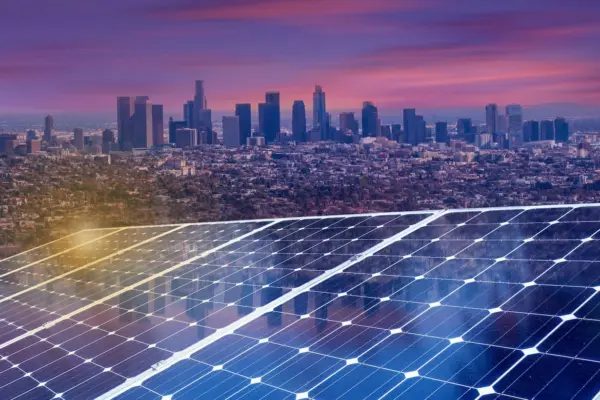
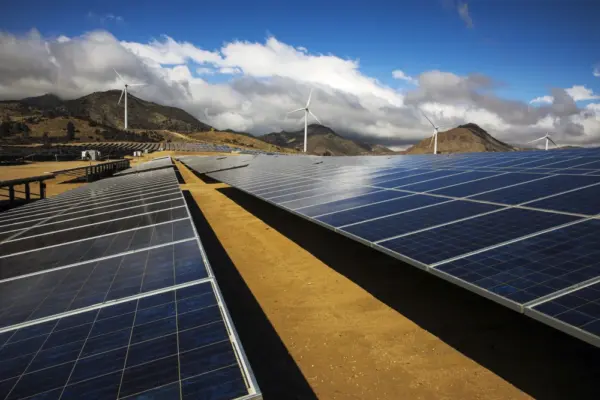
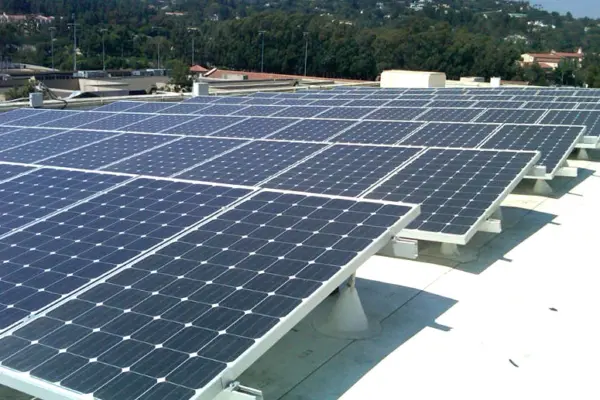
“The cost of doing community solar development in urban areas has been one of the factors that's driven the development of solar in desert areas,” said Robert Cudd, who researches community solar at UCLA’s California Center for Sustainable Communities. “You're not just building new infrastructure. You have to find a place, a property, a location in space where you can actually put these things. That has been prohibitively expensive for private solar developers.”
California regulators say the state is unlikely to experience electricity shortages this summer after securing new power sources and a wet winter that filled the state's reservoirs enough to restart hydroelectric power plants that were dormant during the drought.
Wealthy people generally have the infrastructure to make water available to them, so it’s easier for them to consume it. They also have larger properties to maintain, larger dwelling units, pools, and more, says Stephanie Pincetl, director of the California Center for Sustainable Communities at UCLA.
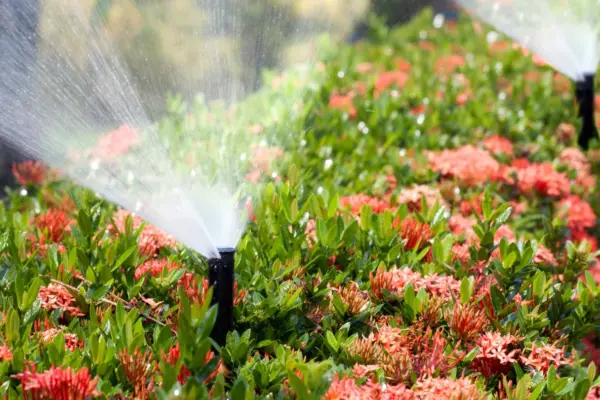
“In places like the Southwest, we need to aggressively change outdoor landscapes,” says Pincetl. In California, landscape irrigation accounts for about 50 percent of annual residential water consumption. Overall, federal and local governments have a responsibility to manage urban water supplies sustainably and equitably.
Erik Porse joined the University of California Agriculture and Natural Resources on Jan. 11 as director of the California Institute for Water Resources.
In the new documentary Without Water, Stephanie Pincetl, director of the California Center for Sustainable Communities at UCLA, argues that Long Valley is a test case for big cities seeking smarter ways…
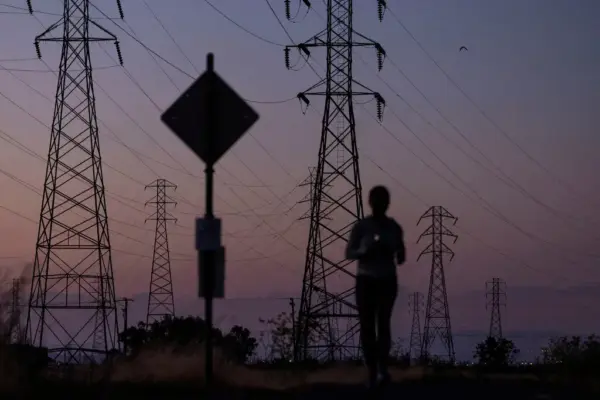
But many blackouts can also be blamed on how the electric system works. Namely: The goal of the power grid is to deliver electricity to your home as soon as it’s been generated at a power plant. There isn’t a great pool of electricity waiting in reserve for when demand spikes. Experts say that needs to change.
“Electricity systems are real-time systems,” said Eric Fournier, research director at UCLA’s Institute of the Environment and Sustainability. There’s little room for error.
How do we survive in the age of climate change driven megafires? The Big Burn podcast from LAist Studios tries to answer that complex question by exploring how we got here, how we keep screwing things up, and what we can do to survive and even thrive while the world around us burns. -- Stephanie Pincetl, guest panelist
The area encompassing both Southern California and Baja in Mexico have what’s known as chaparral ecosystems: dry soil, hot weather, and short shrubs. But these two regions’ fire lives have played out very differently. “Right across the border, there are very similar chaparral ecosystems,” Pincetl said, but “that chaparral has not had the benefit of fire suppression, because the Mexicans simply can't afford it. And it continues to exhibit this low intensity fire pattern, which does not kill the chaparral, but there are unsuppressed fires that occur on a relatively regular basis. And people don't die. The houses aren't burned. There's not huge conflagrations. So how do we get back to that kind of chaparral, is the question.”